
Zebrafish
Scientific Name:
Danio rerio
Scope
Covers zebrafish, Danio rerio (Hamilton, 1822), family Cyprinidae, across all captive exploitation systems: laboratory research and biomedical use (including transgenic, inbred, CRISPR-modified, and wild-type lines); regulatory toxicology and ecotoxicology (OECD and ISO standardised test species); commercial breeding for research supply; and the ornamental pet trade. Wild populations in South Asian freshwater systems (Ganges-Brahmaputra basin and adjacent drainages) are included for baseline biology reference but are not a primary commercial harvest target. Excludes other danionins and non-D. rerio ornamentals. The record’s primary focus is the laboratory research system, which represents the large majority of documented exploitation at scale.
Species Context
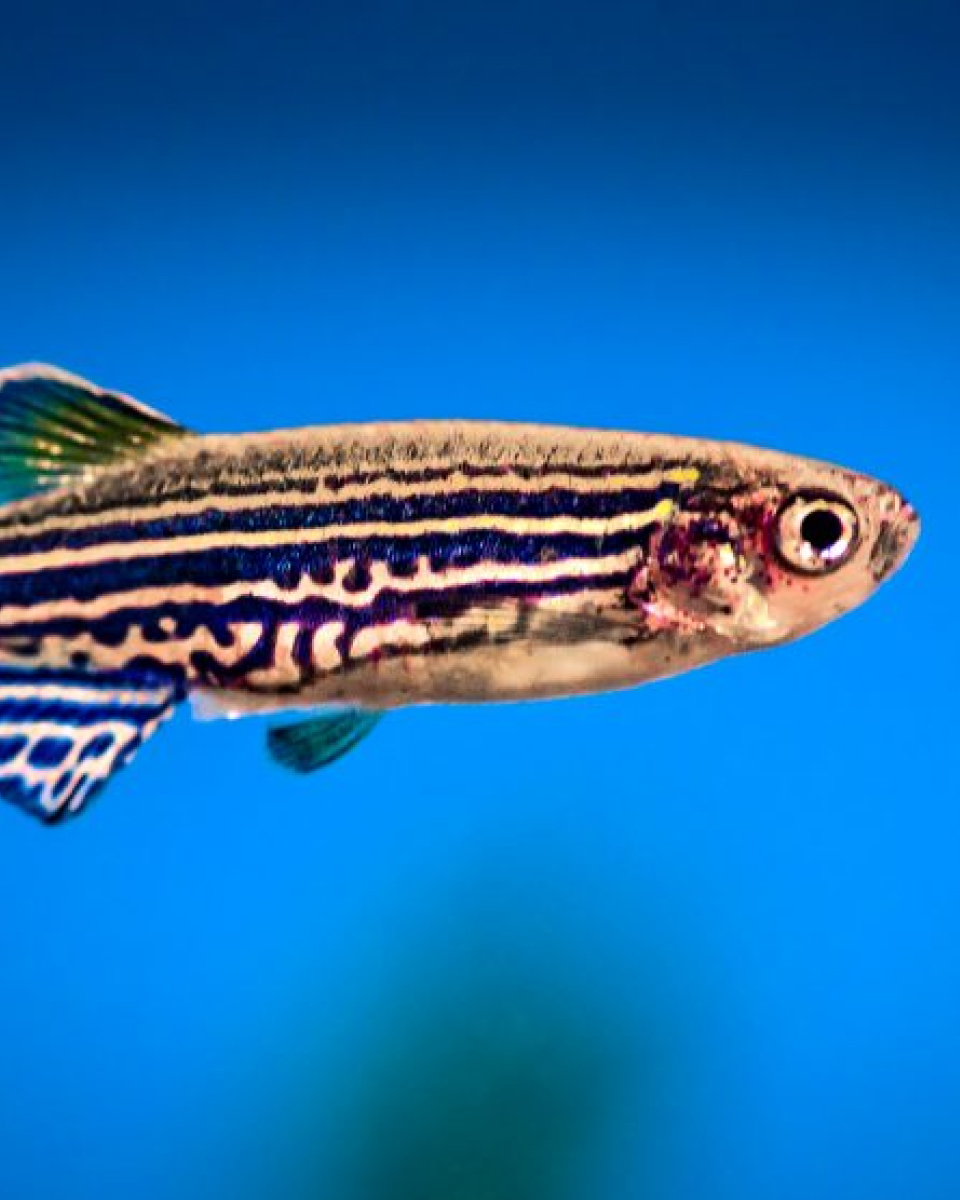
Photo by Powers Scientific
Danio rerio is a small benthopelagic freshwater cyprinid, typically 3–4 cm standard length and 0.4–0.8 g in adult captive conditions. Its native habitats are shallow, slow-moving streams, rice paddies, and seasonally variable floodplains with sandy or silty substrates in South Asia. Preferred captive temperature is approximately 26–28.5°C; water quality parameters — dissolved oxygen near saturation, ammonia and nitrite near zero, stable pH and hardness — strongly influence survival, behaviour, and experimental reproducibility.
Zebrafish are group-living and form shoals; they show shoaling preferences based on size, familiarity, and patterning. Social isolation is associated with altered stress physiology and behaviour. Males exhibit aggression and dominance hierarchies. Environmental complexity — shelters, substrates, visual structure — reduces anxiety-like behaviours and alters social dynamics; international survey data document widespread use of barren tanks in research facilities alongside growing evidence favouring enriched environments.
Stress responses follow the teleost hypothalamic-pituitary-interrenal (HPI) axis: handling, confinement, social isolation, and poor water quality produce elevated cortisol, reduced exploration, bottom-dwelling, erratic swimming, and freezing. Zebrafish demonstrate associative learning, spatial learning, reversal learning, and social learning; they are used as models for anxiety-like, fear, and reward-related behaviour, and exhibit neophilia and information-seeking consistent with affectively-valenced motivation. The extensive use of zebrafish as a model for affective state research is itself evidence of the species’ capacity for negative states — the validity of the model depends on the assumption that these states are real.
Lifecycle Summary
Zebrafish are the world’s most widely used vertebrate research model fish and among the most numerically significant laboratory animals globally. An NC3Rs-led international survey estimated that more than 5 million zebrafish are used annually across more than 3,250 institutes in approximately 100 countries, with use expanding due to advances in gene editing and high-throughput imaging. In Great Britain, zebrafish were the second most commonly used animal species in research in 2015. The majority are euthanised either during embryonic or larval stages — days to weeks post-fertilisation — during toxicity screening, developmental assays, and genetic experiments, or as adults at experimental endpoints or colony management culls, at ages of 1–2 years, well below their potential natural lifespan of 3–5 years. A parallel ornamental trade produces and distributes zebrafish globally for home aquaria and public displays, with production concentrated in Asian and Eastern European hatcheries; mortality along the ornamental supply chain is qualitatively documented but not systematically quantified.
Lifespan (Natural vs Exploited)
Wild zebrafish have an estimated natural lifespan of approximately 3–5 years, inferred from field sampling, growth data, and captive longevity under low-stress enriched conditions.
In laboratory research systems, breeding adults are commonly maintained for approximately 1–2 years post-fertilisation before being culled or retired due to declining fecundity and experimental performance. Large numbers of individuals are culled at embryonic or larval stages — 24 hours to 7 days post-fertilisation — following toxicity assays, developmental screens, and genetic procedures, making their total lifespan days to weeks.
Broodstock in commercial supply facilities may be maintained for multiple spawning seasons approaching natural lifespan, but surplus juveniles and experimental cohorts are euthanised once shipping or experimental age windows are passed. In the ornamental trade, husbandry literature cites 3–5 years in well-maintained aquaria; mortality in the early supply chain — breeding hatchery, wholesale, retail — is qualitatively reported to be high but is not systematically quantified.
Primary causes of mortality in exploitation systems include planned euthanasia at experimental endpoints, colony management culls for genotype and phenotype selection, surplus cull of non-required animals, disease (bacterial, mycotic, parasitic), water quality failures, transport stress, and aggression or cannibalism among fry and juveniles.
Exploitation Systems
Zebrafish exploitation operates across three systems with distinct operational logics.
Biomedical and basic research. The dominant system by animal numbers and institutional presence. Zebrafish function as a vertebrate model for genetics, developmental biology, neuroscience, behaviour, pharmacology, toxicology, disease modelling, and regenerative biology. Experimental mechanisms include large-scale controlled breeding for embryo and larval supply; high-throughput imaging and phenotypic screening; surgical and chemical manipulations; transgenesis using Tol2 transposons and CRISPR/Cas9 editing; induction of specific disease states; and xenotransplantation. Established laboratory lines include AB, TU, WIK, and TL wild-type strains plus hundreds of mutant, reporter, and disease model lines maintained in centralised stock centres and distributed globally. Downstream outputs are primarily data — genomic, phenotypic, pharmacological — alongside cell lines, fixed tissues, and validated drug targets. Carcasses and chemically contaminated water are managed as biohazardous or chemical waste.
Regulatory toxicology and ecotoxicology. Zebrafish are a standard OECD and ISO test species for acute and chronic toxicity testing, endocrine disruption assessment, developmental toxicity, and environmental risk assessment of chemical substances, effluents, and water samples. Embryos and larvae are exposed to test substances across defined developmental windows; endpoints include mortality, hatching success, malformation rates, behavioural responses, and biomarker expression. Test results inform environmental standards, effluent permits, and chemical registrations. Animals are euthanised and disposed of as hazardous or biological waste.
Ornamental pet trade. Zebrafish — including naturally striped wild-type and selectively bred colour, fin, and body-shape morphs — are mass-produced in hatcheries in South and Southeast Asia and Eastern Europe for global distribution through wholesale and retail pet trade channels. Transgenic fluorescent variants (“GloFish”) are commercially sold in some jurisdictions. Fish function as decorative and occasionally educational animals in home aquaria and public displays. Production volumes are not reported in FAO statistics, which aggregate ornamental freshwater fish without species-level breakdown.
Living Conditions Across Systems
Laboratory and research facilities. Zebrafish are housed predominantly in rack-mounted recirculating aquaculture systems (RAS) with polycarbonate tanks of 1–10 L on centralised filtration, UV sterilisation, and biofiltration. Recommended stocking densities vary substantially between sources: “The Zebrafish Book” suggests approximately 0.66 fish/L; some institutional guidelines specify approximately 5 fish/L; system manufacturers recommend 6–15 fish/L; and general aquaculture biomass-based guidance of 30–40 g/L would correspond to approximately 60–80 fish/L for 0.5 g adults. This tenfold range reflects the absence of a consensus welfare-based standard. Water parameters are typically maintained at 26–28.5°C, pH 6.8–7.5, conductivity 300–1,500 µS/cm, ammonia and nitrite near zero, with partial daily water exchange and continuous mechanical and biological filtration.
An international survey of zebrafish research facilities documented widespread use of barren tanks with no structural enrichment — smooth walls, no substrate, no shelter objects. Evidence from welfare research consistently shows that enriched environments reduce anxiety-like behaviours and alter stress responses; the survey identified increasing institutional interest in enrichment adoption. Continuous or diurnal artificial lighting is standard; typical photoperiods are 14:10 or 12:12 light:dark cycles. Social housing in groups is standard for adults; isolation is used for specific experimental protocols and is associated with altered stress physiology and behaviour.
Ornamental production and trade. Hatchery production uses high-density ponds or tanks with minimal environmental complexity. Wholesale and retail holding uses small glass or plastic tanks with recirculating filtration; densities are typically high relative to hobbyist welfare recommendations and water quality is variable. Mortality along this supply chain — from hatchery through wholesale to retail — is qualitatively reported to be elevated but is not systematically quantified.
Lifecycle Under Exploitation
Genetic Selection
Selective Breeding programmes maintain and develop zebrafish lines across three distinct selection objectives. Research lines are selected for experimental traits: fluorescent reporter expression, specific mutations, disease susceptibility or resistance, pigmentation phenotypes, and behavioural characteristics. Colony management applies selection for fecundity, viability, and experimental performance. Ornamental lines are selected for colour morphs, fin elongation, and body shape through pet trade breeding. Transgenic techniques — Tol2 transposons, CRISPR/Cas9, and earlier methods — create lines expressing specific constructs; these lines are maintained in breeding colonies and archived as cryopreserved sperm in centralised stock centres (ZIRC, EZRC) for global distribution.
Reproduction
Controlled spawning in breeding tanks uses inserts or marbles to protect fertilised eggs from adult consumption; photoperiod manipulation — morning light onset — predictably triggers spawning. Fertilised eggs are collected from tank bottoms or spawning traps within hours of deposition. Reproductive timing is managed to coordinate embryo supply with experimental schedules.
Birth & Early Life
Embryos are incubated in Petri dishes or hatching trays in system water or embryo medium at approximately 28.5°C. Early stages — 0 to 7 days post-fertilisation — are the primary material for toxicity testing, developmental studies, and genetic screening. A regulatory and welfare threshold applies at this stage: EU Directive 2010/63/EU applies to fish at the stage of independent feeding, approximately 120 hours post-fertilisation; in the US, IACUC oversight typically applies from fertilisation under institutional policy. Below applicable regulatory thresholds, different euthanasia methods are permitted — including sodium hypochlorite — reflecting the assumption that pain capacity develops progressively through early larval development. Many embryos and larvae are culled at or shortly after experimental endpoints, making their total lifespan days.
Growth & Rearing
Larvae are transferred to nursery tanks at defined age and size, fed live feeds — paramecia, rotifers, enriched Artemia nauplii — and transitioned to dry microdiets. Selective Culling via size grading manages aggression and optimises growth performance. Excess or off-target genotype animals are euthanised during this phase. Identification Marking through fin clipping under anaesthesia is performed for genotyping — a procedure with documented behavioural and stress impacts that is standard across research colonies.
Production
The production phase consists of allocation to experimental procedures: drug or chemical exposure, behavioural testing, imaging, surgery, infection or disease induction, or genetic manipulation. Experimental use spans all life stages from embryo to adult. Some fish undergo longitudinal studies involving repeated procedures; others are allocated to single-endpoint assays. Animal Experimentation is the defining practice of this lifecycle stage.
Transport
Movement within facilities uses netting and cup transfer. Transport between institutions — for research supply, line distribution, or collaborative studies — uses oxygenated water bags in temperature-controlled shipping boxes, governed by EU Directive 2010/63/EU, USDA regulations, and equivalent national animal welfare frameworks. Ornamental trade transport uses similar bagged shipping for domestic and international distribution through wholesale networks.
End of Life
Euthanasia methods used in research and colony management include: anaesthetic overdose with MS-222 (tricaine methanesulfonate), buffered to neutral pH, which is the dominant method in research facilities; hypothermic shock in ice-slurry baths, which is conditionally acceptable under AVMA Guidelines 2020 and requires exposure beyond cessation of opercular movement followed by a secondary confirmation method; and sodium or calcium hypochlorite solution for embryos and early fry at or below approximately 7 days post-fertilisation, applied under institutional rules referencing AVMA 2020. Secondary methods — decapitation, pithing, freezing — are required to confirm death following primary euthanasia, particularly for larger fish. For adult fish where experimental endpoints require it, overdose anaesthesia followed by secondary method is standard. Euthanasia is performed by animal facility technicians, researchers, and veterinarians; throughput varies from individual fish for surgical experiments to high-volume batch culling of embryo cohorts following screen completion.
Processing
Post-mortem processing in research contexts consists of tissue fixation for histology, dissection for molecular and cellular analyses, imaging preparation, and whole-body or organ sampling. Carcasses are disposed of through biohazardous waste streams — incineration — or as chemical waste where experimental exposures require it. Wastewater from tanks containing test compounds or anaesthetics is managed as hazardous liquid waste under institutional environmental health and safety protocols. Zebrafish are not processed for human consumption in any mainstream commercial context.
Chemical Medical Interventions
MS-222 (tricaine methanesulfonate) buffered to neutral pH is the primary anaesthetic and euthanasia agent in zebrafish research globally. It is delivered by immersion at concentrations of approximately 160–200 mg/L for anaesthesia and higher concentrations or extended exposure for euthanasia. Alternative agents include benzocaine, isoflurane, clove oil (eugenol), and metomidate, though MS-222 dominates in survey data across institutions.
Hypothermic shock using ice-slurry immersion is a commonly used and controversially classified euthanasia method. AVMA Guidelines 2020 classify it as conditionally acceptable, requiring exposure times beyond cessation of opercular movement and recommendation of secondary methods; it is not recommended as a sole method for warm-water species above approximately 4°C. Its acceptability and required exposure durations are subject to institutional interpretation.
Sodium or calcium hypochlorite is used for rapid chemical destruction of embryos and early larvae below defined developmental thresholds — typically 7 days post-fertilisation — where regulatory frameworks for animal use do not yet apply or apply differently.
Antimicrobials used in health management include formalin baths for external parasites, salt treatments, and antibiotics for mycobacterial and other infections. Specific protocols vary by facility and are not standardised across the literature; mycobacteriosis is a notable chronic infection in zebrafish colonies.
Fin clipping — removal of a small portion of fin tissue — is performed under anaesthesia for genotyping and marking purposes. The procedure causes documented behavioural and stress responses including altered fin use, reduced locomotion, and HPI axis activation; it is standard practice across research colonies and is the primary identification procedure for maintaining known-genotype individuals.
Experimental chemical exposures — pharmaceuticals, industrial compounds, endocrine disruptors, environmental samples — are applied to animals across developmental stages as part of toxicological and pharmacological research. These are experimental interventions rather than husbandry treatments and are documented through institutional animal use protocols and study records.
EU Directive 2010/63/EU and AVMA Guidelines for the Euthanasia of Animals (2020) are the primary regulatory frameworks governing permitted methods, developmental stage thresholds, mandatory secondary confirmation, and operator competency requirements. National and institutional requirements vary in permitted agents and training standards.
Slaughter Processes
In research contexts, killing of zebrafish is classified and documented as euthanasia — a distinction that positions the act within a welfare and regulatory framework rather than a food production framework. The primary methods are anaesthetic overdose with MS-222, hypothermic shock, and hypochlorite treatment for early embryos. Each method has specific requirements for exposure duration, secondary confirmation, and life-stage applicability under AVMA and institutional guidelines.
MS-222 overdose is the most widely validated method: immersion in buffered solution induces progressive loss of consciousness and death; confirmation of death by cessation of opercular movement, lack of response to stimuli, and secondary method application is required. Hypothermic shock achieves death through metabolic suppression but requires extended exposure and secondary confirmation due to the risk of cold-narcosis rather than death at short durations in small fish.
Quantitative failure rates in routine facility operations — cases where primary methods did not achieve death and required secondary rescue — are not published for zebrafish specifically. Studies examining euthanasia effectiveness focus on physiological endpoints rather than operational failure statistics.
For ornamental trade, no specific killing or euthanasia standard is applied; fish in retail settings are killed by standard practices including hypothermia or disposal methods that vary by retailer and jurisdiction.
Slaughterhouse Labour Impact
Zebrafish euthanasia and handling are performed by animal facility technicians, research staff, and veterinarians within institutional animal care programmes. Tasks range from individual fish handling for surgical procedures to high-throughput batch euthanasia of embryo and larval cohorts at experimental endpoints, which may involve culling hundreds to thousands of individuals per session.
Systematic data on occupational injury rates specific to zebrafish facilities are not available; available occupational health literature aggregates across laboratory animal species. Ergonomic risks documented for animal facility staff broadly include repetitive pipetting and transfer tasks, lifting and moving rack systems, and exposure to chemicals including anaesthetics (MS-222 vapour) and disinfectants. Potential psychological impact of high-throughput euthanasia tasks has been noted in broader laboratory animal welfare literature but is not quantified for zebrafish-specific operations.
The ornamental trade supply chain involves hatchery workers in Asian and Eastern European production facilities, wholesale distribution staff, and retail workers; demographic and occupational health data specific to zebrafish ornamental supply chains are not available.
Scale & Prevalence
Research use: an NC3Rs-led international survey estimated that more than 5 million zebrafish are used annually in research, spanning more than 3,250 institutes across approximately 100 countries. This estimate is based on survey extrapolation and may not capture current scale given growth in gene editing and imaging applications since the survey period. In Great Britain, zebrafish were the second most commonly used animal species in research in 2015 according to Home Office statistics. Research use is concentrated in North America, Europe, and parts of Asia.
The directional trend for research use is expansion: advances in CRISPR/Cas9 editing, high-throughput live imaging, and disease model development are increasing zebrafish use across neuroscience, cancer research, drug discovery, and developmental biology.
Ornamental trade: global production and trade volumes for D. rerio specifically are not reported in FAO statistics, which aggregate freshwater ornamental fish without species-level breakdown. Zebrafish are among the most commonly sold aquarium fish globally; production is concentrated in South and Southeast Asia for export markets and in Eastern Europe for regional distribution. Transgenic fluorescent GloFish variants add a distinct commercial stream in jurisdictions where their sale is permitted.
The total number of zebrafish alive at any point across research and ornamental systems is not consolidated in any public database.
Ecological Impact
Zebrafish research facilities operate RAS and flow-through systems consuming water, electrical energy for pumps, heaters, chillers, and continuous lighting, and materials including polycarbonate tanks and filtration media. Quantitative lifecycle assessment data for zebrafish facility environmental footprints are not available in published literature; energy and water consumption are assumed to scale with facility size and system design but have not been systematically measured or reported at population scale.
RAS harbour facility-specific microbial communities that influence effluent composition; discharge of treated or untreated wastewater may release microbial assemblages, residual anaesthetic compounds including MS-222 and benzocaine, and test chemicals from toxicology studies into wastewater systems. Disposal protocols for chemically contaminated water vary by institution and jurisdiction.
Zebrafish are not widely documented as a major invasive species in receiving waters; their tropical/subtropical temperature requirements limit establishment in temperate climates. However, escape from ornamental or research facilities and potential local ecological impacts of introductions are not systematically assessed.
As OECD and ISO standard test organisms for environmental toxicology, zebrafish embryos and larvae serve as sentinel indicators of water pollution — demonstrating sensitivity to contaminated urban river water, effluent samples, and specific chemical compounds across developmental endpoints. This use positions the species simultaneously as an ecological impact assessment tool and as a subject of that assessment infrastructure.
Language & Abstraction
The dominant framing in research contexts describes zebrafish as “models,” “model organisms,” “experimental units,” or “research resources” — positioning individual animals as tools for understanding human biology and disease. The model organism framing centres on construct validity, throughput, and reproducibility; individual animal welfare is addressed within a “refinement” discourse that links improved welfare to improved scientific outcomes rather than to intrinsic animal interests.
“Euthanasia” rather than “killing” or “slaughter” is the consistent institutional and regulatory term for all zebrafish killing across research contexts. This framing locates the act within a welfare procedure that implies benefit to the animal — a characterisation that does not apply to colony management culls of surplus animals or experimental endpoint kills. Institutional protocols describe methods in terms of “cessation of opercular movement,” “secondary method,” and “confirmation of death” — technical sequences that absorb individual death into procedural compliance language.
Developmental staging terminology — hours post-fertilisation, days post-fertilisation, “embryo,” “larva,” “fry” — is functionally linked to regulatory thresholds. The precision of staging serves simultaneously as scientific methodology and as a framework for determining which regulatory protections apply to which individuals. Animals below the threshold for EU Directive 2010/63/EU or equivalent requirements are described as “embryos” or “pre-feeding larvae” in ways that implicitly position them outside the animal welfare protection framework, though the evidence base for drawing welfare-relevant developmental boundaries is contested.
Colony management produces “surplus stock,” “non-experimental fish,” “excess animals,” and “culls” — terms that position planned killing as operational housekeeping within a production system. “Line maintenance,” “stock centre,” and “cryopreservation of sperm” describe genetic management of living populations in materials science and archiving language.
In the ornamental trade, zebrafish are sold as “zebra danio” — a trade name emphasising pattern and visual appeal — alongside selectively bred morphs described by colour (“golden,” “leopard”) and fin form (“long-fin”). Transgenic fluorescent variants are marketed as “GloFish” — a brand name that entirely replaces biological identity with a product character. The transgenic origin of GloFish is disclosed in product descriptions in jurisdictions requiring it, but the consumer framing presents genetic modification as an aesthetic product feature.
Terminology
Model organism, experimental model, vertebrate model, aquatic model, laboratory fish, zebrafish line, wild-type line, transgenic line, mutant line, knockout line, CRISPR line, stock, broodstock, breeding stock, spawning group, production stock, colony, facility stock, surplus stock, non-experimental fish, cull, fry, larvae, embryo, egg, juvenile, adult, broodfish, spawning pair, hpf, dpf, test fish, experimental unit, control group, treatment group, sentinel fish, production, breeding programme, line maintenance, stock centre, recirculating aquaculture system, RAS, flow-through system, rack system, tank, holding tank, nursery tank, grow-out tank, quarantine tank, enrichment, barren tank, complex environment, semi-natural tank, high-throughput screen, toxicity assay, developmental toxicity test, ecotoxicological assay, bioassay, euthanasia, anaesthetic overdose, hypothermic shock, ice bath, bleach treatment, hypochlorite solution, MS-222, tricaine, fin clip, genotyping, tagging, sample collection, carcass disposal, biohazard waste, hazardous waste, refinement, standard operating procedure, SOP, animal use protocol.
Within The System
Developments
Report a development: contact@systemicexploitation.org
Notice an inaccuracy or omission?
If you believe information on this page is incorrect, incomplete, or missing important context, you may submit a suggested correction for review.