
Parrots
Scientific Name:
Order Psittaciformes (families Psittacidae, Cacatuidae, Strigopidae)
Scope
Covers the order Psittaciformes — approximately 400 recognised species of parrots, cockatoos, and lorikeets — across all populations subject to exploitation systems, including wild populations subject to capture and trade; captive populations in companion animal trade, commercial breeding farms, zoological institutions, and research facilities; selectively bred morphs (budgerigar, cockatiel, lovebird varieties) and hybrid macaws in commercial breeding and pet trade contexts; and free-ranging invasive or feral populations subject to pest control programmes. Excludes non-psittacine birds and non-commercial conservation-focused captive breeding except where it intersects with trade, housing, or disease data.
Species Context
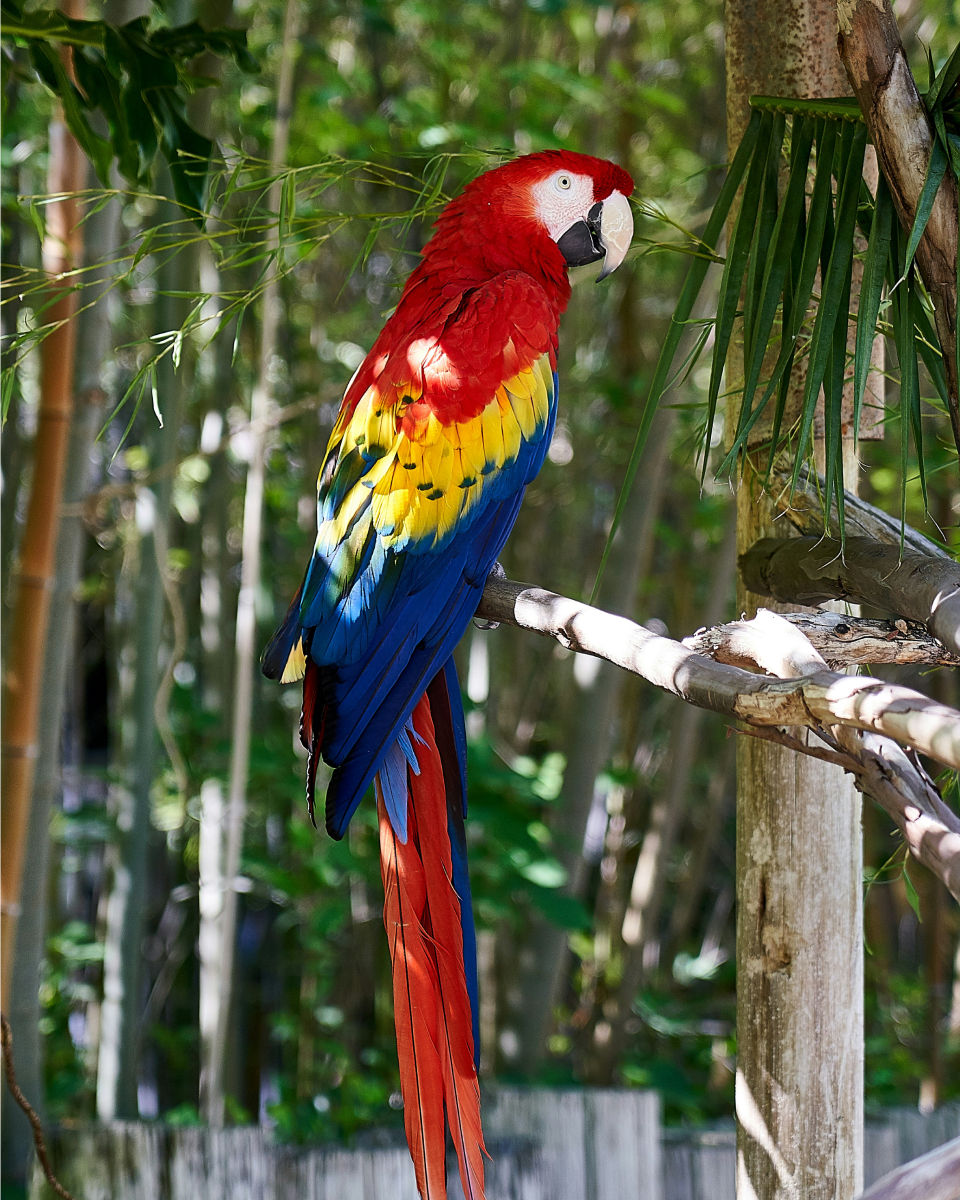
Photo by Nikolay Tchaouchev
Psittacines are predominantly tropical and subtropical arboreal birds, largely cavity-nesting, and granivorous or frugivorous, with some nectarivorous and omnivorous species. Approximately 400 species are recognised across three families. Body size ranges from small species such as budgerigars to large macaws and cockatoos. Many species exhibit long-term pair bonds and live in fission-fusion flocks in which sociality and complex vocal communication are central to foraging and predator avoidance.
Environmental needs include high requirements for flight space, three-dimensional environmental complexity, foraging opportunities, variable perching substrates, and stable social contact. Many species are adapted to large home ranges and seasonal movements. Captive welfare studies identify social isolation, housing limitations, and restricted opportunity to express species-typical behaviours as primary welfare risks, with these factors producing stereotypic behaviours including route tracing, feather damaging behaviour, excessive vocalisation, and aggression (Meijer et al., 2024).
Psittacines exhibit advanced physical cognition, including problem-solving and self-control comparable in some tasks to corvids and primates. Delay-of-gratification studies demonstrate that psittacines can forgo immediate food rewards in favour of larger delayed rewards, indicating future-oriented decision making. Complex learning, vocal mimicry, and flexible tool use are documented across species. Social cognition is relatively understudied compared with physical cognition. Scientific consensus supports psittacines as sentient birds with developed cognitive and affective capacities.
Lifecycle Summary
Parrot exploitation operates across structurally distinct systems — companion animal trade, commercial farming, wild capture, zoo display, and pest control — each with a different exploitation logic. The dominant system by captive animal numbers is the companion and pet trade, with an estimated 50 million parrots held in captivity globally, predominantly as pets. Commercial farming facilities produce live birds for export, primarily to Middle Eastern and South Asian markets; South Africa alone exported over one million parrots from more than 120 species between 2020 and 2025. Wild capture for trade continues despite CITES restrictions, with in-transit and post-capture mortality substantially understating official export figures. Parrots are not killed for meat at industrial scale; end-of-life pathways are veterinary euthanasia, pest control killing, and trade mortality rather than slaughter.
Lifespan (Natural vs Exploited)
Wild lifespan data for parrots are sparse because individuals are difficult to track in natural settings. Expert and veterinary summaries indicate that small- to medium-sized parrots commonly reach 10–20 years under low-predation conditions; larger cockatoos and macaws can reach 20–40+ years, with maximum potential lifespans higher. Predation and environmental hazards reduce average survival relative to potential longevity.
Analysis of 83,212 individuals from zoological collections across 260 species found that 50% of species never had any individual survive beyond 22 years, and only 30% of species showed median adult lifespan of 10 or more years when restricting to birds surviving past the juvenile period.
In captive companion and breeding settings, realised lifespans are often below potential longevity. A 19-year retrospective necropsy study of 1,850 captive psittacines found that infectious disease accounted for 44.5% of cases (23.1% viral, 15.4% bacterial, 8.7% fungal), with systemic disease, trauma, and nutritional disorders as additional significant mortality drivers.
Wild-captured birds face additional mortality during and after capture. For African grey parrots, CITES assessments estimated that shipments of approximately 800 birds per month from a single region corresponded to 1,000–1,500 actual captures per month — implying 20–40% in-transit and post-capture mortality before export.
Exploitation Systems
Parrot exploitation operates across five structurally distinct systems with different mechanisms, scales, and endpoints.
Companion animal and pet trade. The dominant system by captive animal numbers. Parrots are sold as pets and display animals through commercial breeders, pet retailers, importers, and online markets. Psittacines constitute approximately 90% of the monitored live bird trade globally and are among the twenty most traded avian families by CITES data. Downstream flows include resale, further breeding, zoo transfers, and surrender to shelters or sanctuaries.
Commercial breeding farms. Large-scale breeding facilities — particularly in South Africa and parts of Asia — produce live birds for export. South Africa exported over one million parrots from more than 120 species between 2020 and 2025, primarily to Middle Eastern and South Asian markets. Mechanisms include intensive pair-based or colony breeding, artificial egg incubation, removal of eggs to stimulate re-laying, and hand-rearing of chicks to accelerate production and socialisation for sale.
Wild capture and international trade. Wild-sourced birds captured from native ranges and traded domestically or internationally. CITES regulates international trade in listed species; however, CITES data systematically underrepresent total trade volumes by excluding domestic trade, non-listed species, and illegal flows. In Mexico, an estimated 65,000–78,500 parrots are captured and traded annually. Wild capture is associated with high in-transit mortality and population-level depletion in source regions.
Zoological institutions. Parrots kept in zoo collections and ex situ conservation programmes for display, conservation breeding, and educational functions. Longevity and disease data from zoological populations provide baseline information used in veterinary and conservation research.
Pest control. Certain parrots and cockatoos are managed as agricultural or environmental pests in regions including Australia, parts of Europe, and the Americas where they are invasive or locally overabundant. Management systems include non-lethal methods (netting, exclusion, frightening devices, habitat modification) and lethal control (shooting, trapping, poisoning, and narcotic grain baiting with subsequent euthanasia of captured birds).
Living Conditions Across Systems
Companion and pet settings. Typical housing is individual or paired indoor caging. Welfare guidelines specify minimum cage dimensions based on body size; Australian codes of practice require minimum indoor floor areas of 1,600 cm² for a 200 mm bird and 5,000 cm² for a 300 mm bird, with outdoor aviaries ranging from 7,200 cm² to 25,000 cm² depending on species size. Social grouping ranges from solitary to small pairs. Welfare studies consistently identify housing limitations, social isolation, and insufficient environmental enrichment as primary risk factors for stereotypic behaviour and psychological stress.
Commercial breeding farms. High-density aviary blocks or flight cages with multiple breeding pairs, nest boxes, and limited flying space, organised to facilitate chick collection and maximise reproductive output. Quantitative stocking density data are rarely published in peer-reviewed literature. A 2024 systematic review noted major knowledge gaps in husbandry parameters and production data in commercial breeding, particularly in Asian markets.
Zoological institutions. Larger aviaries with mixed perching, shelter, and flight space. Birds typically housed in pairs, family groups, or single-sex groups depending on management goals. Environmental complexity and managed social contact are generally greater than in companion or commercial breeding settings.
Trade and holding facilities. Birds held in transport crates or holding cages during international and domestic movement, with high densities and limited environmental complexity. CITES and national regulations set general requirements for crate size, ventilation, and feed and water provision during transit, but documented compliance and mortality during transit indicate significant welfare compromise.
Pest control operations. Trapping devices confine multiple birds before euthanasia. Shooting operations do not involve confinement but may cause non-lethal injury and affect flock cohesion and behaviour across surrounding areas.
Lifecycle Under Exploitation
Genetic Selection
In commercial breeding and companion trade, selection is based on plumage colour, body size, temperament, vocal mimicry capacity, and reproductive output, driven by breeder preferences and market demand rather than formal estimated breeding values. In zoological conservation programmes, selection is constrained to maintain genetic diversity and species-typical traits through studbook management and coordinated pairing. Wild-captured birds undergo no selective process prior to capture.
Reproduction
In commercial farming and breeding settings, pairs or small groups are housed in nest-box-equipped enclosures, with some facilities using colony breeding. Artificial incubation of eggs and removal of clutches to stimulate re-laying are used to maximise reproductive output per pair. Cross-fostering between pairs is practised in some settings. Wild populations reproduce independently; their offspring and adults are subject to capture rather than controlled reproduction.
Birth & Early Life
Chicks may be parent-reared, hand-reared, or a combination. Hand-rearing is the dominant practice in commercial and pet-oriented breeding to increase human socialisation and allow more clutches per pair, achieved by separating chicks from parents shortly after hatching. Hand-reared chicks are housed in brooders and nursery cages. Disease susceptibility, growth disorders, and early mortality are documented as significant risks in commercial breeding populations.
Growth & Rearing
Chicks are housed in brooders, nursery cages, and juvenile aviaries, fed formulated pellets, seed mixes, or supplemented diets. Management includes scheduled weighing, health monitoring, and behavioural conditioning targeting appropriate socialisation and body condition before sale or transfer. In pest control contexts, wild birds are not subject to rearing management.
Production
In companion trade, production means the generation of weaned, socialised juveniles available for sale. In zoological settings, production may mean chicks for population management within coordinated conservation programmes. In pest-managed wild or invasive populations, reproduction occurs in situ without industrial management; control systems aim to suppress this reproductive output through lethal and non-lethal methods.
Transport
Parrots move through trade chains from breeding facilities or capture sites to wholesalers, exporters, importers, retailers, and end buyers. International movements of CITES-listed species require permits and health certification. CITES documentation indicates that export records systematically undercount actual capture by 20–40% for some species due to in-transit mortality. Physical Restraint in transport crates and Social Isolation during holding periods are structurally embedded in the trade chain.
End of Life
In companion and zoo settings, death occurs through disease, accident, or veterinary euthanasia for chronic illness or behavioural issues. In pest control operations, end of life is killing by shooting, trapping followed by cervical dislocation or other approved euthanasia, poisoning, or narcotic grain baiting. Trade mortality — dying during capture, holding, and transport — represents a significant unrecorded mortality category for wild-sourced birds, not reflected in official trade statistics.
Processing
There is no industrial processing of parrot carcasses. In companion and zoo settings, carcasses are disposed of via incineration or clinical waste. In pest control operations, carcasses are buried, incinerated, or left on site depending on operational context and jurisdiction. No downstream product chains involving parrot carcasses analogous to poultry processing are documented at meaningful scale.
Chemical Medical Interventions
Veterinary pharmaceutical use in captive parrots is individual-level rather than population-scale, and is governed by companion animal rather than livestock frameworks.
Antimicrobials including enrofloxacin, doxycycline, and trimethoprim-sulfonamides are used for bacterial infections. Antifungals including itraconazole and amphotericin B are used for fungal diseases — notably aspergillosis. Antiparasitic agents including ivermectin are used for ecto- and endoparasites. Analgesics and anti-inflammatories including meloxicam are used for injury and post-surgical care.
There are no widely used, globally standardised vaccines for major psittacine viral diseases comparable to commercial poultry vaccine programmes. Disease control in captive collections relies primarily on quarantine protocols, diagnostic testing, and biosecurity measures. Psittacine beak and feather disease (PBFD) caused by circovirus is a significant pathogen in captive and wild populations for which no commercial vaccine is currently available.
Physical interventions performed at individual level include wing clipping (feather trimming to restrict flight), beak and nail trimming, surgical sexing via endoscopy, reproductive surgeries in chronic egg-laying females (salpingohysterectomy), and fracture repair. These are clinical rather than industrial-scale procedures.
In pest control operations, chemical agents including alpha-chloralose (a stupefying agent) and other avicides are used to incapacitate or kill pest birds including psittacines. Narcotic grain baiting facilitates capture for subsequent euthanasia. Regulatory approval for these agents varies by jurisdiction and is governed by national biosecurity and animal welfare legislation.
Slaughter Processes
Parrots are not slaughtered for meat at industrial scale. There is no commercial slaughter infrastructure for psittacines comparable to poultry processing. Killing occurs in three distinct and structurally separate contexts.
Veterinary euthanasia in companion and zoological settings uses injectable barbiturates or inhalant anaesthetics administered by veterinarians, consistent with avian euthanasia guidelines. This is individual-level clinical practice.
Pest control killing employs shooting, trapping followed by cervical dislocation or other approved methods, and poisoning or narcotic grain baiting with subsequent euthanasia of incapacitated birds. Methods and regulatory requirements vary by jurisdiction and target species. Quantitative failure rates for pest control killing methods are not reported in available literature.
Trade mortality — death during wild capture, holding, and transport — is a structurally significant mortality pathway for wild-sourced birds that occurs outside any regulated kill framework. It is not recorded in official trade statistics and its scale is inferred from comparisons between capture estimates and export records.
Slaughterhouse Labour Impact
This field does not apply to parrots in any conventional sense. There is no slaughterhouse workforce or processing line associated with parrot exploitation systems.
Pest control operations involve field workers conducting shooting, trapping, and euthanasia tasks; no occupational health literature specific to these roles in psittacine management has been identified. The psychological and physical burdens documented in livestock slaughter workforces are not transferable to the small-scale, field-based, or veterinary contexts in which parrots are killed.
Scale & Prevalence
Approximately 50 million parrots are estimated to live in captivity globally, predominantly as companion animals in private households. This figure is indicative and derived from compiled secondary sources rather than a primary census.
Legal international trade in CITES-listed psittacines contributes thousands to tens of thousands of individuals annually to monitored trade flows. China’s imports and exports of CITES-listed parrots between 1981 and 2022 totalled approximately 760,000 individuals (~18,500 per year), representing approximately 5% of global CITES-listed live parrot trade.
South Africa is the leading exporting country by volume, having exported over one million parrots from more than 120 species since 2020, primarily to Middle Eastern and South Asian markets. Commercial parrot farming is expanding in South Africa and parts of Asia.
Illegal and domestic trade is not captured in CITES data. In Mexico, an estimated 65,000–78,500 parrots are captured and traded annually, with wild population declines of up to 30% over a century attributed partly to this trade.
Nearly one-third of parrot species globally are considered threatened with extinction. Wild population depletion from overexploitation for trade — combined with habitat loss — is a primary driver. African grey parrot populations in Ghana declined by an estimated 90–99% since the early 1990s, with trade identified as a major contributing factor.
Ecological Impact
The primary ecological impact of parrot exploitation is not the environmental footprint of captive production but the depletion of wild populations through capture, trade, and associated demographic disruption.
Wild population depletion. Parrots are described as the most heavily exploited group of wild birds. Trapping for the pet trade, combined with habitat loss, has substantially reduced wild populations across species ranges. African grey parrot populations in Ghana declined by 90–99% since the early 1990s; analogous declines are documented across other heavily traded species in Latin America, Africa, and Asia.
Invasive and pest impacts. In regions where psittacines are introduced or locally overabundant — including parts of Australia, Europe, and the Americas — they cause documented agricultural damage to fruit crops and grain systems, as well as infrastructure damage. Integrated pest management programmes apply lethal and non-lethal controls with associated ecological effects on local bird communities that are not fully quantified in available literature.
Conservation breeding outcomes. Captive-bred parrots released for population recovery programmes face post-release survival challenges. Research on orange-bellied parrots found that captive-bred birds developed altered wing morphology associated with 2.7-fold lower migration survival relative to wild-type birds, indicating that captive rearing conditions can affect post-release ecological function.
Captive and farming environmental footprint. The direct land, water, and greenhouse gas footprint of parrot farming and companion keeping is small relative to food-production livestock systems. No life-cycle assessments specific to parrot farming or pet keeping have been identified in available literature.
Language & Abstraction
CITES and regulatory trade documentation classify parrots as “live specimens,” assigning them categories including “captive-bred,” “wild-sourced,” and “ranched,” and purpose codes including “commercial,” “personal,” and “scientific.” These classifications frame individual animals as trade units to be categorised by source and purpose, with the category distinctions serving regulatory rather than animal-centred functions.
Commercial breeding literature applies production terminology — “productivity,” “supply-side interventions,” “reproductive output,” “stock” — to parrot farming, aligning the language of parrot reproduction with commodity production framing. “Hand-reared” functions as both a welfare and a marketing descriptor, indicating human socialisation as a product attribute rather than describing the separation of chicks from parents.
Pest control regulations classify some species as “declared pests” or “invasive species,” with management plans describing “eradication,” “population reduction,” “control operations,” and “lethal tools.” This framing positions killing as a technical management intervention directed at populations rather than individuals, and positions the parrots themselves as a system problem to be resolved rather than subjects of the intervention.
Conservation assessments use terms including “off-take,” “harvest,” “sustainable trade,” and “source population,” which apply population-demographic framing to what are individual capture and mortality events. The concept of “sustainable harvest” in wildlife trade discourse normalises extraction from wild populations as long as demographic replacement rates are maintained, abstracting the experience of captured individuals into population-level accounting.
“Consignment mortality” in trade documentation frames deaths during transit as a logistical variable — a percentage loss within a shipment — rather than as the death of individual animals during capture and transport.
Terminology
Live parrots, psittacines, captive-bred, wild-sourced, ranched, pet birds, ornamental birds, breeder stock, breeding pairs, juveniles, fledglings, weanlings, hand-reared chicks, parent-reared, surplus stock, exhibit animals, display birds, pest birds, invasive birds, declared pest, culled birds, live specimens, CITES-listed specimens, Appendix I species, Appendix II species, exports, imports, re-exports, off-take, harvest, production, productivity, supply-side intervention, trade volume, stock, consignment, shipment, consignment mortality, euthanised birds, control kill, eradication, population reduction, trapping take, narcotic grain, stupefied birds.
Within The System
Developments
Report a development: contact@systemicexploitation.org
Notice an inaccuracy or omission?
If you believe information on this page is incorrect, incomplete, or missing important context, you may submit a suggested correction for review.