
Orcas
Scientific Name:
Orcinus orca
Scope
Covers Orcinus orca across all populations subject to exploitation systems: orcas held in captivity in marine parks, aquaria, and display facilities globally; wild populations subject to historical and ongoing live capture; and wild orcas subject to localised hunting or incidental killing. No formally recognised subspecies exist; multiple ecotypes — including resident, transient (Bigg’s), offshore, and Antarctic types A–D — differ in morphology, diet, and behaviour but remain within O. orca. Excludes other delphinids and non-orca cetaceans. Excludes historical commercial whaling data not specific to O. orca.
Species Context
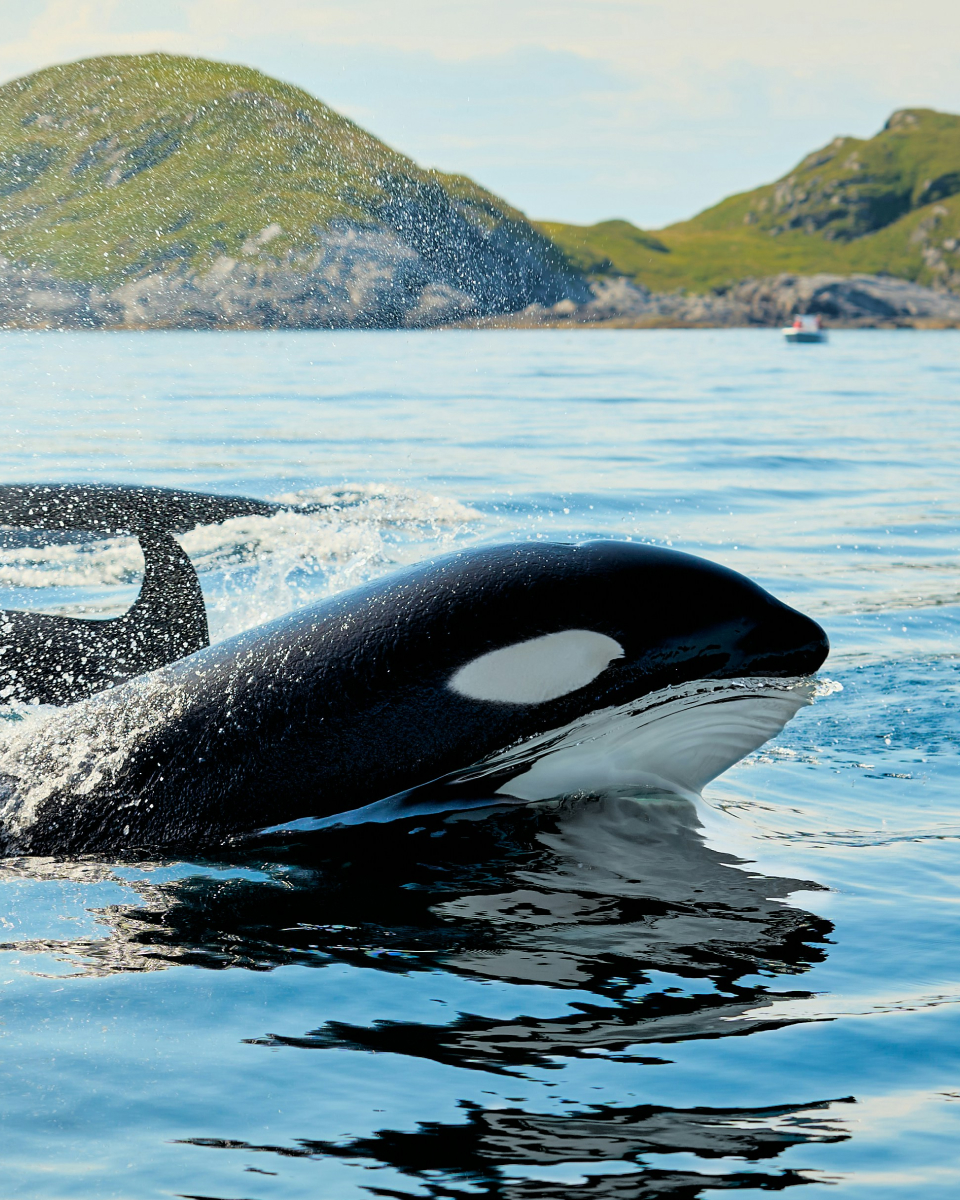
Photo by Vidar Nordli-Mathisen
Orcas are large odontocete apex predators in the family Delphinidae. Adults typically measure 5–8 m in length and weigh 3–6+ tonnes, with significant variation by sex and ecotype. They are among the widest-ranging marine mammals — some wild individuals travel more than 100 km per day and perform prolonged deep dives — requiring extensive three-dimensional space that captive environments cannot provide.
Social structure in resident ecotypes is built around stable matrilineal groups with strong natal philopatry — individuals remain with their birth family across their entire lives. Group-specific vocal repertoires and dialects are transmitted across generations and constitute evidence of cultural transmission. Prey-specialised hunting strategies — including coordinated beaching to capture pinnipeds — are socially learned and population-specific. Some ecotypes display fission-fusion social dynamics with smaller and more fluid groupings.
Scientific evidence establishes orcas as highly encephalised cetaceans with complex cognitive capacities: advanced problem-solving, imitation, long-term memory, and flexible behaviour are documented in experimental and observational literature. Chronic stress in captivity is associated with immune dysregulation, increased morbidity, and stereotypic behaviours including repetitive swimming and self-directed behaviour. Environmental needs include an open dynamic acoustic environment suited to echolocation, varied three-dimensional space, live prey and natural hunting, and stable complex social contact with familiar conspecifics — none of which are met in captive display conditions.
Lifecycle Summary
Orca exploitation is structured around captive display in marine parks and aquaria, where individual animals are maintained for performance, visitor interaction, and commercial revenue. As of August 2025, approximately 54 orcas were held in captivity globally — approximately 23 wild-captured and 31 captive-born. This is an individual-scale population, not an aggregate production system. Live-capture operations supplied facilities from the 1960s onward; some jurisdictions have since restricted or banned new captures and phased out breeding. Captive orcas live substantially shorter lives than wild conspecifics, with deaths from infectious disease, stress-related conditions, trauma, and veterinary euthanasia documented across facilities. In North America and parts of Europe the industry is contracting; in China and Russia new marine parks have expanded the captive population. There is no industrial slaughter or commercial meat processing for orcas.
Lifespan (Natural vs Exploited)
Photographic identification studies of wild populations document female maximum lifespans up to approximately 80–90 years, with averages around 40–60 years. Male wild lifespans average approximately 30 years, with maxima around 50–60 years. These figures vary by population and are affected by prey depletion, contaminants, and fisheries interactions.
Captive orcas have significantly shorter realised lifespans. Historical analyses showed annual survival probabilities of approximately 94% in captivity compared with approximately 98% in wild resident populations; more recent captive survival data have improved but remain debated and period-specific. Many captive individuals have died in their teens or twenties — well below wild average lifespans. The oldest captive orcas have reached their forties; none have approached wild female maximum ages.
Primary causes of death in captivity include bacterial, fungal, and viral infections, which accounted for a substantial proportion of marine mammal deaths in documented facility datasets; stress-related gastric pathology; poor dentition from chewing on tank structures; intraspecific aggression; respiratory disorders; and trauma. Veterinary euthanasia is used when prognosis is considered unmanageable.
Exploitation Systems
Orca exploitation operates through a single primary system — captive display — with subsidiary capture, breeding, and research components.
Captive display in marine parks and aquaria. The dominant exploitation system. Orcas are maintained in concrete or fibreglass tank complexes for choreographed shows, educational presentations, visitor interaction programmes, and marketing. Animals generate commercial revenue through ticket sales, merchandise, media content, and sponsorship. The display function defines the system’s entire management logic: housing, training, feeding, transport, and medical protocols are all organised around maintaining animals in a condition suitable for public performance.
Live capture. Live-capture operations — using purse-seine nets, drive techniques, and other methods — supplied facilities from the 1960s onward, primarily from Pacific Northwest and Icelandic waters, and more recently from Russian Far East populations. Some jurisdictions including the United States now restrict new wild captures and rely on captive breeding; China and Russia have acquired captured animals in recent years. The Taiji, Japan drive hunts have occasionally involved orca capture or killing as an incidental outcome of operations targeting other dolphin species.
Captive breeding. Managed reproduction within captive populations via coordinated pairing and, in some cases, Artificial Insemination, with estrus monitoring through hormonal assays and behavioural observation. Breeding decisions are made by facility-level or regional studbook committees. Some jurisdictions have imposed breeding restrictions or phase-outs; others continue breeding to supply new display animals.
Research. Some captive orcas are maintained partly for research on physiology, cognition, sensory systems, and veterinary medicine. Experiments typically involve operant conditioning and controlled tasks. Biological samples — blood, exhaled breath, tissue biopsies — are collected for veterinary diagnostics and archived in research biobanks.
Localised hunting. Low-scale and geographically restricted hunting of orcas occurs in some high-latitude regions for food, bait, or fisheries conflict mitigation. Scale is episodic and numbers typically in single digits or tens when kills occur. This is not comparable to commercial baleen whale operations in scale or organisation.
Living Conditions Across Systems
Captive display facilities. Orcas are held in concrete or fibreglass tank complexes. Primary pools are typically less than 50 m in longest dimension and less than 12 m in depth — a fraction of the daily travel distances and dive ranges of wild conspecifics. Night-holding and subsidiary pools are smaller. Water is treated seawater or synthetic saltwater, filtered and chemically managed. The acoustic environment is dominated by filtration system noise and show sound equipment, incompatible with orca echolocation and communication needs. Live prey and natural hunting are absent; fish is provided dead and thawed, often supplemented with vitamins.
Social groupings in captivity are typically composed of unrelated individuals from different populations and sometimes different ecotypes, placed together by institutional management rather than by the stable matrilineal bonds that characterise wild resident societies. Gate separations are used routinely to manage individual animals for training, medical procedures, and aggression control.
Documented welfare indicators include elevated rates of tooth wear and fracture — often from chewing on tank surfaces and gates — stereotypic repetitive swimming patterns, rake marks from intraspecific aggression, chronic use of gastroprotectant medications for stress-related gastric ulceration, and medical histories reflecting persistent infectious disease burden.
Regulatory variation is significant. North American and European facilities operate under marine mammal and zoo regulations specifying minimum tank dimensions, water quality, and care standards. Newer facilities in China and Russia operate under varying regulatory frameworks, with less public reporting.
Lifecycle Under Exploitation
Genetic Selection
There is no industrial-scale genetic selection comparable to livestock programmes. Captive breeding decisions are made by facility-level or regional studbook committees, prioritising compatibility, genetic diversity within the small captive population, and institutional supply needs. Genetic baselines reflect founder capture events; some lineages are disproportionately represented due to the small founding population.
Reproduction
Breeding is managed through coordinated pairing and Artificial Insemination in some facilities. Estrus monitoring uses hormonal assays and behavioural observation. Contraceptives — including hormonal implants or injections — are applied to manage breeding cycles where facilities have imposed restrictions or where breeding is operationally undesirable. Some jurisdictions have imposed phase-outs of captive breeding; others continue actively.
Birth & Early Life
Calving occurs in tanks under veterinary monitoring, with ultrasound and behavioural surveillance used throughout pregnancy. Calves initially remain with their mothers; social groupings may be adjusted to reduce aggression risk from other facility animals. Early life involves intensive human contact for medical conditioning, hand-feeding where required, and early operant training for husbandry compliance behaviours.
Growth & Rearing
Diet consists of thawed fish and other marine products, calorically adjusted as animals grow and supplemented with vitamins to compensate for deficiencies in non-live prey. Daily training sessions condition voluntary participation in veterinary procedures including blood draws, exhaled breath sampling, ultrasound examination, and dental checks. Regular health monitoring includes weight tracking, blood parameter analysis, and behavioural records.
Production
The productive function of captive orcas is performance and display. Daily schedules include choreographed shows, educational presentations, visitor interaction programmes, and splash-zone events. Individual animals perform multiple shows per day interspersed with rest and training periods; rotations are used to manage workload across the facility’s animals. There is no biological output — no meat, milk, eggs, or fibres — analogous to livestock production systems.
Transport
Long-distance transport between facilities uses specialised slings and containers, typically by air. Animals are craned out of pools, restrained in slings, kept moist and cooled during transit, and craned back into receiving pools. Pre- and post-transport veterinary protocols include prophylactic treatments, hydration management, and quarantine on arrival to manage disease transmission risk between facilities.
End of Life
Deaths in captivity occur through disease, trauma, or age-related deterioration. Veterinary euthanasia using intravenous barbiturates is used when prognosis is poor or suffering is considered unmanageable. Deaths are subject to regulatory reporting requirements in some jurisdictions — the US Marine Mammal Inventory Report system maintains public records of captive marine mammal deaths and transfers.
Processing
Carcasses undergo full necropsy to determine cause of death, with tissue collection for histopathology, toxicology, microbiology, and research archiving. Disposal follows local regulations and may include rendering, incineration, or burial. There is no commercial product processing chain for orca carcasses.
Chemical Medical Interventions
Veterinary pharmaceutical use in captive orcas is managed at the individual animal level by facility veterinary teams, governed by companion and zoo animal frameworks rather than livestock frameworks.
Antibiotics — including cephalosporins, fluoroquinolones, and penicillins — are used for bacterial infections, which represent a substantial proportion of documented captive orca mortality. Antifungals are used for fungal infections, noted as prevalent in captive marine mammals. Anti-inflammatory drugs including NSAIDs and corticosteroids are used for pain management, inflammation, and immune modulation.
Gastroprotectants and antacids — including proton pump inhibitors and H2 blockers — are used to manage stress-related gastric ulceration, a condition linked directly to captive confinement conditions. Sedatives and anxiolytics including benzodiazepines are used peri-procedurally and in some facilities for ongoing behaviour management.
Contraceptives including hormonal implants or injections are applied to regulate reproduction where breeding restrictions are in effect. Vaccination regimes target facility-relevant pathogens; specifics vary by institution and national veterinary guidelines.
Dental interventions — including drilling and flushing of broken and worn teeth — are performed due to the high rate of dental pathology caused by chewing on pool structures and gates. Endoscopic procedures, tissue biopsies, and surgical repair of injuries or gastrointestinal issues are performed as clinically indicated. The US Marine Mammal Protection Act and Animal Welfare Act govern veterinary oversight, drug use, and record-keeping for marine mammals in public display in the United States.
Slaughter Processes
Orcas are not slaughtered for food at industrial scale. There is no commercial slaughter infrastructure for orcas comparable to livestock processing. Killing occurs in three structurally distinct contexts.
Veterinary euthanasia in captive facilities is performed using intravenous barbiturates or equivalent agents, consistent with marine mammal euthanasia guidelines, when animals are considered to be in unmanageable suffering or have terminal prognosis. This is the primary end-of-life killing pathway for the captive population.
Localised hunting using rifles, harpoons, or explosive devices occurs in some high-latitude regions, with throughput typically in single digits or low tens per event. Independent quantitative failure-rate data for these methods specific to orcas are not available. No global harmonised regulatory standard specific to orca killing exists; most IWC frameworks have focused on commercial baleen whale species.
Drive hunt incidental capture and killing at Taiji, Japan, involves occasional orca involvement depending on year and facility demand. Methods used in drive hunts — including driving animals into enclosed coves and killing with blades or pithing tools — apply to orcas when they are present in targeted drives.
Slaughterhouse Labour Impact
There is no slaughterhouse workforce associated with orca exploitation. Labour impacts are specific to captive display operations and take a different form from industrial processing contexts.
Documented occupational health risks in marine mammal display operations include serious trainer injuries and fatalities from direct orca contact. OSHA and analogous regulatory agencies have cited marine park facilities for safety violations related to orca handling and waterwork programmes. Regulatory scrutiny following documented fatalities led to changes in waterwork policies at some facilities, including the introduction of physical barriers between trainers and animals during shows.
Veterinary staff and husbandry personnel face cumulative psychological burdens associated with animal deaths, chronic medical cases, and ethical conflicts inherent in managing highly cognitively complex animals in captivity. Quantitative occupational health data specific to orca facility workforces are not systematically published; available evidence derives from regulatory case reports and individual incident documentation.
Scale & Prevalence
The global captive orca population is small and precisely countable. As of August 2025, approximately 54 orcas were held in captivity globally: approximately 23 in established Western facilities in the United States, Argentina, Spain, and France; approximately 6 in Japan; and approximately 25 in China and Russia. Of these, approximately 23 were wild-captured and approximately 31 were captive-born.
This is an individual-scale population, not an aggregate production figure. The distinction matters: each animal is individually identified, named, and tracked in public or NGO-maintained inventories.
The global trend is divergent by region. In North America, policy changes — including legislative restrictions on captive orca shows in California and SeaWorld’s announced phase-out of breeding and theatrical shows — and sustained public pressure have driven a gradual decline in the Western captive population. In China and Russia, the captive population has expanded through new marine park construction and acquisitions, including wild-captured animals from Russian Far East waters.
Wild orca populations globally are estimated in the low tens of thousands across all oceans, but precise figures and trends are ecotype- and population-specific and are not directly linked to the captive exploitation system documented here.
Ecological Impact
Orcas function as apex predators and keystone species in marine ecosystems, exerting top-down trophic control on prey populations including fish, marine mammals, and seabirds, with cascading effects on community structure. Captive exploitation removes individuals from these functional ecological roles.
Historical live-capture operations removed individuals from specific wild populations — particularly Pacific Northwest resident and Icelandic populations — affecting demographic structure and social network integrity. The Pacific Northwest resident population has not recovered to pre-capture levels. Removal of matrilineal group members, including reproductively active females, has long-term effects on population social cohesion that extend beyond simple numerical reduction.
Captive facilities generate localised environmental impacts from coastal land use, energy consumption for water treatment and life support, chemical inputs for pool management, and wastewater discharge. Quantified life-cycle assessments specific to orca facilities are not available in the published literature.
Fisheries interactions — orcas depredating catch or becoming entangled in gear — prompt management responses in some regions including deterrent devices and, in limited contexts, lethal control. These interactions affect local ecosystems but quantitative orca-specific global impact data are sparse.
Language & Abstraction
Captive orcas are referred to in industry and regulatory communications as “display animals,” “collection animals,” “specimens,” and “individuals,” with the choice of term calibrated to context — clinical inventory language for regulatory reporting, brand language (“orca,” “killer whale”) for marketing. The term “collection” applies to a group of individual animals the same framing used for institutional objects, positioning the animals as institutional assets.
“Oceanarium,” “marine park,” “sea life centre,” and “habitat” are used instead of “tank” or “enclosure” in most public-facing communications, framing confinement infrastructure as naturalistic or recreational space. “Exhibit” frames a living animal held in a concrete pool using the language of museum display.
Performance activities are described as “shows,” “presentations,” “educational demonstrations,” and “interactions,” which foreground visitor experience and animal “skills” while abstracting the fact that the activities are operantly conditioned compliance behaviours performed on a production schedule. “Training” and “enrichment” describe management systems for maintaining compliance and mitigating behavioural consequences of confinement, framing control as care.
Captive births are described as “successful breeding,” “calves born in human care,” and “new additions” using family narrative language, framing reproduction management in terms of achievement and kinship rather than as institutional supply-chain maintenance. “Human care” as a descriptor positions captivity as a welfare-positive context rather than a confinement condition.
“Non-releasable” as a regulatory and operational category frames the animal’s dependency on captive conditions — produced by captivity itself — as a property of the animal rather than a consequence of the system. The animal is classified as unable to survive without the system that created its inability.
Terminology
Display animal, public display, marine mammal, cetacean, killer whale, orca, exhibit, enclosure, habitat, oceanarium, marine park, sea life centre, collection, specimen, individual, asset, inventory, captive-born, rescued, non-releasable, calf, juvenile, adult, breeding programme, studbook, line, bloodline, show, presentation, demonstration, interaction programme, waterwork, husbandry, enrichment, training session, medical pool, holding pool, back pool, transport crate, sling, stranded animal, rehabilitation, educational programme.
Within The System
Developments
Report a development: contact@systemicexploitation.org
Notice an inaccuracy or omission?
If you believe information on this page is incorrect, incomplete, or missing important context, you may submit a suggested correction for review.