
Mice
Scientific Name:
Mus musculus
Scope
Covers genus Mus, primarily Mus musculus sensu lato (including subspecies M. m. domesticus, M. m. musculus, M. m. castaneus) across four exploitation systems: laboratory and biomedical research, pest control targeting wild and commensal populations, the companion animal trade, and feeder animal production. Laboratory populations comprise domesticated, genetically standardised lines derived mainly from M. m. domesticus — including numerous inbred, outbred, transgenic, conditional knockout, and reporter strains — alongside humanised lines carrying human immune system components or tumour xenografts. Pet/fancy mice are domesticated M. musculus selected for coat colour, morphology, and temperament. Wild and feral M. musculus are included where directly subject to pest control. Excludes non-Mus rodents colloquially termed “mice” (Peromyscus spp., Apodemus spp., and various Muridae and Cricetidae). The Rats record covers Rattus spp., which share structural parallels with this record.
Species Context
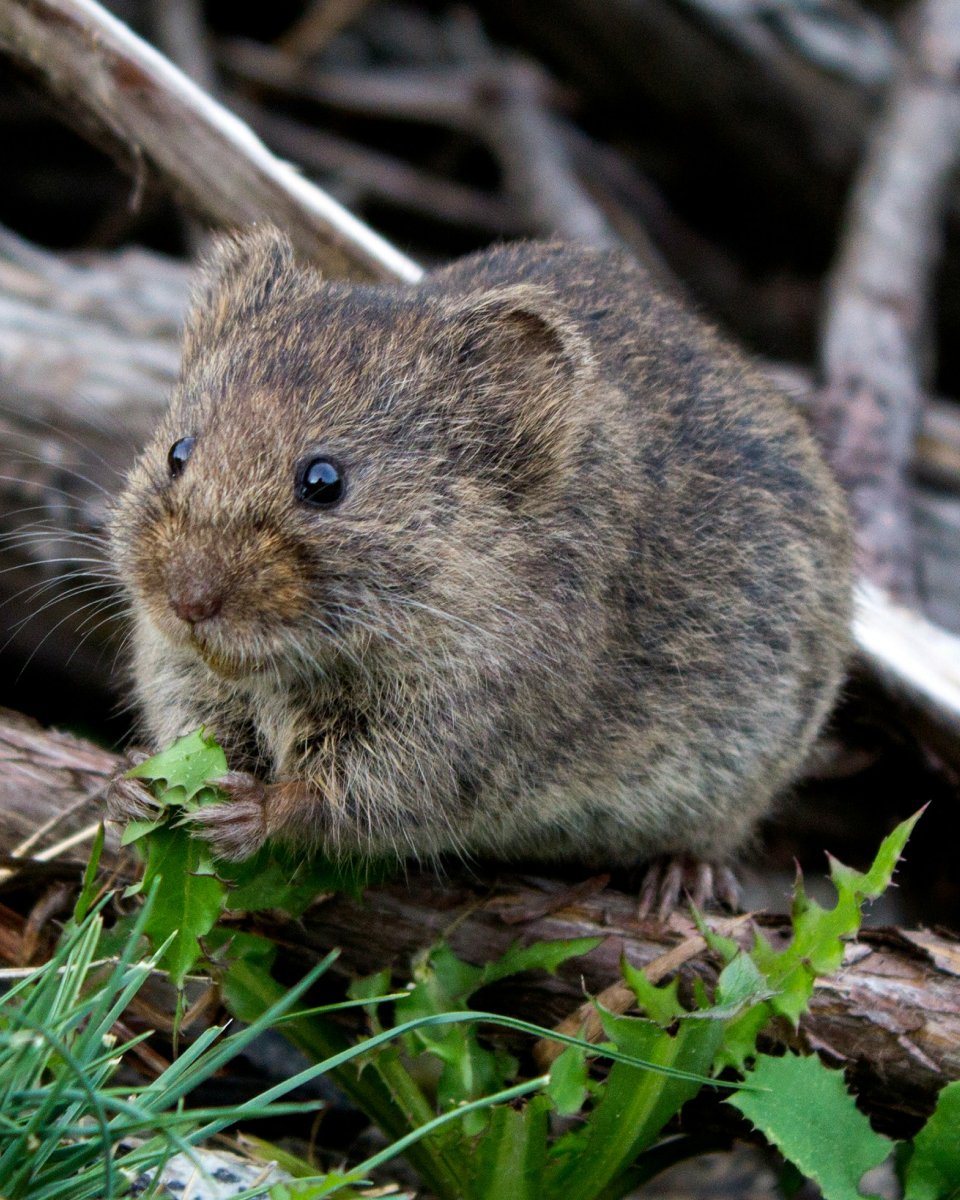
Photo by Ryan Stone
Adult Mus musculus typically weigh 20–40 g in wild populations; many laboratory strains are heavier due to selective breeding. Gestation is approximately 19–21 days with average litter sizes of 5–8 pups and several litters per year. Wild house mice form small territorial social groups with one or more dominant males, multiple females, and juveniles; laboratory housing uses small same-sex groups to manage inter-male aggression. Mice are nocturnal and crepuscular, relying heavily on olfaction and audition; burrowing, nesting, gnawing, and exploration are primary behavioural motivations. Thermoneutral zone is approximately 26–34°C; nesting material and group housing modify thermal comfort substantially, and barren cage conditions without nesting material are associated with documented thermoregulatory and welfare costs.
The hypothalamic-pituitary-adrenal stress axis is well characterised in mice, with strain-specific stress reactivity documented: BALB/c and C57BL/6J strains show quantitatively different emotionality, glucocorticoid profiles, and cognitive performance under stress, making strain identity a welfare-relevant variable as well as a research parameter. Mice demonstrate spatial learning, object recognition, operant conditioning, and strain-specific learning strategies. They are used as models for nociception, anxiety, depression, and psychiatric disorders — uses that presuppose, and are predicated on, functional pain perception and affective states.
The mouse’s position as the dominant research organism for genetic medicine is based on genome similarity to humans, rapid reproduction, small size, and the established toolkit for genetic manipulation. This toolkit includes pronuclear injection, ES cell targeting, CRISPR/Cas9 editing, and Cre-lox conditional systems. The scale of genetically modified mouse line production and maintenance — estimated at hundreds of thousands of distinct lines — has no equivalent in any other species in this database.
Lifecycle Summary
Mice are the most numerically significant research animal globally. An analysis of US institutional data estimated approximately 111 million rats and mice used annually in US biomedical research, with mice comprising more than 97% of that total — implying approximately 100 million mice per year in the US alone. USDA reporting in 2018 covered species other than rats and mice and listed approximately 780,000 animals, indicating that mice and rats constitute approximately 99.3% of mammals used in US research and are entirely absent from mandatory federal welfare reporting. In the EU, 9,237,542 animals were used in research in 2022, with mice consistently the predominant mammalian species across member states. The defining characteristic of laboratory mouse exploitation — absent in any other record in this database — is the extent and sophistication of genetic engineering: the mouse is the primary substrate for transgenic line generation, conditional gene knockouts, reporter constructs, xenograft tumour models, and humanised immune system research, with hundreds of thousands of distinct genetically modified lines generated since the 1980s. Beyond research, mice are also targeted at mass and unquantified scale in pest control operations using the same anticoagulant rodenticide and trapping systems documented in the Rats record.
Lifespan (Natural vs Exploited)
Wild and free-living M. musculus typically survive less than 6–18 months, with most individuals dying from predation, disease, competition, and environmental stress before reaching 1 year. Occasional individuals may reach approximately 2 years.
Indoor commensal mice in human structures without targeted control have estimated lifespans of approximately 1–2 years, reflecting reduced predation and seasonal stress but ongoing risks from control measures and disease.
Common inbred laboratory strains have maximum lifespans of approximately 2.5–3 years under specific-pathogen-free conditions. In practice, most research animals are euthanised well before natural senescence: at acute experimental endpoints (days to weeks), subchronic protocol endpoints (90 days), or at humane endpoints triggered by clinical signs. Only aging studies and carcinogenicity assays approach the full potential lifespan. Colony management culling — of surplus pups, incorrect genotypes, and retired breeders — kills large numbers before experimental allocation.
Pet mice in hobbyist settings typically live approximately 1.5–2.5 years, occasionally reaching 3–4 years.
Causes of early mortality in exploitation systems include protocol-mandated euthanasia, humane endpoint euthanasia from tumour burden, infection, or clinical deterioration, surgical complications, and colony management culling.
Exploitation Systems
Mice are exploited across four systems.
Biomedical and toxicological research. The dominant system globally by animal numbers. Laboratory mice function as experimental subjects for genetics, immunology, oncology, toxicology, neuroscience, infectious disease, pharmacology, and surgical training. The depth of genetic manipulation is the defining operational characteristic: transgenic lines carry inserted human or other genes; knockout and conditional knockout lines have targeted gene deletions; reporter lines express fluorescent or luminescent proteins under gene-specific promoters; humanised lines carry human immune system components generated through foetal liver and thymus transplantation or targeted gene insertion. Xenograft tumour models implant human cancer cell lines into immunocompromised mice — typically NOD-SCID or NSG strains. Each of these applications requires purpose-bred populations maintained in barrier or SPF conditions, generating large numbers of animals whose genotype is confirmed at weaning and who are then allocated to experimental cohorts or culled as surplus.
Regulatory toxicology and safety testing. Mice are the standard rodent species for acute, subchronic, chronic, reproductive, and carcinogenicity testing of pharmaceuticals, chemicals, pesticides, and consumer products under OECD and national test guidelines. The carcinogenicity bioassay — OECD TG 451 and 453 — uses mice and rats in parallel over 18–24 month studies, making it one of the longest-duration and highest-throughput exploitation protocols for any research animal.
Biotechnology and pharmaceutical production. Mice are used to generate hybridoma cell lines for monoclonal antibody production: immunised mice are euthanised, splenocytes are fused with myeloma cells, and the resulting hybridomas are selected and expanded for antibody production. This is a pharmaceutical manufacturing process as well as a research application; while recombinant production methods have replaced some mouse hybridoma use, the system remains in operation. Genetically modified mice expressing human genes or carrying human tumour xenografts generate preclinical pharmacological and toxicological data that underpin regulatory submissions for biologic drugs.
Pest control. Wild and commensal M. musculus are targeted in agricultural, food storage, residential, and conservation contexts using the same anticoagulant rodenticide and mechanical trap methods documented in the Rats record. Second-generation anticoagulants (brodifacoum, bromadiolone, difethialone, difenacoum) are used in buildings and agricultural settings; first-generation compounds (warfarin, chlorophacinone) where resistance patterns permit. Secondary poisoning of predators and scavengers is documented. No welfare regulation applies. Kill totals are not recorded. The scale of pest control killing is unknown but potentially far exceeds laboratory use globally.
Companion animal trade and feeder production. Fancy mice — selectively bred M. musculus variants — are sold as companion animals and show mice; feeder mice are produced as food for captive reptiles, raptors, and small carnivores, using size grades (pinkies, fuzzies, weaners, adults) with CO₂ or cervical dislocation as standard kill methods.
Living Conditions Across Systems
Laboratory housing. Static microisolator cages (approximately 67 in² / 432 cm² floor area) and individually ventilated cages (IVCs, approximately 77 in² / 497 cm²) are standard. One US institutional implementation of the Guide for the Care and Use of Laboratory Animals permits up to 5 mice under 25 g in the smaller cage, up to 6 mice under 25 g in the ventilated cage, or 4 adult mice ≥25 g — densities of approximately 86–99 cm² per animal. Breeding cages house one male with one or more females. Bedding (corncob, cellulose), nesting material (paper, cotton nestlets), and shelters are standard components; nesting material provision is welfare-critical for this species and its absence is associated with hypothermia stress and altered behaviour. Light-dark cycles are typically 12:12; temperature and humidity are controlled. IVCs reduce inter-cage olfactory contact and can increase background airflow noise relative to static cages.
Pest control environments. Wild mice occupy wall cavities, roof spaces, storage areas, agricultural buildings, and field margins with no deliberate human provisioning; exposure to baited traps and rodenticide bait stations constitutes the primary human-system interaction. No captive holding conditions apply.
Companion and feeder housing. Pet mice are typically housed in wire or plastic cages with multiple levels, bedding, and nesting material; no globally standardised minimum space exists. Feeder production uses rack systems with plastic tubs; published welfare data are limited.
Lifecycle Under Exploitation
Genetic Selection
The scope of Selective Breeding in laboratory mouse systems is without parallel in any other record in this database. Inbred strains — C57BL/6J, BALB/c, DBA/2J, FVB/N, 129 strains — are maintained through brother-sister mating to achieve near-complete genetic homozygosity, producing standardised biological replicates for experimental use. Outbred stocks — CD-1, Swiss Webster — are maintained as heterogeneous populations. Transgenic and genetically modified lines are generated through pronuclear injection of DNA constructs, ES cell homologous recombination, CRISPR/Cas9 editing, or Cre-lox conditional systems; each modification creates a new line requiring colony maintenance. Hundreds of thousands of distinct genetically modified lines have been generated globally. Health status classification — specific-pathogen-free, germ-free, barrier-maintained, defined flora — is a formal production attribute of laboratory mouse colonies with commercial and regulatory implications.
Reproduction
Timed mating (monogamous pair or polygamous harem), controlled breeding age and parity limits, superovulation of donor females with pregnant mare serum gonadotropin (PMSG) and human chorionic gonadotropin (hCG) for embryo generation, and embryo transfer into pseudopregnant recipients are used routinely for transgenic line generation and colony rederivation. Cryopreservation of sperm and embryos in liquid nitrogen provides long-term archiving of lines that are not in active use; rederivation from cryopreserved material is the standard route for line recovery and health status reset. Reproductive Cycle Manipulation via photoperiod and hormone induction is standard in breeding colonies.
Birth & Early Life
Pups are born altricial in nesting material in breeding cages; minimal disturbance during the first days reduces pup loss. Cross-fostering is used for genetically modified lines where maternal care may be impaired or for standardising litter sizes across experimental cohorts. Identification Marking via ear punch, ear notch, or tail tip clip — the latter also providing tissue for genotyping — is performed at or shortly after weaning at approximately postnatal day 21. Individual identification is required for experimental traceability.
Growth & Rearing
Post-weaning mice are housed in same-sex groups with ad libitum standard pelleted rodent chow and water; body weight trajectories are monitored for study eligibility windows. Colony management software tracks numbers per strain and age class; culling of surplus animals — incorrect genotypes, excess males from breeding, animals past experimental age windows — is a continuous operational activity at all research mouse facilities.
Production
The production phase spans experimental use: dosing by oral gavage, intraperitoneal, subcutaneous, or intravenous injection, surgical procedures including tumour implantation, telemeter insertion, cranial window preparation, and stereotaxic brain injection, behavioural assays, blood sampling, and imaging. Animal Experimentation is the defining practice of this stage. For hybridoma production, immunised mice are euthanised and splenocytes harvested for fusion — a single-endpoint process. Regulatory carcinogenicity bioassays run for 18–24 months with weekly health monitoring.
Transport
Commercial breeders — Charles River Laboratories, Jackson Laboratory, Envigo, Taconic — distribute mice to research facilities globally in filtered shipping containers with bedding, food, and hydration sources. Receiving facilities apply quarantine and health screening protocols before colony introduction. Germ-free and gnotobiotic mice require sterile transport containers. Cryopreserved material — sperm, embryos — is transported in liquid nitrogen shippers, enabling line distribution without live animal transport.
End of Life
CO₂ inhalation is the dominant batch euthanasia method at most facilities, delivered at controlled fill rates with secondary method confirmation (cervical dislocation or bilateral pneumothorax). CO₂ aversion in mice is documented: escape behaviour and stress responses occur before unconsciousness, and the method’s welfare profile is the subject of ongoing debate in laboratory animal science literature. Isoflurane overdose is used where CO₂ is contraindicated or where rapid induction is required. Cervical dislocation is used as a primary method for small mice under anaesthesia or as a secondary confirmation step; decapitation is used under specified conditions. Surplus pups too young for experimental use — including incorrect-genotype animals identified at weaning — are killed in large numbers as a routine colony management activity.
Processing
Post-mortem processing includes necropsy with organ collection (brain, liver, kidney, spleen, lymph nodes, gonads, and target organs per study protocol), tissue fixation in formalin for histopathology, preparation of single-cell suspensions from spleen and lymph nodes, blood collection by cardiac puncture, and tumour harvest for cell line propagation or molecular analysis. Samples are linked to experimental metadata and archived in biobanks. Carcasses are disposed of as biohazardous waste via incineration.
Chemical Medical Interventions
Anaesthetic agents used in mouse procedures include inhalational isoflurane and sevoflurane for induction and surgical maintenance, and injectable combinations — ketamine with xylazine or medetomidine — for protocols requiring injectable induction. Analgesics include buprenorphine (approximately 0.05–0.1 mg/kg subcutaneously), morphine, and hydromorphone as opioid analgesics, and NSAIDs — meloxicam, carprofen, ketoprofen — for peri- and post-operative pain management. Local anaesthetics include bupivacaine (up to 2 mg/kg at incision site) and liposomal bupivacaine (Nocita) for extended post-operative analgesia.
Antibiotics for post-operative or supportive care include enrofloxacin and amoxicillin under veterinary oversight. Prophylactic vaccination of mice is uncommon in standard SPF colonies; health management relies on barrier housing, sentinel programme monitoring, and elimination of detected pathogens by rederivation.
Superovulation protocols use pregnant mare serum gonadotropin (PMSG) followed by human chorionic gonadotropin (hCG) to increase egg yield from donor females for embryo generation and transgenic line work; this is a routine reproductive manipulation across all transgenic mouse facilities.
Surgical procedures include ovariectomy and orchiectomy for hormonal studies, tumour implantation (subcutaneous, orthotopic, intracranial), catheter and telemeter implantation, cranial window preparation, and stereotaxic brain injections for neuroscience research.
Pest control rodenticides are identical to those documented in the Rats record: first-generation anticoagulants (warfarin, chlorophacinone) and second-generation anticoagulants (brodifacoum, bromadiolone, difethialone, difenacoum), plus acute toxicants (zinc phosphide, cholecalciferol) where permitted. Resistance to some anticoagulants is documented in M. musculus populations in Europe; regulatory restrictions on outdoor SGAR use have been implemented in some jurisdictions.
Slaughter Processes
Laboratory euthanasia methods for mice mirror those documented for rats. CO₂ is the dominant batch method; its conditional acceptability under AVMA 2020 guidelines requires controlled fill rates and secondary method confirmation. The aversive quality of CO₂ for mice is evidenced by escape behaviour, vocalisation, and elevated corticosterone during pre-unconscious exposure. Isoflurane inhalation provides more rapid and less aversive induction but requires equipment and scavenging infrastructure. Cervical dislocation is used as a primary method for small mice and as a secondary method after anaesthesia or CO₂. Decapitation is used for specific applications requiring rapid tissue collection without anaesthetic-related changes.
The high volume of surplus pup and incorrect-genotype culling — a routine continuous activity across research mouse facilities globally — means that a substantial fraction of mice killed in research settings are never allocated to experimental protocols. This killing is poorly quantified in aggregate statistics and receives minimal regulatory attention in most jurisdictions.
Pest control killing is unregulated. Methods, welfare outcomes, and failure rates for snap traps and anticoagulant rodenticides as applied to mice are not systematically documented. The Rats record ECN notes that the 2002 US Farm Bill exclusion of rats and mice from AWA coverage removes the primary federal welfare mechanism applicable to these species in research; no equivalent federal welfare framework applies to pest control killing of any species.
Religious slaughter frameworks do not apply to mice in any documented system.
Slaughterhouse Labour Impact
Laboratory mouse work is performed by animal facility technicians, researchers, and veterinarians. A peer-reviewed survey of laboratory rodent facility personnel in Spain (PMC, 2021) documented substantial emotional impact associated with this work, with professional quality of life linked to perceived animal stress and pain levels, quality of enrichment provision, euthanasia methods used, and social support in the workplace. Psychological burden from repeated involvement in euthanasia and experimental procedures was identified as a structural feature of the role. This is the most specific published occupational psychological data for laboratory small rodent workers in any record in this database.
Allergen exposure is a significant occupational health risk in mouse facilities: mouse urinary proteins (Mus m 1) are potent respiratory allergens, and laboratory animal allergy (LAA) is documented in a substantial proportion of animal facility workers, with onset typically within the first two years of exposure. LAA can progress to occupational asthma; it is the primary occupational disease risk specific to mouse and rat facility work.
Pest control workers face rodenticide handling risks managed through PPE requirements; specific injury and health statistics for mouse pest control operations are not disaggregated from broader pest control sector data.
Scale & Prevalence
Research and testing: the most precise US estimate extrapolates from institutional data to approximately 111 million mice and rats annually in US biomedical research, with mice comprising more than 97% — implying approximately 100 million mice per year in the US alone (Science, reporting on peer-reviewed analysis). USDA Animal Welfare Act reporting in 2018 covered approximately 780,000 animals of other species, consistent with mice and rats constituting approximately 99.3% of mammals used; neither species is covered by AWA reporting requirements following the 2002 Farm Bill amendment. The EU reported 9,237,542 animals used across all species in 2022; mice are consistently the predominant mammalian species across EU member states. Major research-using countries include the US, China, the UK, Germany, and Japan.
Mice are likely the single most-used animal in biomedical research globally, and the extent of transgenic line generation and maintenance means that the population of mice living in research facilities at any given time — including colony animals not yet or never assigned to experiments — substantially exceeds the number used in procedures annually.
Pest control: global kill totals are not systematically recorded; house mice are pest targets in agricultural, residential, and food storage contexts worldwide without population-level kill accounting.
Companion and feeder systems: not separately reported in any national or international statistics.
Directional trend: expanding, driven by growth in genetic medicine, biologics development, and oncology research requiring humanised and xenograft mouse models.
Ecological Impact
Wild M. musculus are globally distributed invasive commensal rodents contributing to consumption and contamination of stored grain and foodstuffs, damage to infrastructure, and predation on native invertebrates and small vertebrates in island and sensitive continental ecosystems. On islands, house mouse predation on ground-nesting seabirds and their eggs and chicks is documented as a driver of population decline; island eradication campaigns have targeted mouse removal to protect endangered bird species.
Second-generation anticoagulant rodenticides used in pest control accumulate through food chains, with secondary poisoning of non-target predators and scavengers documented at scale, as noted in the Rats record. Regulatory restrictions on outdoor SGAR applications have been implemented in some EU member states and US states; enforcement and compliance are variable.
Laboratory mouse facilities generate waste streams of feed, bedding, carcasses for incineration, and potentially contaminated wastewater from facilities housing mice with infectious agents or exposed to experimental compounds. Facility-level environmental footprints are not reported species-specifically in public literature.
Language & Abstraction
Research and regulatory language positions mice as “model organisms,” “animal units,” “strains,” and “lines” — framings that emphasise standardisation, interchangeability, and technical specification over individual animal identity. Strain designations — “C57BL/6J,” “BALB/c,” “NOD-SCID” — function as precision quality descriptors, analogous to reagent lot numbers, that make the mouse’s genetic constitution a defined and purchasable specification. Colony management terms — “breeder,” “weanling,” “retired breeder,” “surplus animal” — describe life stages and dispositions within a production logic where animals transition between statuses according to breeding schedules and experimental windows.
“Humanised mouse” names the construct by its human component — the immune system, the tumour, the gene — rather than by the mouse that carries it. This naming convention foregrounds the human medicine application and backgrounds the mouse subject. “Xenograft model” similarly describes the human tumour cell implanted into an immunocompromised mouse; the mouse appears as the host environment rather than as the subject. “Knockout mouse” describes a genetic absence rather than an animal.
“Sacrifice” appears alongside “euthanasia” in research protocols and methods sections to describe planned killing at study endpoints. Unlike ‘euthanasia’ — which frames death as serving the animal — ‘sacrifice’
positions the death as a contribution to scientific knowledge, framing it within the value structure of the research rather than the experience of the individual mouse. The two terms are used interchangeably in some contexts and distinctly in others, with neither consistently applied.
The 2002 US Farm Bill amendment’s removal of rats and mice bred for research from the definition of “animal” under the Animal Welfare Act is the legislative codification of the broader exclusion of these species from standard welfare oversight language. In AWA reporting statistics, the category “all other covered species” appears alongside the implicit non-category of the rodents that constitute approximately 99% of animals used; their absence from the data is a structured absence rather than an incidental gap.
In pest control, “structural pest,” “commensal rodent,” “target species,” and “rodent pressure” position mice as a management problem defined by their impact on human infrastructure and food systems. The same species appears in research contexts as a precision biological instrument and in pest contexts as an infrastructure threat — two framings that share no language and imply radically different institutional relationships to the animal.
Terminology
Model organism, laboratory mouse, inbred strain, outbred stock, transgenic line, knockout mouse, conditional knockout, reporter line, humanised mouse, xenograft model, breeding colony, SPF colony, barrier unit, germ-free mouse, gnotobiotic mouse, breeder, dam, sire, weanling, juvenile, adult, retired breeder, surplus animal, animal unit, cage unit, rodent, small rodent, pest, commensal rodent, structural pest, target rodent, non-target species, rodenticide, bait station, block bait, soft bait, FGAR, SGAR, CO₂ euthanasia, cervical dislocation, decapitation, sacrifice, humane endpoint, procedure, experimental unit, test animal, control group, treatment group, sentinel mouse, stock mouse, feeder mouse, pinkie, fuzzy.
Within The System
Developments
Report a development: contact@systemicexploitation.org
Notice an inaccuracy or omission?
If you believe information on this page is incorrect, incomplete, or missing important context, you may submit a suggested correction for review.