
Guinea Pigs
Scientific Name:
Cavia porcellus
Scope
Covers domesticated guinea pig Cavia porcellus (Linnaeus 1758), order Rodentia, family Caviidae, across three exploitation systems: meat production in the Andean region (“cuy”), laboratory and biomedical research, and the companion animal trade. Includes three production groupings: native/criollo lines (locally adapted, lower growth, higher disease resistance), improved meat-type lines bred for production traits (Peru, Andina, Inti breeds), and pet/ornamental lines selected for coat and colour. Wild congeners — principally Cavia tschudii — are referenced for biological comparison only. Excludes feral populations, opportunistic hunting of wild Cavia spp., and purely conservation or zoological display populations.
Species Context
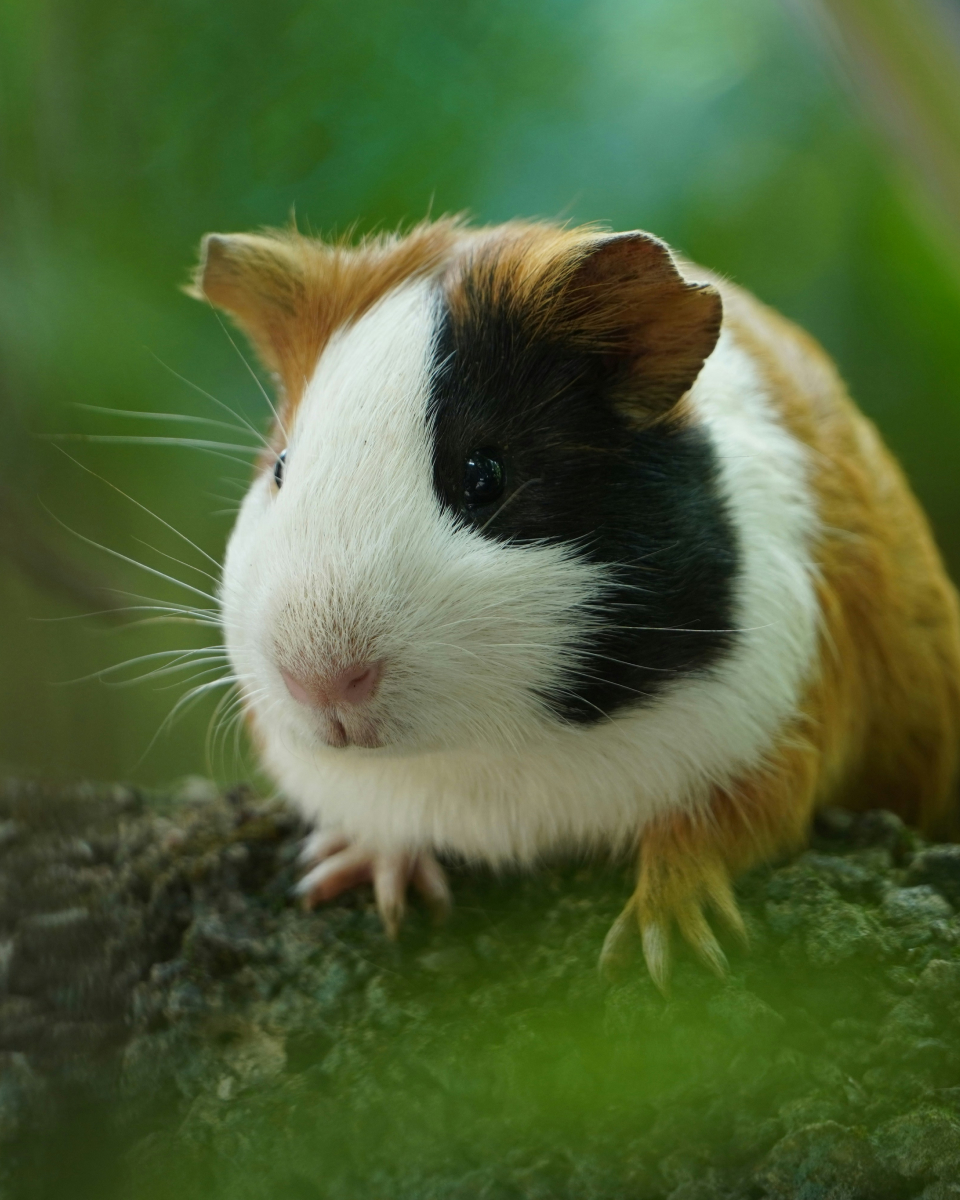
Photo by Amjith S
Cavia porcellus is a small hystricomorph rodent, typically 700–1,200 g in pet and laboratory settings; improved meat lines often exceed 1,200–1,500 g at slaughter. Guinea pigs are crepuscular prey species that form stable social groups of 5–10 individuals in free-living conditions, with strong social cohesion, frequent affiliative contact, and reliance on conspecifics for vigilance. They possess an extensive vocal repertoire — wheeks, purrs, chirps, rumbling — used for food anticipation, alarm, courtship, and social contact, alongside olfactory communication via sebaceous scent glands. They cannot jump or climb effectively and rely on running and hiding as primary escape behaviours.
A species-specific nutritional requirement distinguishes guinea pigs from other records in this database: they lack the enzyme gulonolactone oxidase and cannot synthesise vitamin C endogenously. Deficiency produces scurvy-like clinical disease. This dependency requires dietary supplementation in all captive systems and historically made guinea pigs the dominant model species for early nutritional and infectious disease research.
Stress responses are pronounced in this prey species: freezing, hiding, piloerection, reduced food intake, stereotypic running, and altered corticosterone levels are documented indicators. Guinea pigs are particularly sensitive to loud noise, sudden handling, and predator cues; laboratory housing guidelines prioritise mitigation of these stressors. Cognitive capacities include spatial learning and memory in maze paradigms, social recognition, and conditioned responses to auditory and visual cues. Nociceptive pathways and pain processing are well described; guinea pigs are used as models for hearing, respiratory, and immune research in ways that imply functional sensory and affective capacities.
Lifecycle Summary
Guinea pig exploitation operates across three structurally distinct systems that produce radically different lifespan outcomes for individual animals. In Andean meat production, improved lines are slaughtered at 3–6 months of age — less than one tenth of the species’ potential lifespan of 4–8 years. In laboratory settings, most animals are euthanised at experimental endpoints between a few weeks and approximately 2 years of age. In companion settings, British VetCompass data (n=675) document a mean lifespan of 4.02 years. The Andean cuy system dominates numerically: Peru alone reportedly slaughters approximately 65 million guinea pigs annually, producing approximately 16,500 tonnes of meat representing approximately 6.5% of total Peruvian meat production, though these figures derive from grey and NGO literature rather than harmonised national statistics. Guinea pigs are biologically distinctive in being unable to synthesise vitamin C — a species-specific nutritional dependency that requires supplementation across all captive systems and historically made the species central to scurvy and nutritional research.
Lifespan (Natural vs Exploited)
British pet guinea pigs have a documented mean lifespan of 4.02 years (95% CI 3.88–4.17, n=675) and median of 4.03 years based on VetCompass data (PeerJ 2025); the range extends to approximately 10 years. General husbandry and zoo sources report typical pet lifespan of 4–8 years under adequate care. Increasing mortality hazard is documented after 3–4 years, associated with dental disease, respiratory disease, neoplasia, and age-related conditions.
In laboratory systems, breeders are typically maintained for 6–18 months before culling; experimental animals are euthanised between a few weeks and 2–3 years depending on protocol endpoints. Few individuals reach the upper end of natural lifespan due to protocol mandates.
In intensive Andean meat production, improved lines are slaughtered at 3–6 months at body weights of approximately 0.8–1.2 kg. Backyard and low-input systems slaughter somewhat later — up to approximately 8–12 months — when animals reach desired weight. This represents a lifespan of less than one-tenth of pet potential.
Primary causes of mortality in meat systems include planned early slaughter, infectious disease (pasteurellosis, salmonellosis, parasitism), malnutrition, and predation in backyard settings. In laboratory systems: protocol-mandated euthanasia, anaesthetic complications, respiratory disease, and trauma. In pets: chronic dental disease, respiratory disease, and neoplasia.
Exploitation Systems
Guinea pig exploitation operates across three systems.
Meat production — Andean cuy systems. The primary food production system, concentrated in the Andean highlands of Peru, Bolivia, Ecuador, and Colombia, with Andean diaspora communities extending the market to other regions. Three production intensities are documented. Backyard systems keep guinea pigs in household rooms or hutches in mixed-sex groups on crop residues, kitchen by-products, and forage grasses; they are the traditional production model and remain dominant numerically in rural areas. Semi-intensive systems use pens, hutches, or cage batteries with partial supplemental feeding, separation of breeding and fattening cohorts, and some veterinary management. Intensive commercial systems use stackable cage batteries or masonry pen structures with improved lines, formulated feeds, controlled breeding programmes, and separation of breeding, growing, and fattening stages. Animals are slaughtered on-farm, at local markets, or at small facilities; carcasses are typically cooked and presented whole — head, limbs, and skin intact — using traditional preparation methods including frying, roasting, grilling, and pachamanca. Manure is used as agricultural fertiliser or in biogas systems in integrated farming operations.
Laboratory and biomedical research. Guinea pigs are used as experimental models for tuberculosis and vaccine testing, otology and audiology, respiratory disease and allergy models, pharmacology, and reproductive physiology. Their role in nutritional research — historically central to the discovery of vitamin C — has been largely superseded, but they remain the preferred or required model for specific immunological and physiological contexts where their unique biological characteristics are relevant. Experimental mechanisms include vaccination and infection challenge, drug and chemical exposure, surgical procedures, and collection of tissues, organs, and fluids for ex vivo analysis.
Companion animal trade. Guinea pigs are sold through pet shops, breeders, and rescue organisations as companion animals in Europe, North America, Australia, and other high-income regions. In Britain approximately 700,000 are estimated to be kept as pets. They also appear in educational contexts in schools and informal petting environments. Pet lines are selected for coat length, colour, and body morphology — including long-hair (Peruvian, Silkie), rosette (Abyssinian), and hairless (Skinny pig) variants — rather than production traits.
Living Conditions Across Systems
Laboratory housing. Australian NSW DPI guidelines specify minimum floor areas per animal: for single-housed individuals 250–550 g: 900 cm²; above 550 g: 1,000 cm²; group-housed 250–550 g: 450 cm² per animal; above 550 g: 600 cm² per animal; breeding female with litter: 1,200 cm²; harem groups: 1,000 cm² per female. Cages require solid floors with absorbent bedding (wood shavings, paper), overhead shelters or tunnels, ad libitum hay for gut motility and dental wear, and elevated feed hoppers. Wire floors are avoided due to pododermatitis risk. Social housing is recommended; single housing requires ethics committee justification. Environmental controls specify 12:12 light-dark cycles, approximately 18–24°C, 40–70% relative humidity, acoustic dampening, and minimisation of odour and vibration.
Andean meat production. Backyard systems use household rooms or simple hutches with earth or concrete floors, basic shelters, and variable bedding; mixed-sex groups of 5–20 animals in a few square metres are typical. Semi-intensive and intensive operations use raised wooden or wire-mesh cages or masonry pens; improved lines are kept at higher densities with formulated diets and separation of functional cohorts. Environmental management varies significantly — limited temperature control in smallholder settings; improvement projects introduce better ventilation, roofing, and manure management to reduce ammonia and humidity. Quantitative stocking density data from surveys vary and are not standardised.
Companion animal housing. Typical commercial housing uses plastic or wire cages of approximately 0.7–1.2 m length with bedding and hideouts. Zoo and welfare organisation guidelines recommend larger floor areas, solid floors, and group housing with at least two animals — consistent with the species’ strong social needs. Pet housing frequently falls below recommended minimum areas in practice.
Lifecycle Under Exploitation
Genetic Selection
Three parallel selection objectives apply across systems. In meat production, agricultural research institutes and breeding companies maintain nucleus herds of improved lines — Peru, Andina, Inti — selected for growth rate, feed conversion, litter size, and survivability through performance testing and line crossing. In laboratory settings, closed colonies maintain specific genetic backgrounds through outbred stocks (e.g. Hartley strain) and inbred lines selected for research traits. In the pet trade, Selective Breeding targets coat length, colour, and body morphology rather than production performance.
Reproduction
Meat production uses controlled harem mating — one male to 4–10 females — in dedicated breeding pens, with breeding intervals managed to maintain continuous production. Gestation is approximately 59–72 days; average litter size in improved lines is approximately 3–4 pups, higher than in native lines. Laboratory settings use timed monogamous or harem matings with breeding records managed to control genetic background; pregnant females are moved to maternity cages. Reproductive Cycle Manipulation through controlled mating and photoperiod management applies in intensive production and laboratory contexts.
Birth & Early Life
Guinea pigs are precocial — fully furred with open eyes and erupted teeth, beginning solid food within days of birth. Birth (kindling) occurs in maternity cages or pens with nesting material. Early mortality is linked to hypothermia, crushing, and inadequate milk access. Pups remain with the dam until weaning at approximately 14–21 days — earlier than the species’ natural weaning timeline. Premature Weaning and Separation at 14–21 days is standard across meat and laboratory systems.
Growth & Rearing
In meat production, post-weaning juveniles are moved to grower pens or cages and fed forage plus concentrates; growth is monitored until target slaughter weight is reached at 3–6 months. In laboratory systems, juveniles are weaned at approximately 3 weeks and group-housed before allocation to experimental cohorts. Pet juveniles are sold at 3–6 weeks by breeders and retailers. Selective Culling removes underperformers and surplus animals across meat and laboratory systems.
Production
In meat production, the production phase is fattening to slaughter weight: ration formulation, health surveillance including parasite control and vaccination where practised, and culling of underperforming individuals. In laboratory systems, production consists of experimental use — vaccination, infection challenge, drug dosing, surgical procedures, and endpoint collection. Growth Acceleration through formulated high-protein feeds and optimised ration management is central to intensive meat production systems.
Transport
Meat system animals are transported from farms to local markets or slaughter facilities in crates, sacks, or cages; quantitative data on transport durations and conditions are sparse. Laboratory animals are transported between breeding facilities and research institutions in ventilated transport boxes under regulatory frameworks governing temperature, ventilation, and density. Pet juveniles move from breeders to wholesalers to retail outlets in cardboard or plastic carriers.
End of Life
In meat production, slaughter occurs on-farm, at local markets, or at small processing facilities when target weight or age is reached. Documented methods include cervical dislocation, blunt force trauma, exsanguination by neck or thoracic cutting, and decapitation; pre-slaughter stunning is not documented as standard practice in traditional smallholder or market slaughter. Industrialised slaughter lines for guinea pigs are not established; throughput occurs through decentralised small-scale individual handling. Hair removal by scalding or singeing with open flame precedes evisceration and cooking.
In laboratory settings, euthanasia at experimental endpoints follows institutional guidelines: overdose of barbiturate or other anaesthetic agents, often following inhalation or injectable anaesthesia. Physical methods including decapitation may be used with prior anaesthesia.
Processing
Meat carcasses are dehaired, eviscerated, and cooked whole — fried, roasted, grilled, or prepared as pachamanca — often with head, limbs, and skin intact. Small-scale processing with minimal mechanisation is standard. Laboratory and pet carcasses are disposed of as biological or municipal waste via incineration, rendering, or burial according to local regulations; no food processing chain applies.
Chemical Medical Interventions
Vitamin C supplementation is a non-negotiable species requirement in all captive systems. Guinea pigs lack gulonolactone oxidase and cannot synthesise ascorbic acid endogenously; dietary provision via fortified pellets, fresh vegetables, or water-soluble supplements is required daily. Deficiency produces anorexia, weight loss, dental and gingival disease, and ultimately fatal scurvy-like syndrome. This species-specific dependency has no parallel in any other record in this database and must be actively managed in meat, laboratory, and pet systems alike.
Anaesthetic agents used in laboratory and veterinary settings include injectable ketamine-xylazine combinations at various dosages and inhalational agents — isoflurane, halothane, enflurane, desflurane, sevoflurane. Inhalational agents are often preferred in clinical and research practice due to variable and sometimes unpredictable responses to injectable protocols in this species. Analgesics include opioids (buprenorphine), NSAIDs (meloxicam, carprofen), and local anaesthetics, applied under institutional protocols.
Antiparasitic treatments include ivermectin and similar macrocyclic lactones for ecto- and endoparasites in both meat and pet systems. Antibiotics used in pet and laboratory veterinary practice include trimethoprim-sulfonamide combinations and fluoroquinolones; antibiotic selection in guinea pigs requires care due to susceptibility to antibiotic-associated dysbiosis — many antibiotics are toxic to guinea pigs at standard dosages due to disruption of caecal microflora.
Vaccination against pasteurellosis and other bacterial diseases is promoted in some Andean production programmes using killed or attenuated vaccines; specific products vary by country and are not standardised internationally.
Experimental chemical exposures — pharmaceuticals, toxicological compounds, biologics — are applied across research protocols for efficacy and safety testing.
Surgical procedures in laboratory and veterinary contexts include ovariohysterectomy, castration, dental procedures, device implantation, and experimental surgeries; all require adapted protocols given species-specific anaesthetic sensitivities.
Slaughter Processes
Slaughter of guinea pigs in Andean meat production occurs at small scale, without standardised stunning requirements, and through a variety of manual methods: cervical dislocation, blunt force trauma to the head, exsanguination by neck or thoracic cutting, and decapitation. These methods are applied by smallholder farmers, market vendors, or small processing operators without access to or regulatory requirement for commercial stunning equipment. Pre-slaughter stunning is not documented as standard or legally required practice in the Andean production context. Hair removal after killing is achieved by scalding in hot water or singeing with an open flame.
Industrialised slaughter infrastructure for guinea pigs does not exist in the literature; throughput at individual operations ranges from a few animals at household level to small batches at market scale. Specific failure rate data for killing methods are not documented.
In laboratory contexts, euthanasia is performed by trained personnel under institutional guidelines — primarily overdose anaesthesia, with physical methods (decapitation, pithing) requiring prior unconsciousness.
Religious slaughter provisions specifically addressing guinea pigs are not formally codified in major religious slaughter frameworks; their slaughter is typically categorised as traditional or ethnic food production rather than integrated into standardised halal or kosher frameworks.
Slaughterhouse Labour Impact
Guinea pig slaughter in the Andean meat system is predominantly family-based or small-enterprise in scale; specific occupational health data for cuy slaughter workers are not available in peer-reviewed literature. Operations are decentralised and typically performed by household members, market vendors, or small producers rather than slaughterhouse workers in the industrial sense.
A systematic review of slaughterhouse worker mental health cited in the research base documents higher prevalence of depression, anxiety, and violence-supportive attitudes among slaughter workers compared with other occupational groups. This finding is from the broader slaughterhouse literature and is not guinea pig-specific; its applicability to small-scale family cuy operations is indirect given the structural differences in scale, mechanisation, and labour context.
In laboratory settings, staff performing euthanasia include animal facility technicians and researchers; occupational health literature for laboratory animal workers documents chemical exposure risks (anaesthetics, disinfectants), ergonomic hazards, and psychological impacts of routine animal killing, though species-specific data for guinea pig facilities are not consolidated.
Scale & Prevalence
Andean meat production: Peru is the dominant producing country. Commonly cited figures — approximately 21 million guinea pigs maintained in Peru and approximately 65 million slaughtered annually producing approximately 16,500 tonnes of meat representing approximately 6.5% of total Peruvian meat production — are widely referenced but derive from NGO and grey literature (AgriCultures Network and related sources) rather than FAOSTAT or harmonised national statistics. Production is concentrated in the Andean highlands of Peru, Bolivia, Ecuador, and Colombia. The trend is expansion: promotion as a high-protein, low-input livestock option is driving increased commercialisation and urban market development across Andean countries.
Laboratory use: historically substantial for vaccine testing and infectious disease research; partially replaced by mice and rats in many applications with alternatives development, but guinea pigs remain in use for specific immunological, otological, and respiratory models. Global annual numbers used in research are not consolidated; they are aggregated under “rodents” in most national statistics without species-level breakdown.
Companion animals: approximately 700,000 estimated in Britain based on VetCompass data. Pet ownership is common across Europe, North America, and Australia; precise global counts are not available but pet populations likely number in the millions globally. The trend is stable to increasing in high-income markets.
Ecological Impact
Andean cuy production is structurally integrated with smallholder farming: guinea pigs consume crop residues, forage grasses, and kitchen by-products rather than requiring dedicated feed crop production, and they occupy existing household structures rather than requiring land conversion. This production model has a substantially smaller land and resource footprint per unit of protein than cattle, pig, or intensive poultry systems. Manure is reused as agricultural fertiliser or in integrated biogas systems.
Intensive and improved systems use formulated feed with some purchased inputs, increasing the resource footprint, but still operating at smaller spatial scale than equivalent protein output from larger livestock. Specific greenhouse gas emissions per kilogram of guinea pig meat are not available from published lifecycle assessments; qualitative extension and development assessments position cuy as lower-emission than ruminants per animal, but per-kilogram product comparisons are absent from peer-reviewed literature.
Because production is embedded in existing smallholder systems rather than requiring new land conversion, cuy production is not documented as a driver of deforestation or habitat loss; this assessment is based on qualitative development organisation analysis rather than large-scale spatial analysis.
Laboratory and pet system ecological impacts are tied to facility energy use, feed and bedding production, and waste disposal; species-specific lifecycle assessment data are not available.
Language & Abstraction
In Andean meat systems, guinea pigs are designated “cuy” (Spanish) or local indigenous terms, functioning as standard product names that position the animal within a specific regional food culture. Production stages are described in livestock terminology — “reproductores” (breeders), “engorde” (fattening), “cuy de carne” (meat guinea pig), “pie de cría” (breeding stock) — that integrates guinea pig production into standard agricultural management language. In development discourse, cuy appear as “micro-livestock,” “small animal protein source,” and “climate-friendly livestock” — framings that foreground efficiency and income generation while positioning them within the productivity logic of livestock development programs.
Product and dish names — “cuy chactado,” “cuy frito,” “cuy al horno” — identify preparation method and cultural context without reference to production system, lifespan, or living conditions. The whole-carcass presentation in many traditional preparations — head, limbs, and skin visible — is unusual among consumer food cultures in high-income countries and generates a distinct consumer interface with the source animal that differs from the fragmented and abstracted product forms typical of industrial meat.
In laboratory contexts, standard research language positions guinea pigs as “laboratory rodents,” “experimental models,” or “subjects” identified by strain code (e.g. “Hartley” or “Strain 13”), embedding them in the same abstraction framework as zebrafish and other research species. The “guinea pig” idiom in popular usage — “to be someone’s guinea pig” — has become synonymous in English with being an experimental subject, a linguistic trace of the species’ historical centrality to biomedical research that is now largely detached from the current research reality.
In companion contexts, guinea pigs are “pocket pets,” “small mammals,” or “starter pets” — framings that emphasise manageability, accessibility, and lower care demands than dogs or cats. These framings function to position guinea pigs as lower-welfare-investment companions, which contrasts with the specific and demanding husbandry requirements (vitamin C, social housing, large floor space, hay provision) that welfare guidelines document.
Terminology
Cuy, cuyes, Cavia porcellus, nativo, criollo, mejorado, línea mejorada, raza Peru, raza Andina, raza Inti, reproductor, reproductores, pie de cría, vientre, semental, engorde, ceba, levante, destete, gazapo, gazapos, camada, línea de carne, cuy de carne, cuy mejorado, cuy de engorde, animal de laboratorio, rodentia de laboratorio, modelo animal, sujeto experimental, stock Hartley, cepa, línea experimental, mascota, small mammal, pocket pet, pet line, pet-type, carcasa de cuy, carne de cuy, cuy fresco, cuy beneficiado, cuy faenado, cuy chactado, cuy frito, cuy al horno, pachamanca de cuy, cuero de cuy, estiércol de cuy.
Within The System
Developments
Report a development: contact@systemicexploitation.org
Notice an inaccuracy or omission?
If you believe information on this page is incorrect, incomplete, or missing important context, you may submit a suggested correction for review.