
Eels
Scientific Name:
Anguilla anguilla / Anguilla japonica / Anguilla rostrata
Scope
Covers catadromous freshwater eels of genus Anguilla used in capture fisheries and aquaculture, principally the four commercially exploited species: Japanese eel (Anguilla japonica), European eel (A. anguilla), American eel (A. rostrata), and tropical species A. bicolor and A. marmorata. Includes wild populations harvested at glass eel, elver, yellow eel, and silver eel stages; capture-based aquaculture and grow-out operations receiving wild-caught seed; and experimental hatchery systems. Excludes non-Anguillid eels — moray eels (Muraenidae), conger eels (Congridae), swamp eels (Synbranchidae) — ornamental eel-like fish, and research laboratory use outside food and aquaculture contexts.
A defining structural characteristic of this record: no closed commercial life cycle exists for Anguilla spp. at scale. All farmed eels enter production systems as wild-caught glass eels or elvers; experimental hatcheries have achieved artificial spawning but have not yet replaced wild capture as the dominant seed source. The record’s lifecycle structure reflects this dependency throughout.
Species Context
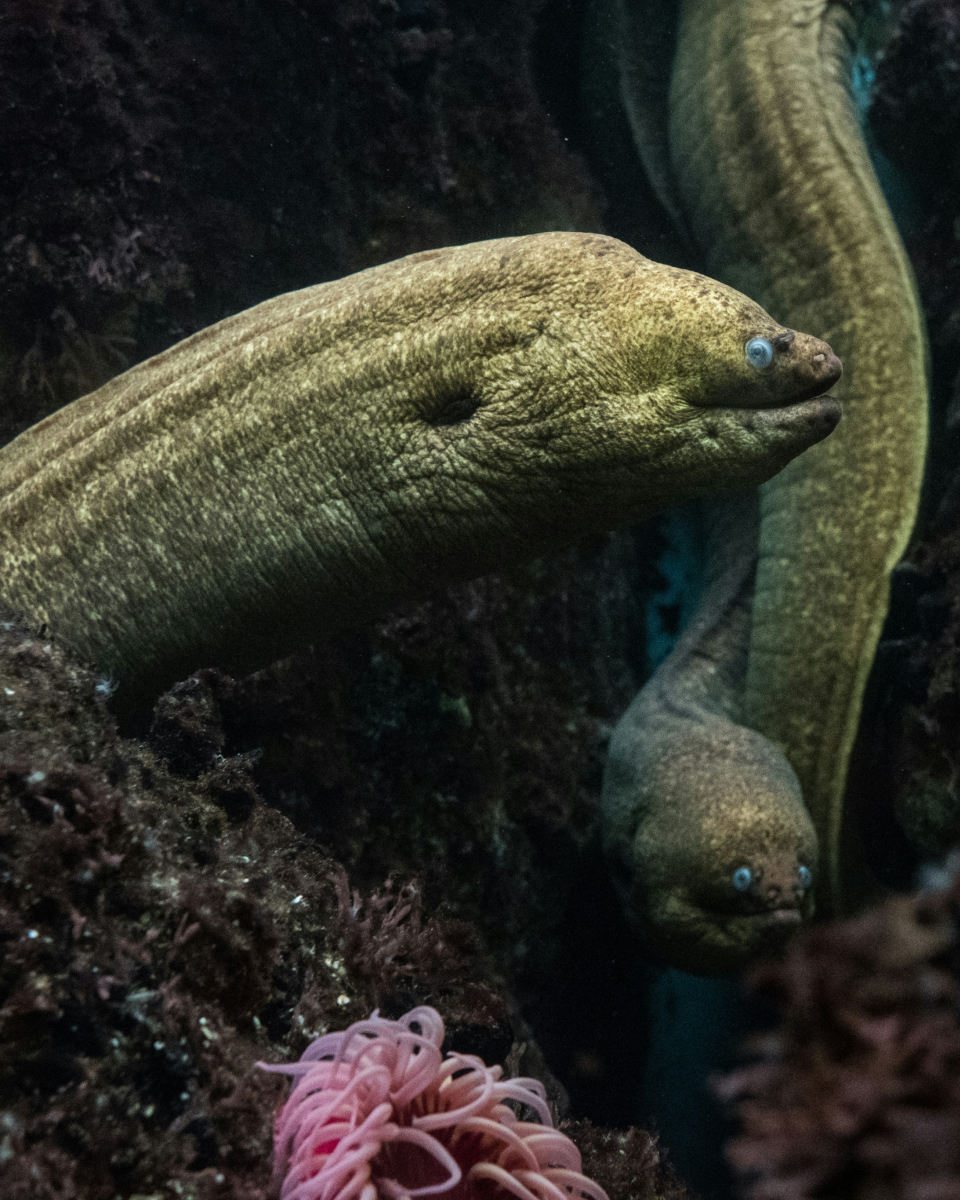
Photo by Lance Anderson
Anguilla spp. are long-lived, catadromous teleosts with complex life cycles: oceanic leptocephalus larvae drift in ocean currents for months to years before metamorphosing into glass eels approaching continental shelves; glass eels recruit to estuaries and rivers and transition to the yellow eel growth phase in freshwater and brackish habitats; mature silver eels migrate to oceanic spawning grounds. European eels form a single panmictic stock distributed across Europe and North Africa, with regional variation in growth rates, sex ratios, and age at maturation.
Eels are euryhaline, tolerating fresh to marine salinities. Temperature optima for culture are typically 23–28°C for Japanese and tropical eel species. Eels show benthic or demersal behaviour, strong preference for shelters and substrates, and nocturnal or crepuscular activity. In farm tanks, they aggregate in pipes, artificial shelters, or tank corners. Wild yellow eels are solitary to loosely aggregated; density-dependent effects on growth and sex differentiation have been documented in European eel, with higher densities associated with male-biased populations.
As teleost fish, Anguilla spp. possess functional nociceptors, endogenous opioid systems, and central processing pathways associated with pain. Fish demonstrate avoidance learning, altered behaviour following noxious stimuli, and responses modulated by analgesics — evidence meeting standard scientific criteria for sentience and pain perception. Cortisol elevation, reduced feeding, and behavioural hyperactivity are documented stress indicators in eel aquaculture. Species-specific cognitive testing is less extensive than in model teleosts.
Lifecycle Summary
Eel exploitation operates across two interconnected systems: wild capture fisheries targeting early life stages for aquaculture seed and later stages for direct human consumption, and capture-based aquaculture producing the majority of global eel supply. Global eel production fluctuated between approximately 140,000 and 275,000 tonnes annually from 2000 to 2017; China has become the dominant producer, with Taiwan, Japan, and Southeast Asian countries contributing additional significant volumes. East Asian production is overwhelmingly oriented toward kabayaki — grilled, sauced eel fillet — as the primary consumer product.
The industry’s structural dependency on wild glass eel capture creates a systemic conservation conflict. Anguilla anguilla is listed as Critically Endangered by the IUCN; annual reported European glass eel catches fell from approximately 494 tonnes in 1994 to approximately 198 tonnes in 2004. In addition to legal harvest, an estimated 20–50 tonnes of European glass eels are smuggled to Asian aquaculture operations annually — representing, at individual animal level, approximately 67–167 million individual eels per year in illegal trade alone given glass eel body mass of approximately 0.3 g. EU trade restrictions and the EU Eel Regulation constrain legal European production while illegal supply chains persist.
Lifespan (Natural vs Exploited)
European eel maximum recorded age in the wild is 85 years, with typical maturation and spawning migration at 7–25 or more years depending on region, sex, and local conditions. Japanese and tropical eel species have shorter typical lifespans but equally complex catadromous cycles.
In capture fisheries, yellow and silver eels are harvested at typically 3–15 years of age for European and American species, depending on growth conditions and management regimes.
In capture-based aquaculture, glass eels are caught at a few months post-metamorphosis and introduced to farms. Grow-out to slaughter weight of 150–300 g — or higher for kabayaki markets requiring larger fish — typically takes 1–3 years, placing total farm lifespan well below a fraction of wild potential. Capture-based aquaculture yellow eels on-grown may be held from months to a few years before slaughter; total lifespan in this system rarely exceeds 10 years.
Primary causes of mortality in farmed systems include disease outbreaks (edwardsiellosis caused by Edwardsiella tarda, vibriosis, Aeromonas infections), water quality failures including ammonia accumulation, low dissolved oxygen, and elevated CO₂ — particularly in systems using paste feeds — and handling stress during grading, transport, and slaughter.
Exploitation Systems
Eel exploitation operates across two structurally connected systems.
Wild capture fisheries. Three target categories are commercially significant. Glass eel and elver fisheries harvest early-stage juveniles from estuaries and river mouths using fyke nets, dip nets, and traps; the primary function is supplying seed to aquaculture operations, not direct human consumption. Approximately 20–50 tonnes of European glass eels are additionally smuggled annually from European capture to Asian farms outside legal supply chains. Yellow eel fisheries harvest continental-phase eels using fyke nets, eel pots, traps, weirs, and seine nets for direct human consumption — smoked, fresh, and processed products. Silver eel fisheries intercept maturing eels on spawning migrations using downstream traps and weirs, supplying markets for smoked and fresh eel.
Capture-based aquaculture. Wild-caught glass eels and elvers are transferred to farm systems for grow-out to market size. System types include earthen ponds (semi-intensive, historically dominant in Japan and parts of Europe), concrete tanks and raceways (intensive, prevalent in East Asia), and recirculating aquaculture systems (RAS; intensive, increasingly significant in Europe and East Asia). China is the largest producer, operating primarily intensive tank and RAS systems oriented toward kabayaki export and domestic markets. Experimental hatcheries using hormone-induced maturation and controlled larval rearing exist but have not displaced wild capture as the seed source for commercial production.
Downstream product flows from aquaculture and wild capture include live eels for direct sale, kabayaki (grilled sauced eel fillet, the dominant East Asian commercial product), smoked eel (European markets), frozen and chilled whole eels, and processed fillets. Processing by-products — heads, frames, viscera — are rendered into fishmeal and fish oil. Eel skin is used in limited speciality leather applications.
Illegal trade. European glass eel smuggling to Asian farms — estimated at 20–50 tonnes annually — constitutes a materially significant unrecorded supply channel. This flow is not captured in FAO production statistics and represents additional fishing mortality on an IUCN Critically Endangered species beyond documented legal harvest volumes.
Living Conditions Across Systems
Earthen ponds. Larger surface areas with earthen substrate and variable water quality managed via paddlewheel or diffuser aeration. Stocking densities in grow-out typically 5–20 kg/m³ depending on aeration capacity and feeding regime. Natural lighting; limited structural complexity; human interaction centred on feeding and sampling.
Concrete tanks and raceways. Intensive indoor or outdoor systems with continuous water flow or partial recirculation. Smooth walls, limited structure, artificial lighting. Grow-out stocking densities can exceed 50 kg/m³ under high oxygenation in intensive operations. Regular feeding with paste or pellet feeds; routine monitoring of dissolved oxygen, pH, ammonia, and nitrite.
Recirculating aquaculture systems. Highest level of water chemistry and temperature control; mechanical and biological filtration, degassing, and protein skimming. Nursery RAS trials for A. bicolor bicolor identified 5 kg/m³ as optimal for elver performance; commercial grow-out operates at higher densities subject to system capacity.
A welfare-critical operational distinction in eel RAS is feed type. Paste feeds — historically standard in eel farming — break down rapidly in water, generating organic solids that disrupt biofiltration, promote heterotrophic bacterial proliferation, deplete dissolved oxygen, and elevate CO₂. This creates a mutually reinforcing cycle of water quality degradation, metabolic stress, and increased pathogen susceptibility. Floating extruded pellets substantially reduce solids accumulation and improve water quality. The transition from paste to pellet feeds is documented to reduce water quality degradation, pathogen susceptibility, and associated mortality; paste feeds remain in use in some operations.
Provision of pipes or artificial shelters in tanks reduces aggressive interactions and improves volume utilisation. Dissolved oxygen is typically maintained above 5–6 mg/L; unionised ammonia and nitrite are maintained at low or sub-milligram-per-litre thresholds. Failure in either parameter is associated with gill damage, mortality spikes, and acute behavioural distress.
Lifecycle Under Exploitation
Genetic Selection
No commercial selective breeding programme exists for any Anguilla species. No stable selectively bred lines have been established comparable to those in salmon, tilapia, or carp. Within-farm growth and survival selection occurs implicitly through grading and culling, but this does not constitute a structured programme. Genetic composition of farmed eels reflects wild stock diversity and capture selectivity.
Reproduction
Reproduction occurs in oceanic spawning grounds — the Sargasso Sea for A. anguilla and A. rostrata; western North Pacific seamount areas for A. japonica — entirely outside human control and outside the farming system. No commercial management of eel reproduction occurs. Experimental hormone-induced maturation using GnRHa, human chorionic gonadotropin (hCG), and carp pituitary extracts has achieved artificial spawning in research settings, but hatchery-produced seed is not yet a commercial supply source for farms.
Birth & Early Life
Leptocephalus larvae drift in ocean currents for months to years following spawning. Metamorphosis to glass eel stage occurs approaching continental shelves, followed by estuarine recruitment. No direct human intervention occurs until glass eel capture. This stage is entirely determined by wild oceanic processes and subject to the population pressures — barriers, hydropower mortality, by-catch, climate variability — that have driven recruitment declines in European and Japanese stocks.
Growth & Rearing
Glass eels and elvers are captured from estuaries and river mouths using nets, dip nets, and traps during seasonal migration periods. Captured animals are held in aerated tanks and transported to farms in oxygen-supplemented bags or tanks with temperature control; transport mortality is a documented risk factor. On-farm acclimation involves gradual salinity and temperature adjustment and transition to formulated feeds — initially moist paste feed, with pellets increasingly preferred for water quality reasons. Grading throughout grow-out manages size heterogeneity and reduces cannibalism. Selective Culling removes undersized or diseased individuals.
Production
Grow-out feeding regimes use multiple daily feedings with paste or pellet feeds; feed conversion ratios are managed to target growth rates. Water management — filtration maintenance, solids removal, biofilter management — is operationally intensive, particularly in RAS. Disease management involves prophylactic and reactive antibiotic treatments, vaccination where available, and antiparasitic baths. Growth Acceleration through formulated high-protein feeds and temperature management is central to the production system.
Transport
Harvested eels are fasted to empty gut contents before transport, then harvested by seine, pump, or pond draining, sorted, and placed in oxygenated transport tanks. Long-distance live eel transport — including cross-border trade from China to other Asian markets — uses specialised trucks or refrigerated containers with oxygen supply and temperature management. Live transport is structurally central to both the glass eel supply chain (farm entry) and the consumer market chain (live eel sales).
End of Life
Commercial slaughter methods for eels include percussive stunning followed by decapitation or exsanguination; electrical stunning; CO₂ or nitrogen-CO₂ gas mixtures in water; immersion in ice slurry or ice-salt mixtures; and immersion anaesthetics (MS-222, benzocaine, clove oil/eugenol) as a precursor to physical killing. No eel-specific validated stunning parameters or failure rate data are available in peer-reviewed literature. AVMA guidelines for fish euthanasia are applied by extrapolation. Decapitation or cervical dislocation without prior anaesthesia or stunning is not accepted under AVMA guidelines; its prevalence in commercial eel processing operations is not systematically documented.
Processing
Desliming (removal of mucus coating), skinning, evisceration, filleting, and subsequent smoking, grilling (kabayaki preparation), or freezing constitute the primary processing chain. Kabayaki processing involves butterflying, grilling, steaming, and sauce application — a labour-intensive series of steps integrated into large-scale processing in East Asia. Vacuum or modified-atmosphere packaging for fresh and chilled products. By-products are rendered into fishmeal and fish oil.
Chemical Medical Interventions
Antibiotics used in eel aquaculture to treat edwardsiellosis, vibriosis, and Aeromonas infections include oxytetracycline and florfenicol. Regulatory frameworks vary substantially across producing regions: EU regulations restrict antibiotic use, mandate maximum residue limits, and conduct residue surveillance; Asian producing countries including China, Japan, and Taiwan operate under national veterinary drug regulations with varying approved substances and enforcement intensity. Some substances permitted in Asian eel aquaculture may be banned or unapproved in EU or US markets, creating residue compliance pressure on export-oriented operations.
Edwardsiellosis vaccination has been developed specifically for Japanese eel. Formalin-killed cell (FKC) vaccines are administered by injection or immersion. A starch-hydrogel-based oral vaccine (SHO) has demonstrated improved protection in challenge trials, elevating pro-inflammatory cytokines including IL-6, TNF-α, and IFN-α; oral booster doses at approximately 46 days post-initial vaccination further increased survival in challenge models. This vaccine represents one of the few eel-species-specific pharmaceutical developments and an alternative pathway to reduce antibiotic dependency for the most significant bacterial pathogen.
Antiparasitic treatments for skin and gill parasites include formalin baths and hydrogen peroxide, applied as in other intensive aquaculture systems subject to national regulatory approval.
Anaesthetics used for handling and minor procedures include MS-222 (tricaine methanesulfonate), benzocaine, isoeugenol, and clove oil (eugenol). Effective concentrations are species- and size-dependent; regulatory frameworks in some jurisdictions require compliance with AVMA or equivalent guidelines specifying acceptable agents and exposure durations.
Hormonal maturation induction using GnRHa, hCG, and carp pituitary extracts is restricted to experimental hatchery programmes and is not part of routine commercial production.
Water treatment chemicals include disinfectants (chlorine compounds, iodophors, quaternary ammonium compounds) for hatchery and nursery equipment, pH control agents for biofilter management in RAS, and carbon sources supporting the nitrification cycle in biological filtration.
Slaughter Processes
Commercial slaughter methods for eels are not standardised globally and vary substantially by producing country, facility type, and scale. Documented methods include percussive stunning followed by decapitation or bleeding; electrical stunning using small-scale devices; CO₂ or nitrogen-CO₂ gas mixtures delivered into water to induce loss of consciousness before killing; immersion in ice slurry or ice-salt mixtures causing hypothermia; and immersion anaesthetics — MS-222, benzocaine, eugenol — used as a precursor to secondary physical killing methods.
AVMA guidelines treat hypothermia alone as insufficient for warm-water species; decapitation or cervical dislocation alone without prior anaesthesia or unconsciousness is not accepted under AVMA guidance. Species-specific validated parameters — effective electrical parameters, CO₂ concentration thresholds, and time-to-unconsciousness for eels — are not available from peer-reviewed literature. Eel-specific failure rate data for any stunning method are not documented. Regulatory oversight of fish slaughter at the facility level is less standardised globally than for terrestrial livestock, producing variable practices across eel operations by country and scale.
Religious slaughter frameworks are not a documented significant factor in eel processing; the species does not occupy a primary position in halal or kosher supply chain governance.
Slaughterhouse Labour Impact
Eel slaughter and processing are typically integrated into broader fish processing facilities. A Finnish peer-reviewed study of fish farm occupational injuries across 1996–2015 reported an average rate of 3.2 injuries per 100 employee-years; accident mechanisms included falls, slips, and trips (28%), hand or finger injuries (25%), and dislocations, sprains, and strains (35%). Eighteen occupational diseases were recorded, including cumulative trauma from processing tasks. These figures apply to general fish farming and processing and are the most specific quantitative data available applicable to eel operations, though not eel-specific.
Kabayaki preparation — butterflying, skinning, grilling — is a labour-intensive multi-step process. In large East Asian processing operations, this involves repetitive knife and grilling tasks at high throughput, exposing workers to the standard fish processing risk profile of musculoskeletal strain, lacerations, cold and wet environments, and heat exposure at grilling stations. Workforce demographics in East Asian eel processing — the dominant production region — typically involve rural and migrant labour; eel-specific demographic data are not available in published literature. European eel processing operations are smaller scale and subject to different labour market conditions.
Scale & Prevalence
Global eel production (Anguilla spp., all systems) fluctuated between approximately 140,000 and 275,000 tonnes annually from 2000 to 2017 based on FAO-derived data. Production has shifted geographically from Japan — historically the dominant producer — to China over recent decades; China is now the largest eel producer, with Taiwan, Japan, and Southeast Asian countries contributing additional significant volumes. East Asian production is overwhelmingly oriented toward kabayaki domestic markets and intra-Asian trade.
In Europe, aquaculture production of A. anguilla has declined in many member states due to conservation restrictions, the EU Eel Regulation’s management requirements, and the critically endangered status of the species. Remaining EU farms operate under limited legal glass eel quotas. Annual reported European glass eel catches from France, Ireland, Spain, Portugal, the UK, and the Netherlands fell from approximately 494 tonnes in 1994 to approximately 198 tonnes in 2004, reflecting both stock decline and increased regulatory management.
FAO statistics aggregate Anguilla spp. production across species and system types without consistent species-level or system-type disaggregation. Reliable separation of pond versus RAS production, or capture-based versus experimental hatchery-based seed, is not available from public global datasets.
The overall trend for European eel production is contraction driven by conservation restrictions. The trend for East Asian production is stable to modestly declining, constrained by seed availability and international trade pressures. Illegal supply chains partially offset legal supply constraints.
Ecological Impact
Glass eel and elver fisheries remove early life stages from declining wild stocks, directly reducing the pool of individuals available for eventual spawning migration and recruitment. Annual reported European glass eel landings have declined substantially since the 1990s, and illegal exports of 20–50 tonnes annually to Asia represent additional unquantified fishing mortality on an IUCN Critically Endangered population. Barriers, hydropower turbine mortality, agricultural water extraction, and by-catch in non-target fisheries contribute cumulatively to anthropogenic mortality beyond direct harvest.
Translocation of European glass eels to Asian aquaculture operations — both legal and illegal — creates biosecurity risks through potential pathogen and parasite transfer. Escaped eels could theoretically introduce non-native lineages or disease agents to receiving environments, though documented cases are limited.
Intensive tank and RAS systems generate organic solids and dissolved nutrients through feeding and fish metabolism. Paste feeds in eel RAS systems create acute localised water quality degradation cycles as described in the Living Conditions section; broader effluent management involves treatment or discharge of nutrient-loaded wastewater. RAS operations require substantial continuous energy input for pumping, temperature maintenance, and aeration. Species-specific lifecycle assessment data for eel aquaculture are limited; energy use and effluent treatment costs are significant but not systematically quantified at global scale.
Eel management units (EMUs) have been established across Europe to coordinate conservation and exploitation management, recognising spatial variation in fishing pressure and habitat quality across river systems within the European eel’s range.
Language & Abstraction
The sequential life-stage terminology — “glass eel,” “elver,” “yellow eel,” “silver eel” — structures the species into distinct production categories and fisheries management units. Each term emphasises functional status within production or management contexts rather than biological continuity of the individual: “glass eel” defines an animal by transparency and market value, “silver eel” by melanisation and migratory readiness. Regulatory frameworks reference “silver eel escapement” as a population-level biomass target, absorbing individual survival into a stock management metric.
“Capture-based aquaculture” (CBA) is an industry and policy classification that frames operations using wild-caught seed as a form of aquaculture equivalent to hatchery-based production. This terminology standardises eel farming within aquaculture regulatory and statistical frameworks despite its fundamental dependence on wild stock extraction. “Seed” and “stocking material” — applied to glass eels — position individual animals captured from a critically endangered wild population as production inputs interchangeable with hatchery-produced juveniles.
The illegal trade volume is routinely reported in “tonnes of glass eel” — a unit that obscures individual animal counts. At a glass eel body mass of approximately 0.3 g, 20–50 tonnes of illegal trade represents approximately 67–167 million individual animals per annual estimate. The volumetric framing positions the trade as a bulk commodity flow rather than the removal of hundreds of millions of individual animals from a declining wild population.
“Kabayaki” as a product term identifies a preparation method and flavour profile entirely disconnected from species, origin, or production system. It occupies the same abstraction function as “whitefish fillet” in the pangasius record — the finished food product bears no linguistic reference to its biological source. “Smoked eel” in European markets operates similarly, though geographic labelling requirements create some traceability pressure.
“Eel culture” and “eel farming” align eel production with standard aquaculture language without foregrounding the absence of a closed breeding cycle — the characteristic that structurally distinguishes eel aquaculture from all other major farmed finfish species and that makes conservation pressure an intrinsic rather than incidental feature of the production system.
Terminology
Glass eel, elver, yellow eel, silver eel, seed, stocking material, capture-based aquaculture, eel culture, eel farming, eel grow-out, nursery, on-growing, kabayaki, smoked eel, eel fillet, eel steak, eel by-products, processing waste, fishmeal, fish oil, live eel, eel pond, eel tank, eel RAS, eel hatchery, eel management unit, silver eel escapement, eel quota, eel seed quota, eel restocking.
Within The System
Developments
Report a development: contact@systemicexploitation.org
Notice an inaccuracy or omission?
If you believe information on this page is incorrect, incomplete, or missing important context, you may submit a suggested correction for review.