
Sables
Scientific Name:
Martes zibellina
Scope
Covers Martes zibellina (Linnaeus, 1758), order Carnivora, family Mustelidae, across all populations subject to exploitation systems: wild populations harvested by licensed and unlicensed trapping and hunting for fur; captive-bred populations in fur farms in Russia, China, Finland, and other producing countries; and semi-managed populations in game reserves and leasing concessions subject to habitat manipulation and regulated harvest. Multiple subspecies have been described but subspecific taxonomy is inconsistent between sources and exploitation data do not distinguish subspecies. Excludes other Martes species (M. martes, M. americana) even where traded as comparable furs. Excludes zoo specimens except where used as founders or breeding stock for fur farming.
Species Context
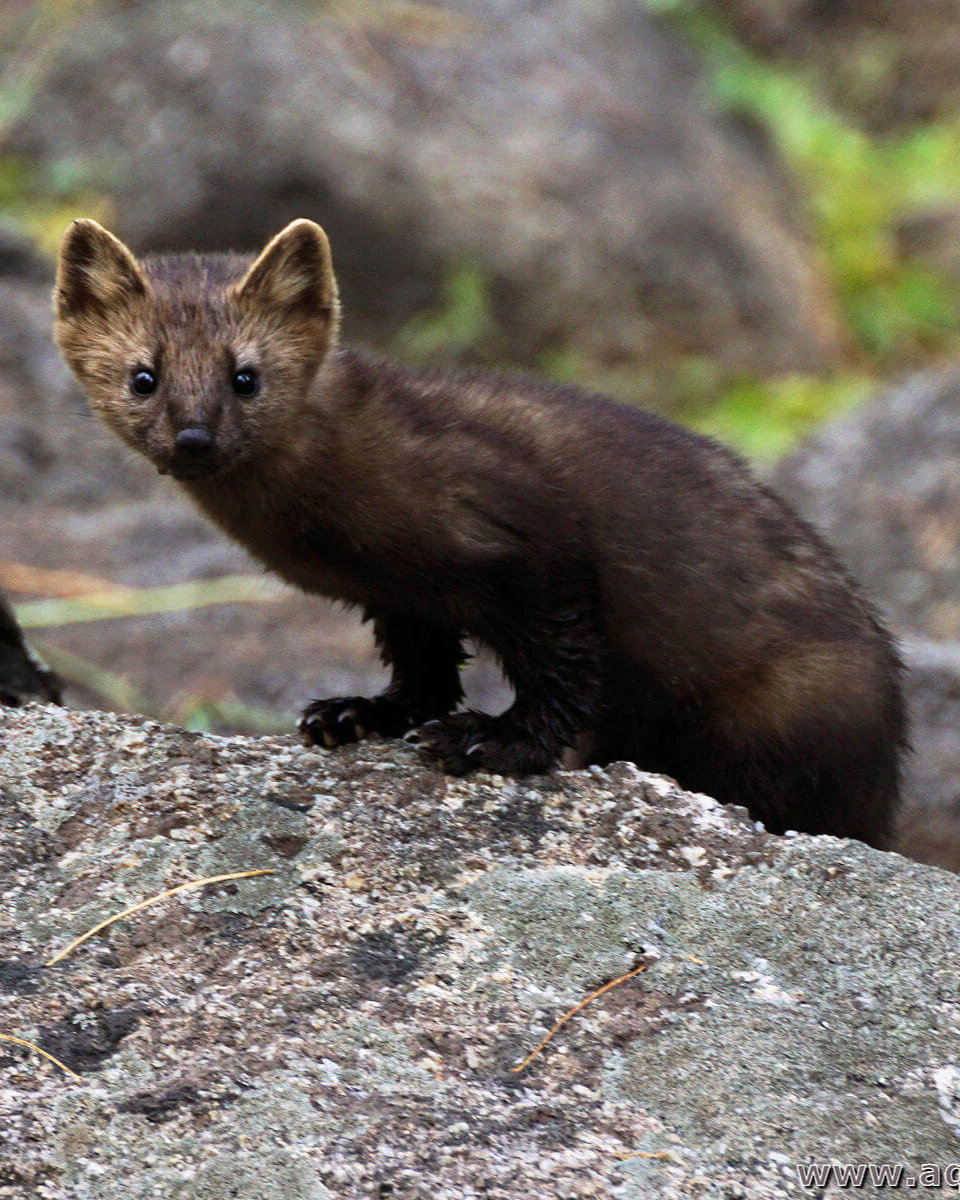
Photo by Aqua Portail
Sables are small mustelids with body length of 32–56 cm, tail 12–18 cm, and body mass of approximately 0.7–1.8 kg, with males larger than females. The dense underfur with longer guard hairs produces a high-value pelage with colour variation from light brown to near-black. Sables are adapted to old-growth taiga and mixed coniferous-broadleaf forests, using complex vertical structure, deadwood, burrows, and river valley terrain. They are primarily crepuscular-diurnal, solitary, and territorial, with home ranges of roughly 4–30 km² depending on forest type and prey density.
Diet is generalist — small mammals, birds, eggs, carrion, insects, berries, and pine nuts — varying seasonally with prey cycles. Reproduction involves mating in July–August with delayed implantation, producing litters of 2–5 altricial kits in March–April. Females rear litters alone in dens located in tree hollows, burrows, and rock crevices.
Mustelids demonstrate complex spatial memory, problem-solving, and flexible foraging strategies. Experimental work on related Martes and Mustela species documents learning, object exploration, and individual recognition, supporting vertebrate-standard evidence for nociception and sentience. Stress responses in wild sables include increased den use and reduced surface activity under hunting pressure. In captive mustelids, stereotypic behaviours including pacing and repetitive movement are documented in wire-cage fur farm housing; sable-specific peer-reviewed welfare studies are limited, but the structural conditions of sable fur farming are comparable to those of mink — where welfare consequences of confinement are well-documented.
Lifecycle Summary
Sable exploitation operates across two structurally distinct systems: wild harvest through trapping and hunting, and captive fur farming through cage breeding. Wild harvest dominates by volume — early 2000s estimates placed Russian production at 300,000–400,000 pelts annually — while fur farming contributes approximately 10,000–20,000 pelts per year at a higher price point due to controlled pelt traits. Both systems are oriented exclusively toward fur production; meat and carcass by-products are disposal outputs rather than managed production streams. Animals killed for pelts are typically in their first year of life, at 6–10 months of age, coinciding with winter fur prime. Breeding stock in farm systems may be retained for multiple seasons before culling. The global sable fur trade is structured around Russian-origin “Russian sable” and “Siberian sable” as luxury brand designations, with pelts sold through international auction systems.
Lifespan (Natural vs Exploited)
Maximum reported wild lifespan is approximately 8 years, with wild population age structure skewed heavily toward young animals — approximately two-thirds of wild individuals are under 2 years due to predation, disease, food limitation, and harvest mortality.
Under protected captive conditions with veterinary care, lifespans of 18–22 years have been reported.
In fur farm systems, offspring raised for pelts are killed in their first year, typically at 6–10 months when winter fur is at prime quality. Breeding animals retained on farms may reach 8–10 years, though commercial replacement commonly occurs earlier when pelt quality or reproductive performance declines.
Mortality causes in wild harvest include trapping, snaring, and shooting under licensed and unlicensed harvest; bycatch in traps set for other species; starvation during low prey years; disease; and predation. In fur farms, mortality causes include planned first-year killing for pelts; culling of surplus or low-quality breeders; disease outbreaks in dense cage systems; stress-related and injury-related mortality; and neonatal losses.
Exploitation Systems
Sable exploitation operates across two systems, both oriented exclusively toward fur production.
Wild fur harvest. The dominant production system by volume. Sables are harvested by licensed trapping and hunting in Russia — the principal producing country — and in parts of Mongolia and Northeast China. Trapping methods include leg-hold traps, snares, and body-grip (conibear-type) traps; hunting uses small-calibre rifles and shotguns. Harvest is regulated by quotas and seasonal restrictions in Russian administrative regions; these regulations emerged from severe population declines caused by over-harvest in the early twentieth century, which necessitated harvest bans and active restocking programmes to restore populations. Game management concessions lease forest areas to hunting enterprises, with habitat manipulation, predator control, and restocking used to sustain harvest yields.
Fur farming — captive cage breeding. Sables are bred in captivity in wire-cage systems, primarily in Russia, with additional smaller-scale operations in China and Finland. Russian farm production is positioned in the luxury market as “ranch sable,” differentiated from wild-caught pelts by controlled pelt traits — colour morphs, density, and silkiness — achieved through Selective Breeding. Wild-caught animals have historically been introduced to farm lines to restore traits or increase genetic diversity. Market preference in recent years has shifted toward wild sable pelts over farmed due to perceived quality differences, suggesting that farmed production remains a modest fraction of the total supply.
Downstream material flows. Pelts from both systems are graded, dried, and sold through international auction houses — primarily in Russia (Saint Petersburg) — as whole pelts or finished garments, trims, hats, and accessories. “Russian sable” and “Siberian sable” function as luxury brand designations within the global fur trade. Carcasses after skinning are rendered, composted, incinerated, or incorporated into general fur farm waste streams; they are disposal outputs rather than a managed production stream.
Living Conditions Across Systems
Wild populations. Sables range across home ranges of 4–30 km², using natural forest structure, den sites, and seasonal prey availability. Social organisation is solitary outside breeding. Living conditions are determined by habitat quality, prey cycles, and the extent of hunting pressure — which is documented to drive behavioural changes including increased den use and reduced surface activity.
Fur farm cage systems. Sables are housed in wire-mesh cages arranged in rows in open-sided or partially enclosed sheds. Animals are typically housed singly outside the breeding season, with controlled mating encounters. Nest boxes are provided for shelter and reproduction. The specific cage dimensions required under Russian and other national regulations are not consistently available in publicly accessible literature; designs are described as broadly comparable to mink and fox housing scaled for sable body size.
Animals are held continuously in cages with no access to ground substrate, burrow structure, or forest-type environmental complexity. The sensory environment includes persistent noise from feeding and husbandry operations, odour from feed and waste, and visual contact with conspecifics through cage partitions. Welfare risks documented in mustelid fur farm literature — stereotypies, self-biting, high kit mortality, and infectious disease transmission in dense cage systems — are directly applicable to sable farm conditions. Sable-specific peer-reviewed welfare studies are limited; Russian technical literature addresses feeding, cage design, and handling primarily in the context of fur quality and reproductive performance rather than animal welfare outcomes.
Lifecycle Under Exploitation
Genetic Selection
In wild harvest, selection operates indirectly through hunting regulations and market preferences for specific pelt colours and sizes, which create directional selection pressure on harvested populations. In fur farming, Selective Breeding targets pelt colour — dark “black sable” types command premium prices — fur density, silkiness, body size, and reproductive performance. Low-quality breeders and poor-pelt animals are culled. Wild-caught individuals have been incorporated into farm lines to restore traits or genetic diversity.
Reproduction
In wild populations, natural mating occurs July–August; males are polygynous and mate with multiple females without human intervention. On fur farms, controlled mating pairs specific males and females to achieve target pelt traits, using pedigree records and in some operations basic genetic markers to manage inbreeding. Artificial insemination is technically feasible in mustelids and may be used on some farms; routine sable-specific AI documentation is not available in accessible sources.
Birth & Early Life
Wild kits are born in March–April in secluded dens after delayed implantation; litter size is 2–5; kits are altricial and blind at birth and are reared solely by the female. On farms, kitting occurs in nest boxes attached to cages with comparable litter sizes. Early-life farm management includes nest inspections, fostering across litters, and culling of non-viable kits. Primary mortality drivers in early farm life include hypothermia, maternal neglect, infections, and intra-litter competition.
Growth & Rearing
Wild juveniles are gradually weaned and accompany the mother through her home range before dispersal later in the first year. On farms, young are fed high-protein rations based on fish and slaughter by-products — diets comparable to mink and fox feeds — formulated for rapid growth and optimal fur development. Young animals are kept with the dam for several weeks to months, then separated into individual or same-sex cages. Handling, identification marking, and vaccination occur during this phase.
Production
For pelt animals, the productive phase consists of fur maturation through the first autumn and winter. Management focuses entirely on avoiding pelt damage from disease, injury, or stress. Animals are killed when fur reaches prime quality at 6–10 months of age. For breeding stock, animals are managed through multiple seasons, monitored for fertility and pelt trait transmission.
Transport
Live transport in fur farm systems is limited; most killing occurs on-farm. When transport to centralised killing or processing facilities is required, animals are moved in crates or transport cages under nationally regulated conditions. Wild pelts are skinned and processed near harvest locations, then transported as dried and baled pelts to regional buyers and international auction houses.
End of Life
Wild sables are killed by trapping or shooting. Body-grip traps are designed to cause rapid death; leg-hold and snare traps restrain animals alive for varying periods until the trapper returns, with death potentially delayed and caused by trauma, hypothermia, or strangulation depending on trap type and time in trap. Shooting provides rapid death when shot placement is accurate; failure rates for both trapping and shooting are not quantified for sable specifically.
On farms, killing methods are extrapolated from small furbearer practice: gas chambers using carbon monoxide or carbon dioxide are widely applied in commercial fur operations; cervical dislocation and blunt force trauma are used as alternatives or emergency methods. Species-specific mis-kill rates for sable are not publicly documented.
Processing
After killing, pelts are removed by skinning, fleshed to remove tissue, stretched on boards, dried, and graded by colour, density, and quality before being baled and transported to auction. Carcasses are rendered into fats and protein meals, composted, incinerated, or disposed of according to national veterinary and environmental regulations. No food processing chain for sable carcasses is documented at commercial scale.
Chemical Medical Interventions
Veterinary pharmaceutical use on sable farms follows general mustelid fur farm practice, with sable-specific protocols rarely detailed in accessible literature. Broad-spectrum antibiotics — tetracyclines, penicillins, sulfonamides, and fluoroquinolones — are used therapeutically and metaphylactically against bacterial infections common in intensive cage housing. Macrocyclic lactones including ivermectin and other anthelmintics are used to control ecto- and endoparasites; topical ectoparasiticides treat mites and fleas. Vaccines may be applied against distemper, parvovirus, and other infectious agents on mustelid farms where these diseases are endemic; Russian fur farm veterinary practice relies partly on imported vaccine supply chains.
No sable-specific growth promoter use is documented in primary literature. European fur farm practice prohibits hormonal growth promoters; reproductive hormone manipulation for breeding timing may occur in some producing-country contexts, but public information for sable is scarce.
For veterinary and research procedures, injectable anaesthetics including ketamine combinations are used as in other small carnivores; these are not part of routine production.
Feed composition on carnivorous fur farms — fishmeal and slaughter by-products — introduces potential persistent organic pollutant contamination into the farm waste stream. Studies on mink farms in Nova Scotia documented elevated mercury, PCBs, DDT metabolites, HCH, and dieldrin in farm feeds and waste, with lakes downstream of mink farms showing significantly higher total mercury than reference lakes. Sable farms using comparable fishmeal-based diets would share analogous contamination exposure and emission profiles, though sable-specific environmental contamination data are not available.
Slaughter Processes
Wild harvest killing methods include body-grip traps designed to cause rapid death by physical trauma to the head and neck; leg-hold traps and snares, which restrain animals alive for variable periods until the trapper returns, with death potentially caused by trauma, hypothermia, strangulation, or subsequent shooting; and direct shooting with small-calibre rifles. Time-to-death in restraining traps is not quantified for sable specifically. No global harmonised standards for sable-specific trapping method welfare outcomes exist; most applicable frameworks address mustelid trapping at the genus or family level.
On fur farms, killing uses gas chambers (carbon monoxide or carbon dioxide) consistent with methods applied across small fur-bearing carnivore species, with cervical dislocation or blunt force trauma as alternatives where gas systems are unavailable. National veterinary regulations and fur-industry certification schemes prescribe acceptable killing methods; species-specific performance data for sable (mis-kill rates) are not publicly documented.
Religious slaughter frameworks are not applicable to sable; the species does not enter food supply chains governed by halal or kosher requirements.
Slaughterhouse Labour Impact
Sable-specific occupational health data from fur farm or wild harvest operations are not available in accessible literature. Labour conditions on sable farms share structural characteristics with other carnivorous fur farm operations: occupational injury risks include bites and scratches from handling wild-type mustelid carnivores — a more acute and distinctive risk than in other farmed species — alongside repetitive-strain injuries from feeding and caging tasks, slips in outdoor farm sheds, and chemical exposure from pelt processing operations including preservatives and fleshing compounds.
Workers on carnivore fur farms are also exposed to organic dusts, endotoxins, and zoonotic pathogens from carnivore housing and waste, and to persistent organic pollutants via feed-handling tasks on farms using fishmeal-based diets.
Psychological impacts associated with routine killing and handling in fur farm and slaughter contexts — documented in studies of pig, poultry, and mink sector workers — apply structurally to sable farm operations, though sable-specific data are absent.
Many sable fur farm operations in Russia and China rely on rural, seasonal, and family labour. Detailed demographic or migration-status breakdowns for this workforce are not documented in accessible international literature.
Scale & Prevalence
Wild sable populations in Russia were estimated at approximately 1.1–1.3 million individuals in the early 2000s, with licensed harvest producing approximately 300,000–400,000 pelts annually. These figures are period-specific approximations from wildlife agency and industry assessments and may not reflect current population levels.
In Northeast China, sable distribution contracted by approximately 51.7% between the 1950s and 2000–2016, attributed to combined effects of climate change and increased human population pressure — indicating long-term range contraction and reduced harvest potential in that region.
Fur farm production in Russia historically generated approximately 10,000–20,000 sable pelts annually at auction. Russian industry sources note a renewed market preference for wild over cage-bred sable skins based on perceived quality differences, suggesting farm production remains a modest fraction of total supply. Sable farming in China is present but numerically dominated by other species — raccoon dog, mink, fox — with sable-specific production figures not separately reported in accessible international databases. Finnish sable farming represents a small additional component.
FAOSTAT does not consistently report sable-specific production data; available numerical estimates derive from national wildlife and forestry agencies, Russian industry assessments, and early 2000s FAO fur production reviews. Current figures are not reliably available.
The directional trend for wild harvest is regulated management with population monitoring; the directional trend for farmed production is modest scale relative to other fur species, with market preference currently favouring wild-sourced pelts.
Ecological Impact
Historical over-harvest caused severe sable population declines across Russia in the late nineteenth and early twentieth centuries, necessitating harvest bans, seasonal restrictions, and active reintroduction programmes from the 1930s onward. Regulated harvest and habitat protection subsequently enabled population recovery and range expansion in parts of the former range. This trajectory represents one of the more documented examples of fur-trade-driven collapse and managed recovery for a mustelid species.
In Northeast China, sable distribution has contracted substantially since the 1950s under the combined pressure of climate-related habitat change and increased human population density, indicating ongoing vulnerability to land-use and climate change independent of direct harvest.
Fur farming using fishmeal-based carnivore diets generates environmental contamination risks analogous to those documented for mink farms. A published study of mink farms in Nova Scotia found that feeds and waste contained mercury, PCBs, DDT metabolites, HCH, and dieldrin; lakes downstream of these farms had significantly higher total mercury concentrations than reference lakes, establishing carnivorous fur farms as point sources of persistent organic pollutants to local water systems. Sable farms using comparable feed compositions would share these contamination profiles; sable-specific environmental contamination data have not been published.
Wild harvest uses existing forest landscapes, with indirect impacts from access infrastructure, camp establishment, and hunting pressure on non-target species incidental to sable trapping operations. Fur farms occupy small land areas but generate concentrated waste streams and associated pollution risks as described above.
No documented feral sable population has been established from farm escapees, though the potential ecological impact of escaped sable — as small forest carnivores with established wild populations in the region — would likely be absorbed into existing wild populations rather than producing the invasive dynamics associated with mink escapes in Europe.
Language & Abstraction
“Russian sable” and “Siberian sable” function as geographic luxury brand identifiers in international fur trade, emphasising origin and prestige while abstracting the production system — whether wild-captured or cage-bred — behind a single quality designation. The farmed-versus-wild distinction appears in trade as a quality descriptor (“wild sable,” “ranch sable,” “cage-bred sable”) rather than as a distinction between ecological extraction and confinement-based production, framing it as a product attribute rather than a system difference.
Pelt grading systems convert individual animals into standardised commodity categories defined by colour (“dark,” “black,” “golden”), silkiness, and density. The grading process positions the animal as raw material for quality classification, erasing individual variation and framing the outcome of killing as a product assessment exercise.
In Russian and other national regulatory frameworks, sable is classified as a “furbearer” or “game species” — a resource management category that frames the species primarily as a harvestable population stock. Management terminology — “harvest,” “take,” “yield,” “bag limit,” “quota” — applies the language of sustainable resource extraction to the regulated killing of individual animals, positioning population-level management decisions as conservation practice.
“Living gold of Siberia” — a historical trade descriptor — positions the species as an economic asset whose value is intrinsic to its pelage, embedding the commodity function of the animal into its cultural identity. Modern luxury product terms — “sable coat,” “sable trim,” “sable garment” — complete the abstraction by naming end products through their material and design attributes, with no reference to species, origin, production method, or killing.
Terminology
Russian sable, Siberian sable, wild sable, farmed sable, cage-bred sable, ranch sable, black sable, dark sable, golden sable, sable pelt, sable skin, sable fur, sable coat, sable trim, sable garment, breeding stock, breeder female, breeder male, kit, yearling, harvest, take, quota, bag limit, furbearer, game species, fur-bearing animal, pelt grading, prime fur, offcut, trimmings, auction lot, lot number.
Within The System
Developments
Report a development: contact@systemicexploitation.org
Notice an inaccuracy or omission?
If you believe information on this page is incorrect, incomplete, or missing important context, you may submit a suggested correction for review.