
Pangasius
Scientific Name:
Pangasianodon hypophthalmus
Scope
Covers Pangasianodon hypophthalmus (striped catfish), the species underlying the global “pangasius,” “basa,” and “tra” fillet trade, with supplementary reference to Pangasius bocourti where slaughter and culture literature does not distinguish between the two farmed species. Includes farmed populations in intensive and semi-intensive freshwater aquaculture across all producing countries. Wild riverine populations of P. hypophthalmus are included only for baseline biology and natural lifespan reference; they are not a significant direct commercial harvest target and are excluded from exploitation metrics. Excludes marine catfish species, non-pangasiid catfishes, and ornamental pangasiids.
Species Context
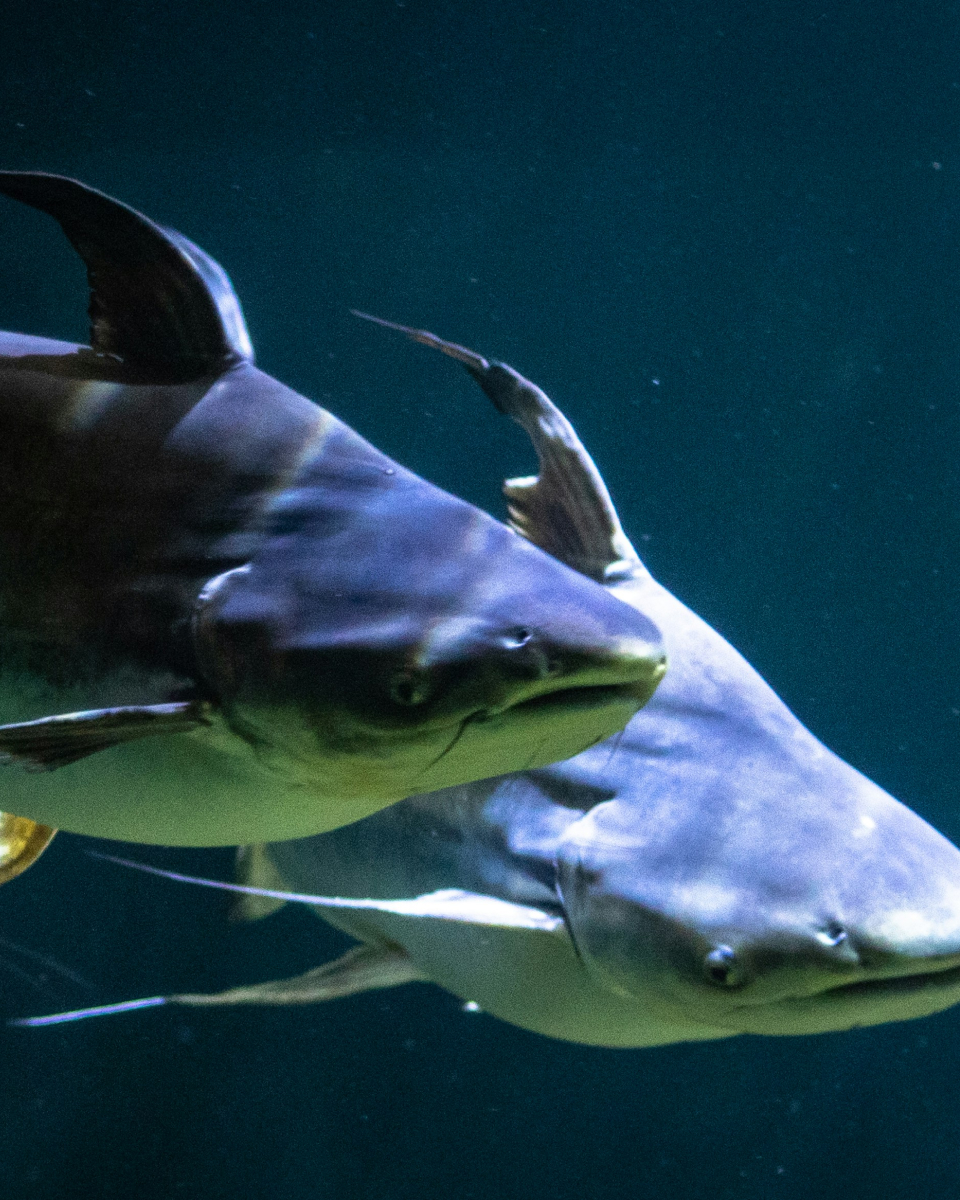
Photo by Joshua J. Cotten
Pangasianodon hypophthalmus is a benthopelagic freshwater catfish native to the Mekong and Chao Phraya river basins. It is tolerant of low dissolved oxygen and high stocking densities relative to many farmed finfish, possessing an accessory air-breathing organ that permits survival under hypoxic conditions — a biological trait that makes the species tractable for intensive aquaculture but does not eliminate stress responses at very low dissolved oxygen. Optimal culture conditions are 26–30°C with near-neutral pH and continuous aeration. The species is schooling in riverine environments and is reared in high-density group conditions in all commercial systems.
Documented stress responses in pangasius include elevated plasma cortisol and blood glucose, increased ventilatory rate, and erratic swimming under handling, crowding, and hypoxia. These responses have been used as welfare proxies in slaughter-method trials. As a teleost fish, pangasius falls within the scientific consensus that teleosts demonstrate nociception, learning, and avoidance behaviour consistent with the capacity for negative affective states. Species-specific advanced cognition studies are limited; welfare guidance for pangasius treats the species as capable of experiencing pain and distress on the basis of general teleost evidence.
Lifecycle Summary
Pangasius aquaculture is one of the world’s largest freshwater finfish production systems, centred in Vietnam’s Mekong Delta and expanding across Bangladesh, India, and Indonesia. Vietnam alone has historically produced more than one million tonnes annually; total global production across all producing countries is in the several-million-tonne range per year. Grow-out fish are slaughtered at 6–10 months of age at 0.8–1.2 kg, representing a reduction from a potential wild lifespan of 10–20 years to under one year for the majority of farmed individuals. Production is structured around hormone-induced spawning in hatcheries, high-density earthen pond grow-out with mechanical aeration and continuous water exchange, and export-oriented fillet processing. Slaughter in most commercial plants occurs without prior stunning — gill-cutting or decapitation of conscious fish is the predominant documented method. Antibiotic use is widespread, with approximately a quarter of surveyed Vietnamese farms using antibiotics prophylactically, and enrofloxacin — banned in Vietnam since 2012 — reported in use on approximately a quarter of surveyed farms. Effluent and sludge from intensive ponds enters Mekong Delta waterways directly in many operations, contributing to eutrophication and antibiotic resistance in receiving water systems.
Lifespan (Natural vs Exploited)
Pangasiid catfish of comparable size have potential lifespans of 10–20 years in large riverine systems, with sexual maturity reached at 2–3 years.
Under aquaculture conditions, broodstock selected for repeated spawning can be maintained for 5–10 years depending on egg quality and disease status. Grow-out fish — representing the large majority of farmed individuals — are harvested at 6–10 months of age at 0.8–1.2 kg, well within the first year of life.
Primary causes of mortality in culture include bacterial infections (Aeromonas spp. and other pathogens), parasitic infestations, poor water quality (elevated ammonia, nitrite, and hypoxia during high-density culture), and handling and transport stress during grading and pre-slaughter operations.
Exploitation Systems
Pangasius exploitation operates through a single primary system with integrated hatchery, grow-out, and processing components.
Intensive freshwater aquaculture. P. hypophthalmus is farmed at industrial scale in earthen pond systems as the dominant production model, particularly in Vietnam’s Mekong Delta. Ponds are typically 0.5–3 hectares, operated with mechanical aeration (paddlewheel aerators), high-intensity pelleted feeding, and continuous or frequent water exchange with adjacent rivers and canals. Stocking densities at harvest commonly reach 40–60 fish/m², equivalent to 300–400 tonnes per hectare in peak operations. River cages and pens moored in Mekong and other river systems are used in some Indonesian and Indian operations, providing flow-through water but confining fish in net or slatted enclosures. Hatchery systems using hormone-induced spawning supply fry and fingerlings to grow-out operations.
Downstream product flows are dominated by export of frozen white-fish fillets — headed, gutted, filleted, and packaged — to EU, US, and other markets where pangasius functions as a low-cost whitefish substitute for cod and similar species. Secondary products include steaks, belly flaps, trimmings, and minced blocks. By-products from processing — viscera, trimmings, and low-grade fish — are rendered into fishmeal and fish oil for aquafeeds and livestock feed. Collagen and gelatin extraction from skin and bone is documented in value-chain analyses but is not consistently quantified.
Living Conditions Across Systems
Earthen pond systems — intensive, Vietnam and South Asia. Stocking densities of 40–60 fish/m² at harvest biomass densities of 300–400 tonnes/ha represent among the highest density aquaculture conditions documented for any farmed fish species. Water is turbid with high organic loading from feed inputs and fish waste. Mechanical aeration operates continuously to maintain dissolved oxygen above critical thresholds; daily or frequent water exchange with adjacent river and canal systems dilutes waste but transfers effluents to receiving waters. Fish experience continuous conspecific contact with no substrate complexity or refuge structures. Ambient daylight governs light conditions in open ponds.
River cage and pen systems. Volumetric stocking densities can exceed 100 kg/m³ in some cage configurations. Fish are confined within net or slatted enclosures in flowing river water, subject to seasonal current variation, river pollution levels, and temperature fluctuations. Cage confinement prevents migration while exposing fish to ambient river conditions.
Hatchery and nursery conditions. Larval and fingerling fish are reared at high densities in tanks or nursing ponds with controlled temperature and water quality. Frequent grading to manage size heterogeneity involves repeated handling and sorting, generating acute stress events across the early life phase.
Lifecycle Under Exploitation
Genetic Selection
Broodstock selection targets growth rate, survival, fillet yield, and disease resistance. Selection occurs at hatcheries and specialised breeding centres. Structured national breeding programmes focused on improved seed quality and disease resistance have been documented in Vietnam, though published detail on programme architecture is limited compared with salmonid breeding systems. Selective Breeding operates across all producing countries with hatchery infrastructure.
Reproduction
Spawning is induced using gonadotropin-releasing hormone analogues (GnRHa) or carp pituitary extracts injected into broodstock to synchronise and intensify egg release. Spawning is carried out in controlled tanks; eggs are collected, fertilised, and incubated under controlled flow and temperature. This reproductive control — Reproductive Cycle Manipulation — enables year-round fry supply to grow-out farms independent of natural seasonal breeding cycles, which is structurally essential to maintaining continuous industrial production throughput.
Birth & Early Life
Eggs hatch into larvae reared in tanks or nursing ponds at high density with live or formulated feeds. Frequent grading reduces cannibalism and size heterogeneity but involves repeated handling stress. Prophylactic chemical treatments including formalin and disinfectants are used for pathogen control in some operations.
Growth & Rearing
Fry and fingerlings are transferred to grow-out ponds or cages and fed commercial pellets with protein levels formulated for rapid growth — targeting 0.8–1.2 kg at 6–10 months. Growth Acceleration via formulated high-protein feed regimes is the central operational mechanism of the grow-out phase. Water management through exchange and aeration maintains oxygen and reduces waste accumulation. Routine sampling monitors growth and health; therapeutic and prophylactic antibiotic and chemical use for disease control occurs throughout this phase.
Production
The grow-out phase to market size constitutes the production stage. Management focuses on feed conversion efficiency, survival rates, and compliance with export certification requirements — ASC, VietGAP, and equivalent standards. Sludge and effluent management varies substantially by farm; some operations integrate treatment systems while others discharge directly to adjacent waterways.
Transport
Live fish are transported from grow-out ponds to processing facilities by pumping into well boats or live-haul tanks with aeration. Transport densities and aeration standards vary by operator and infrastructure. High transport densities and handling during loading are documented stress events preceding slaughter.
End of Life
Gill-cutting or decapitation without prior stunning is the predominant slaughter method documented at commercial pangasius processing facilities; fish are killed while conscious. Asphyxiation in air — following transport in crowded conditions — is also documented, with gradual loss of consciousness occurring over minutes to hours. Electrical stunning followed by decapitation or gill-cutting is the method recommended in welfare guidance and is under active research and trial development in Vietnam, but adoption across the commercial sector remains very low. A 2025 in-water electrical stunner trial in Vietnam collected detailed behavioural and cortisol data to refine species-specific parameters; large-scale commercial adoption data are not yet available.
Processing
Post-kill processing in export-oriented plants includes deheading, gutting, filleting, skinning, trimming, grading by size and quality category, and frozen packaging. Processing lines operate at high throughput to meet export volumes. By-products are rendered into fishmeal and fish oil or further processed for collagen and gelatin extraction where facilities exist.
Chemical Medical Interventions
Antibiotic use in Vietnamese pangasius aquaculture is documented as widespread and partly non-compliant with national regulation. Commonly reported antibiotics include oxytetracycline, florfenicol, sulfonamides, and fluoroquinolones. A 2025 Dutch government-funded welfare study of Vietnamese pangasius farms found approximately 25% of surveyed farmers using antibiotics prophylactically and approximately 25% using enrofloxacin — which Vietnam banned in 2012 due to its classification as a critically important antibiotic for human medicine — in current operations. Export market maximum residue limits for banned substances trigger rejections when detected, creating market-side pressure that partially moderates use patterns without eliminating regulatory non-compliance.
Hormone-induced reproduction uses GnRHa and carp pituitary extracts injected into broodstock for spawning induction. This is standard practice across hatchery operations.
Disinfectants used in pond preparation and egg disinfection include povidone-iodine, formalin, lime, and oxidising agents. Insecticides and herbicides may be applied in pond preparation to remove unwanted species; specific compounds and usage frequencies are not systematically documented at national scale.
Vaccine use in pangasius is limited compared with salmonid aquaculture; disease management has relied primarily on antibiotics, motivating international projects — including ICARS-Global — targeting antimicrobial use reduction in Vietnamese aquaculture.
Slaughter Processes
The predominant commercial slaughter method for pangasius — gill-cutting or decapitation without prior stunning — kills fish while conscious. Compassion in World Farming’s review of pangasius slaughter practices identifies this as the standard method across the majority of Vietnamese processing plants. Asphyxiation in air, sometimes following transport in high-density crowded conditions, is also documented; time to loss of consciousness under asphyxia extends to minutes or hours.
Electrical stunning — dry or in-water — followed by immediate decapitation or gill-cutting is the method recommended in welfare guidance. Where applied, effective electrical stunning requires achieving instantaneous loss of consciousness at appropriate current density parameters; incomplete stunning due to variable current density is documented as a failure mode. A 2025 research trial in Vietnam tested in-water electrical stunning systems tailored to pangasius physiology using behavioural and plasma cortisol data, but commercial adoption of any pre-slaughter stunning method across the industry remains very low.
Processing plants operate at high throughput; specific line rates per hour are not consistently published but are consistent with national production volumes in the millions of tonnes annually.
Religious slaughter frameworks specific to pangasius are not documented as a significant factor; the species is not subject to the same halal certification infrastructure as livestock in most markets.
Slaughterhouse Labour Impact
Vietnamese pangasius processing plants employ substantial workforces for filleting, trimming, and packing operations. A high proportion of workers on filleting and trimming lines are women; facilities depend on low-wage local and regional labour to maintain cost competitiveness in export markets. General seafood processing occupational hazard profiles — elevated musculoskeletal injury rates, lacerations, slip and fall incidents, cold and wet working environments, and long shifts — apply to pangasius processing lines, consistent with NIOSH seafood processor data and general seafood industry literature. Species-specific occupational health studies for pangasius processing plants are not available in published literature.
Psychological impact data specific to pangasius slaughter workers are absent. The broader slaughterhouse and seafood processing literature documents stress and desensitisation effects that may apply structurally; targeted research for this sector and region does not exist.
Scale & Prevalence
Pangasius is among the world’s largest freshwater finfish aquaculture commodities. Vietnamese production alone has historically exceeded one million tonnes annually, with production concentrated in Mekong Delta provinces including An Giang, Dong Thap, and Can Tho. Total global production across Vietnam, Bangladesh, India, and Indonesia is in the several-million-tonne range per year; precise current figures vary by source year and methodology.
Vietnam is the dominant global exporter of pangasius fillets, supplying EU, US, and diversified markets. Indonesia, Bangladesh, and India produce primarily for domestic and regional consumption as low-cost protein, with expanding government and FAO-supported programmes targeting production growth.
Earthen ponds account for the large majority of intensive production in Vietnam and South Asia; river cages and pens are locally significant but represent a minor fraction of total volume.
The trend is stable to modestly expanding, with Vietnamese exports experiencing cycles of price pressure and market diversification while Indonesia and other countries pursue expansion as a low-cost domestic protein source.
Ecological Impact
High stocking densities and feed inputs in intensive pond systems generate significant organic waste and nutrient loading. Many farms discharge sedimented sludge and untreated effluent directly into adjacent Mekong Delta waterways and onto land, contributing to eutrophication and localised hypoxia in receiving water systems. Seafood Watch’s Vietnam pangasius assessment classifies habitat impacts at moderate concern, noting illegal dumping of sludge wastes as a documented practice.
Antibiotic and chemical use in ponds results in residues and metabolites entering receiving waters through effluent discharge. Studies from Vietnamese production systems document widespread bacterial resistance to multiple antibiotics used in pangasius culture, including oxytetracycline and fluoroquinolones, with implications for antimicrobial resistance development in shared water environments.
Water exchange in intensive ponds draws and discharges large volumes from rivers and canals, contributing to local water-use competition in Mekong Delta regions where pangasius aquaculture is concentrated.
Habitat modification from pond construction along river floodplains can affect local freshwater biodiversity. Regulatory frameworks in some countries — including the Philippines — restrict pangasius culture to land-based ponds not prone to flooding, specifically to reduce escape and ecological interaction risks.
Life-cycle assessments indicate pangasius aquaculture is relatively feed-efficient compared with many terrestrial livestock systems but requires substantial feed inputs, energy for aeration and pumping, and water management. Specific carbon footprint figures vary by study methodology; some analyses identify feed reformulation and improved sludge management as opportunities to reduce greenhouse gas emissions.
Language & Abstraction
The species is marketed under multiple trade names — “pangasius,” “basa,” “tra,” “striped catfish” — that vary by market and product format, creating a fragmented consumer identity that limits species-level traceability across supply chains. “Whitefish fillets” as a product category positions pangasius within a generic seafood commodity class, substitutable for cod or other whitefish, further abstracting species identity from the point of purchase.
Value-chain documentation refers to fish as “biomass,” “stock,” “raw material,” and “units,” framing animals as production inputs within supply-chain efficiency analyses. “Seed production,” “grow-out,” “harvest,” and “processing” describe the lifecycle as a production sequence in which “harvest” replaces killing and “processing” encompasses slaughter, dressing, and packaging as a single operational phase.
Certification and regulatory language — “stocking density,” “health plan,” “holding unit,” “welfare criteria,” “mortality rate” — frames animal conditions through measurable parameters and compliance indices. “Mortality rate” records deaths as a production efficiency metric; “losses” and “disease outbreaks” frame individual deaths as aggregate production outcomes. “Effluent standards” and “habitat criterion scores” aggregate ecological impacts into index values that do not capture the specific contribution of sludge dumping or antibiotic discharge to individual water system degradation.
The low consumer recognition of pangasius as a specific farmed species — as distinct from generic “white fish” — means that supply chain controversies including antibiotic residue detections in import markets, welfare practice concerns, and environmental assessments have limited consumer salience relative to more named and familiar species.
Terminology
Pangasius, basa, tra, striped catfish, whitefish fillet, raw material, biomass, stock, seed, fry, fingerling, broodstock, grow-out, harvest, processing, value-added seafood, health plan, holding unit, stocking density, mortality rate, effluent, sludge, habitat criterion, VietGAP, ASC pangasius, fillet block, belly flap, trimmings, fishmeal, fish oil.
Within The System
Developments
Report a development: contact@systemicexploitation.org
Notice an inaccuracy or omission?
If you believe information on this page is incorrect, incomplete, or missing important context, you may submit a suggested correction for review.