
Prawns
Scientific Name:
Litopenaeus vannamei / Penaeus monodon
Scope
Covers penaeid decapod crustaceans commercially exploited as prawns and shrimp: principally Pacific whiteleg shrimp (Litopenaeus vannamei) and black tiger prawn (Penaeus monodon), which together account for approximately 89% of global farmed shrimp production, with secondary coverage of other farmed and wild-harvested penaeids including P. indicus, P. merguiensis, and P. japonicus. Includes wild coastal and oceanic penaeid populations taken in capture fisheries; farmed populations in intensive and extensive aquaculture systems; and selectively bred hatchery lines. Excludes non-decapod crustaceans referred to as “prawns” in some contexts (e.g. krill), non-commercial ornamental shrimp, and freshwater non-penaeid crustaceans unless integrated in shared farming or processing systems.
The record treats prawns and shrimp as a single production class (penaeid decapods) rather than disaggregating by species, given the integrated nature of the global supply chain. Where species-specific data are available, the dominant species — L. vannamei — is the primary reference.
Species Context
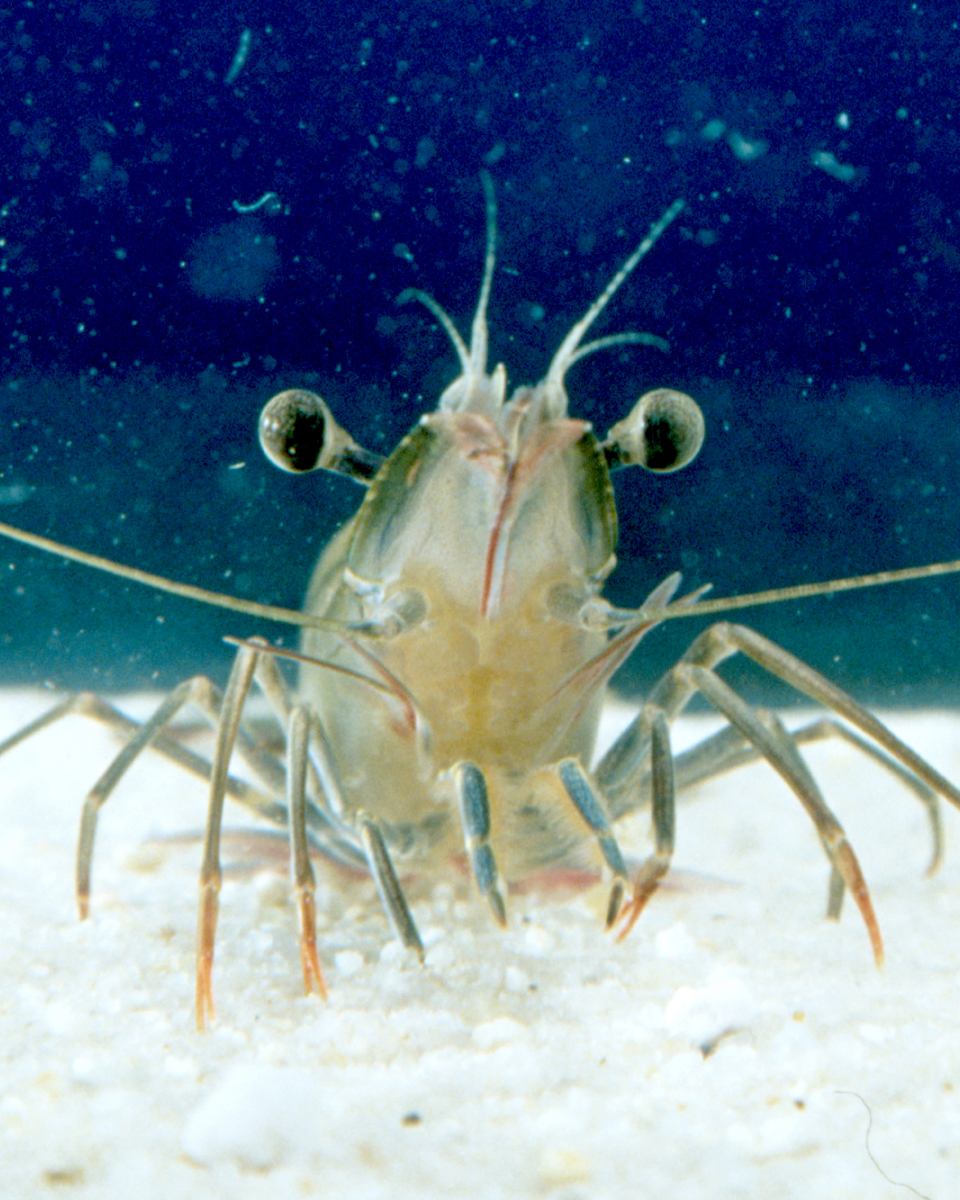
Photo by Science Image
Penaeid prawns are benthic or benthopelagic decapod crustaceans with segmented bodies, exoskeletons, gills, and a ventral nerve cord. Most are nocturnal foragers consuming detritus, small invertebrates, and plankton in tropical and subtropical coastal waters. Growth is discontinuous via ecdysis; moulting frequency decreases with age and is influenced by temperature, salinity, and nutrition.
In wild conditions, penaeids form loose aggregations rather than stable social groups. In farm conditions at artificially high densities, agonistic encounters and dominance hierarchies over shelter and feeding points are documented in behavioural studies. Species-specific optimal temperature ranges — approximately 25–32°C for L. vannamei, with broader salinity tolerance; P. monodon more stenohaline — determine culture system design. Survival decreases when dissolved oxygen falls below approximately 3–4 mg/L in intensive systems.
Evidence for penaeid sentience has strengthened substantially in recent literature. A 2025 peer-reviewed review specifically of decapod shrimp and prawns documents preference learning, place preferences, avoidance learning, personality-like individual differences, and behavioural indicators consistent with negative affective states under aversive conditions. The broader Crump et al. (2022) and Birch et al. (2021) decapod sentience frameworks conclude that decapods show multiple criteria compatible with pain experience — motivational trade-offs, flexible learning, and long-lasting behavioural changes following noxious stimulation — with data assessed as establishing “absence of evidence” rather than “evidence of absence” for penaeid species specifically. The UK Animal Welfare (Sentience) Act 2022 included decapod crustaceans within its scope. Standard welfare frameworks applying to invertebrates do not apply in most producing-country jurisdictions.
Lifecycle Summary
Prawn exploitation operates across two systems — aquaculture and wild capture fisheries — with aquaculture now overwhelmingly dominant by volume. Farmed penaeid shrimp production reached approximately 5.6–8 million tonnes in 2023, with discrepancies between FAO and industry survey estimates reflecting methodological differences; even at the lower estimate, this makes prawns the largest single aquaculture commodity by volume after finfish. Approximately 80% of farmed production is L. vannamei; Ecuador, China, India, Vietnam, and Indonesia collectively account for approximately 74% of global farmed output. Grow-out to harvest takes 70–150 days from post-larval stocking depending on target size and system intensity; most farmed individuals are killed in their first year of life.
The industry is structurally connected to two of the most significant environmental impacts in global aquaculture: mangrove ecosystem conversion, with mean potential emissions of approximately 1,894 Mg CO₂e/ha from mangrove-to-shrimp-pond conversion, and large-scale trawl fishery by-catch from wild prawn capture. Eyestalk ablation — surgical removal or destruction of the eyestalk tissue in female broodstock to induce maturation — is standard practice in P. monodon breeding programmes, representing a routinely applied mutilation with no equivalent in any other record in this database.
Lifespan (Natural vs Exploited)
Wild penaeid prawns are short-lived — most species reach commercial size within 6–18 months and maximum natural lifespan is typically under 2 years, with mortality driven by predation, disease, and environmental variability.
In aquaculture, broodstock of selected L. vannamei and P. monodon lines are maintained in maturation facilities for 1–3 years with repeated spawning cycles, then culled when fecundity declines.
Grow-out animals in extensive and semi-intensive systems are stocked as post-larvae and reared for approximately 90–150 days to harvest sizes — approximately 20–40 g for P. monodon, 12–20 g for L. vannamei — making total life from hatchery to harvest typically 4–6 months. Intensive and super-intensive systems using higher temperatures, aeration, and high-protein feeds shorten grow-out to approximately 70–120 days.
Primary causes of mortality in farmed systems include white spot syndrome virus (WSSV), acute hepatopancreatic necrosis disease (AHPND, also termed early mortality syndrome), vibriosis, environmental stress from low dissolved oxygen and toxic metabolite accumulation, cannibalism after moulting events, and handling and harvest-related stress.
Exploitation Systems
Prawn exploitation operates across two systems.
Aquaculture. The dominant commercial system. Four production intensities are structurally distinct. Extensive systems use stocking densities of 5–10,000 P. monodon per hectare in large earthen ponds, relying on natural pond productivity with minimal feed input; this system type historically dominated production in Southeast Asia and is increasingly constrained by the environmental costs of land conversion. Semi-intensive systems operate at 20–50,000 animals per hectare with partial formulated feed supplementation and managed water exchange. Intensive systems use stocking densities of 50–300,000 animals per hectare with complete reliance on formulated feeds, continuous mechanical aeration, and strict water quality management. Super-intensive systems — including covered raceways and biofloc systems for L. vannamei — operate at 750–1,200 individuals per m², relying on biofloc technology in which microbial aggregate communities recycle nutrients, reduce water exchange requirements, and manage ammonia within partially closed water systems.
Hatcheries supply post-larvae (PL) from controlled breeding of specific-pathogen-free (SPF) broodstock; some operations use specific-pathogen-tolerant (SPT) lines for disease-endemic environments. Selective breeding programmes for L. vannamei and P. monodon apply family-based and genomic selection targeting growth rate, disease resistance — particularly against WSSV and AHPND — and feed conversion efficiency.
Wild capture fisheries. Bottom trawls over soft sediments dominate wild prawn capture, with beam trawls and small-scale estuarine nets contributing additional volume. Wild-caught prawns supply direct human consumption markets and raw material for processing plants. Bottom trawling for prawns is associated with substantial by-catch of non-target demersal species and benthic habitat disturbance; by-catch volumes are fishery- and region-specific and are not consistently reported globally.
Downstream product flows from both systems include whole prawns, head-on shell-on (HOSO) product, headless shell-on (HLSO), peeled and deveined (P&D), cooked and frozen formats, and value-added processed products. Processing by-products — heads and shells — are extracted for chitin and chitosan used in pharmaceutical, biomedical, and industrial applications, and rendered into shrimp meal for animal feeds and fertiliser.
Living Conditions Across Systems
Extensive earthen ponds. Large water bodies (typically 0.5–5 ha) with earthen substrates and natural lighting. Stocking at 5–10,000 animals/ha. Limited structural complexity compared with natural mangrove and seagrass habitats. Water quality managed via tidal exchange or pumped water replacement.
Semi-intensive and intensive ponds. Stocking densities of 20–300,000 animals/ha. Continuous mechanical aeration via paddlewheel or diffuser systems; formulated feed delivery multiple times daily; regular water exchange to manage nutrient loading. Pond substrate is homogeneous; no structural enrichment. Partial harvests via netting allow smaller animals to continue growing while larger cohort members are removed.
Super-intensive and biofloc systems. Covered raceways or tanks at densities of 750–1,200 individuals/m². Biofloc technology maintains suspended microbial aggregates that consume ammonia and provide supplemental nutrition; water exchange is minimised. Artificial lighting and aeration noise are constant. These systems create the highest individual density conditions in the database for any vertebrate or invertebrate farmed species.
Hatchery and nursery conditions. Eggs through post-larval stages (nauplii, zoea, mysis, PL) reared in indoor tanks with microalgae, enriched Artemia, and formulated larval feeds. Water quality tightly controlled; prophylactic antibiotic or disinfectant treatment is standard in many hatcheries to manage bacterial loads in high-density larval conditions.
Welfare literature specifically examining penaeid shrimp documents elevated stress indicators — lactate, glucose, crustacean hyperglycaemic hormone — and behavioural responses including reduced feeding, escape attempts, and increased sheltering under handling, crowding, and poor water quality. Research on penaeid welfare remains limited compared with vertebrate aquaculture species; most welfare guidance extrapolates from larger decapod species.
Lifecycle Under Exploitation
Genetic Selection
Selective Breeding programmes for L. vannamei and P. monodon apply family-based and genomic selection at dedicated breeding centres. Selection targets growth rate, disease resistance against WSSV and AHPND, feed conversion ratio, and body conformation. Specific-pathogen-free (SPF) lines are maintained in biosecure facilities to exclude listed pathogens; SPT lines are developed for production in environments where pathogen elimination is not achievable. Broodstock are sourced from domesticated lines or wild capture for genetic diversity input.
Reproduction
Maturation units hold broodstock under controlled photoperiod, temperature, and salinity to induce reproductive readiness. Eyestalk ablation is applied to female P. monodon broodstock — the dominant method for inducing maturation in this species — by removing or destroying one or both eyestalks to eliminate the gonad-inhibiting hormone produced by the X-organ/sinus gland complex. Methods include crushing, cutting, or ligation of eyestalk tissue; the procedure is performed without anaesthesia in commercial settings. Some selective breeding programmes have shifted toward non-ablated broodstock management, but eyestalk ablation remains standard in much P. monodon production. Induced spawning additionally uses hormonal and environmental cues; eggs are collected and transferred to hatchery incubation tanks. Reproductive Cycle Manipulation via photoperiod and temperature management applies across both L. vannamei and P. monodon hatchery systems.
Birth & Early Life
Eggs hatch sequentially through nauplii, zoea, and mysis larval stages to post-larvae (PL) over approximately 2–3 weeks in hatchery tanks supplied with microalgae and live Artemia enriched with essential fatty acids, transitioning to formulated microdiets. Water quality is tightly controlled. Prophylactic use of disinfectants and, in some producing regions, antibiotics to manage bacterial loads in dense larval conditions is standard practice, though regulatory frameworks in export-oriented operations increasingly restrict antibiotic use at this stage.
Growth & Rearing
Post-larvae are transported to grow-out ponds or transferred through optional nursery systems for intermediate conditioning. Grow-out stocking densities vary by system intensity from 5,000 to 1,200/m² in super-intensive configurations. Feeding with formulated pellets occurs multiple times daily; water quality monitoring — dissolved oxygen, temperature, salinity, ammonia, nitrite, pH — and pond management including aeration, water exchange, and sludge removal are continuous operational requirements. Disease control relies on biosecurity measures — screened water inputs, perimeter fencing, bird nets, equipment disinfection — and pond fallowing between production cycles rather than treatment vaccines, which do not exist for the major viral pathogens.
Production
The grow-out phase to biomass accumulation constitutes the production stage. Partial harvests via seine netting during grow-out allow larger individuals to be removed while smaller animals continue growing — a management tool that simultaneously achieves market-size grading and reduces crowding pressure.
Transport
Post-larvae are transported from hatcheries to farms in oxygenated bags or tanks at high densities with temperature control; transport mortality is a production risk factor. Harvested prawns are transported from ponds to processing plants by truck on ice or live in water-filled containers; transport duration varies by proximity to processing infrastructure.
End of Life
Wild-caught prawns die primarily by asphyxia in air or during deck operations following net hauling, or by chilling on ice. Farmed prawns are killed primarily by chilling — immersion in ice or ice-water slurry — which in L. vannamei induces rapid reduction in cardiac function with apparent loss of sensibility within minutes under experimental conditions. Boiling or scalding is used in some markets and processing contexts. No validated pre-stun protocol specific to penaeid prawns has been adopted in any major producing jurisdiction. Some jurisdictions are developing decapod-inclusive welfare legislation; as of early 2026 enforceable slaughter standards for prawns remain limited globally.
Processing
Primary processing involves deheading, peeling, deveining, washing, grading, and packaging in fresh, frozen, cooked, or breaded formats. Secondary processing produces value-added products. Shell and head fractions are extracted for chitin and chitosan or rendered into shrimp meal. Processing plants operate at high throughput with large peeling line workforces.
Chemical Medical Interventions
Antibiotics used in penaeid shrimp aquaculture — including at hatchery, nursery, and grow-out stages — include tetracyclines (oxytetracycline, chlortetracycline, tetracycline), fluoroquinolones (enrofloxacin, ciprofloxacin), quinolones (oxolinic acid, norfloxacin), sulfonamides, chloramphenicol, and nitrofurans including furazolidone. Regulatory frameworks vary significantly by producing country and export market. India has banned chloramphenicol, nitrofurans, neomycin, nalidixic acid, and sulphamethoxazole with zero-tolerance maximum residue limits; oxytetracycline and tetracycline are permitted with MRLs. Export market residue monitoring — particularly by the EU, US, and Japan — creates compliance pressure on producing-country operators, though survey studies document continued off-label antibiotic use in some segments.
No commercially approved vaccines exist for the major viral pathogens — white spot syndrome virus (WSSV) and the causative agent of acute hepatopancreatic necrosis disease (AHPND, Vibrio parahaemolyticus strains carrying pirAB toxin genes). Disease management therefore relies on SPF and SPT broodstock lines, biosecurity infrastructure, and pond management practices rather than therapeutic or prophylactic vaccination. Probiotics (Bacillus spp., lactic acid bacteria) and immunostimulants (β-glucans, plant extracts) are used commercially to modulate gut microbiota and enhance disease resistance, partly filling the gap created by antibiotic restrictions.
Disinfectants used in hatcheries, nurseries, and pond preparation include chlorine compounds, formalin, quaternary ammonium compounds, iodine, potassium permanganate, and lime. Use intensity is highest in hatcheries and intensive systems.
Eyestalk ablation is the primary reproductive management tool for P. monodon female broodstock. The procedure removes or destroys one or both eyestalks — by crushing, cutting, or ligation — to eliminate gonad-inhibiting hormone and induce maturation and spawning. It is performed routinely and without anaesthesia in commercial maturation operations. The procedure causes direct tissue damage and is the subject of active pressure within breeding programmes to develop ablation-free maturation alternatives.
Anaesthetics including clove oil, MS-222, and chilling are used experimentally and in some hatchery and broodstock handling contexts; standardised anaesthesia protocols for prawns are not universally adopted.
Slaughter Processes
Wild-caught prawns die primarily by asphyxia in air on deck following net haul, or during chilling and icing; animals may remain responsive for variable periods during the chilling process.
Farmed prawns are killed primarily by chilling in ice or ice-water slurry. In L. vannamei, experimental studies document rapid reduction in cardiac function following ice-slurry immersion with apparent loss of sensibility occurring within minutes. The duration to confirmed insensibility varies with species, size, and exact temperature conditions; translating experimental findings to commercial conditions for all penaeid species introduces uncertainty. Boiling or scalding is used in some producing regions and processing contexts; experimental work on decapod crustaceans documents that small prawns reach estimated stunning and killing temperatures more rapidly than larger crustaceans, but measurable exposure durations are still required before death is confirmed.
No validated stunning standard specific to penaeid prawns has been adopted in any major producing jurisdiction as of early 2026. Electrical stunning systems applicable to small crustaceans are considered in welfare literature as a potential approach but have not been standardised or widely implemented. Some jurisdictions — including the UK following the Animal Welfare (Sentience) Act 2022 — have extended animal welfare consideration to decapod crustaceans; enforceable slaughter standards specifically for prawns remain limited globally.
Religious slaughter frameworks are not documented as a significant structural factor for prawn processing.
Slaughterhouse Labour Impact
Prawn processing plants in major producing and exporting countries — Ecuador, India, Vietnam, Indonesia — employ large workforces on peeling, deveining, sorting, and packing lines. The workforce in export-oriented processing operations is predominantly women and includes high proportions of migrant and informal labour. Piece-rate payment structures and long working hours have been documented in investigative reporting on prawn processing sectors in South and Southeast Asia.
Common occupational hazards include repetitive strain injuries and musculoskeletal disorders from sustained peeling and deveining tasks, cuts from knives and processing equipment, cold exposure in chilled processing environments, and contact dermatitis from prolonged exposure to seafood proteins, shell dust, and disinfectant cleaning agents. Quantitative injury rates specific to prawn processing plants are not consistently reported in peer-reviewed literature; available information derives from general seafood processing sector data and NGO and labour rights investigations.
Psychological impact data specific to prawn processing workers are not available; broader literature on repetitive food processing work documents stress and cumulative health effects applicable structurally.
Scale & Prevalence
Global farmed penaeid shrimp production reached approximately 5.6 million tonnes in 2023 according to the Global Seafood Alliance annual survey, with expectations of growth to approximately 5.88 million tonnes in 2024. A separate estimate based on broader FAO-derived data placed global farmed shrimp production near 8 million tonnes in 2023; this discrepancy reflects methodological differences in species coverage and estimation approaches and should be treated as a production range rather than a precise figure. At either estimate, farmed prawns constitute the largest single aquaculture commodity by volume in the database.
Approximately 80% of farmed production in 2023 was L. vannamei; approximately 9% P. monodon; remaining volume from other penaeid species. The top five farmed producers — Ecuador, China, India, Vietnam, and Indonesia — collectively represent approximately 74% of global farmed output. Additional Asian producers including Thailand, Malaysia, the Philippines, and Myanmar contributed approximately 840,000 tonnes; Latin American producers including Brazil, Mexico, and Venezuela approximately 500,000 tonnes.
Wild penaeid capture adds further volume; wild catches remain relatively stable or constrained by stock status and management frameworks.
The overall trend is expansion: global farmed shrimp production has grown rapidly over recent decades, with a slight decline of approximately 0.4% in 2023 relative to 2022 and projected rebound and continued expansion thereafter. Wild capture production is stable to declining in some fisheries.
Ecological Impact
Mangrove conversion to shrimp ponds represents one of the most carbon-intensive land-use changes documented in global aquaculture. A cross-country analysis reported mean potential greenhouse gas emissions of approximately 1,894 Mg CO₂e/ha from mangrove-to-shrimp-pond conversion, with approximately 84% of emissions from soil carbon pools released following mangrove removal and pond construction. A study of mangrove conversion for shrimp farming in northeastern Brazil documented losses of 58–82% of ecosystem carbon stocks, with mean potential emissions of approximately 1,390 Mg CO₂e/ha. In addition to carbon release, mangrove conversion eliminates nursery habitat for coastal fish and crustacean species, reduces coastal protection functions, and displaces biodiversity dependent on mangrove structural complexity.
Shrimp pond effluents discharge nitrogen, phosphorus, and organic matter into receiving coastal waters. Studies of mangrove-adjacent prawn farming systems document measurable changes in soil pH, water content, bulk density, and organic carbon and nitrogen in receiving mangrove soils, with implications for biogeochemical cycling. Semi-intensive and intensive systems relying on pumped water exchange discharge high nutrient loads that contribute to localised eutrophication; untreated effluents can facilitate disease transmission between farms and to wild populations.
Wild prawn trawl fisheries disturb benthic sediment communities through repeated bottom contact, removing non-target species as by-catch in quantities that vary by fishery, region, and gear type. By-catch from tropical prawn trawl fisheries includes high proportions of juvenile finfish and invertebrates; the ratio of by-catch to target catch in some tropical prawn trawl fisheries has historically been among the highest of any commercial fishery type.
Pond sediment and effluent emissions contribute CO₂, CH₄, and N₂O from organic decomposition; quantitative estimates vary by system intensity and management practice.
Language & Abstraction
The same penaeid species are marketed under multiple terms — “shrimp,” “prawns,” “white shrimp,” “whiteleg shrimp,” “Pacific white shrimp,” “black tiger prawn,” “warm-water shrimp” — which emphasise product attributes including size, colour, texture, and geographic origin over species identity. The shrimp/prawn terminological boundary is geographic and culinary rather than biological: in North American usage “shrimp” covers the full penaeid range; in British and Australian usage “prawn” is preferred for larger species. This creates no taxonomic distinction in trade documents but produces inconsistent labelling that can obscure species-specific sourcing.
Production system descriptors — “extensive,” “semi-intensive,” “intensive,” “super-intensive,” “biosecure,” “SPF,” “sustainable” — frame farms as technical configurations defined by inputs, biosecurity architecture, and productivity metrics. “Biosecure” and “SPF” position pathogen management as the primary operational distinction, directing attention to disease control performance while leaving individual animal conditions unaddressed. “Sustainable” in certification frameworks applies to environmental and social audit criteria, not to individual welfare outcomes.
Lifecycle terminology positions individual animals as production units moving through cohort stages: “nauplii,” “PL,” “juveniles,” “grow-out stock,” “harvest stock.” “Partial harvest” describes selective removal of market-size individuals from a still-growing cohort — a routine management tool framed as a production operation rather than the killing of a subset of animals. “Harvest” absorbs killing; “processing” absorbs slaughter, deheading, peeling, and packaging as a single industrial sequence.
“Eyestalk ablation” is the standard technical term for a procedure that destroys the eyestalk tissue of female broodstock. The clinical naming functions to normalise a mutilation within veterinary and aquaculture management language; the term describes the procedure by its target anatomy and mechanism without foregrounding its welfare implications. “Non-ablated broodstock management” positions ablation-free methods as alternatives under development, implicitly accepting ablation as the existing standard.
The regulatory classification of prawns as “fishery products” or “aquatic animals” in food and trade law — without explicit recognition as sentient animals — structures permissible killing practices and welfare oversight frameworks. Where decapod sentience is not legally recognised, this classification removes any obligation for pre-slaughter stunning and limits the applicability of welfare-at-slaughter legislation.
Terminology
Shrimp, prawns, whiteleg shrimp, Pacific white shrimp, Litopenaeus vannamei, black tiger prawn, Penaeus monodon, warm-water shrimp, nauplii, zoea, mysis, post-larvae, PL, juveniles, grow-out, harvest stock, broodstock, SPF, SPT, hatchery, nursery, maturation unit, extensive farming, semi-intensive farming, intensive farming, super-intensive system, biofloc, earthen pond, lined pond, raceway, aeration, partial harvest, head-on shell-on, HOSO, headless shell-on, HLSO, peeled and deveined, P&D, EZ-peel, value-added shrimp, shrimp meal, shrimp paste, shrimp waste, chitin, chitosan, by-product, processing plant, peeling line, grading, freezing tunnel, ice slurry, stocking density, FCR, specific-pathogen-free, eyestalk ablation, pond fallowing, water exchange, effluent discharge.
Within The System
Developments
Report a development: contact@systemicexploitation.org
Notice an inaccuracy or omission?
If you believe information on this page is incorrect, incomplete, or missing important context, you may submit a suggested correction for review.