
Cold-Water Shrimp
Scientific Name:
Pandalus borealis / Crangon crangon
Scope
Covers cold-water, non-penaeid marine shrimp exploited in wild capture fisheries: Northern shrimp (Pandalus borealis, family Pandalidae) and brown shrimp (Crangon crangon, family Crangonidae). These two species dominate temperate and sub-Arctic trawl fisheries for cold-water shrimp and together represent the principal cold-water shrimp supply in global seafood trade. No established industrial aquaculture exists for either species; all exploitation is through wild capture. Excludes tropical penaeid shrimp and prawns (covered in the Prawns record), freshwater shrimp, and experimental aquaculture research that has not developed into commercial production. The record treats P. borealis and C. crangon as a single cold-water shrimp complex given their shared exploitation system, while noting species-specific biological and distributional differences throughout.
Species Context
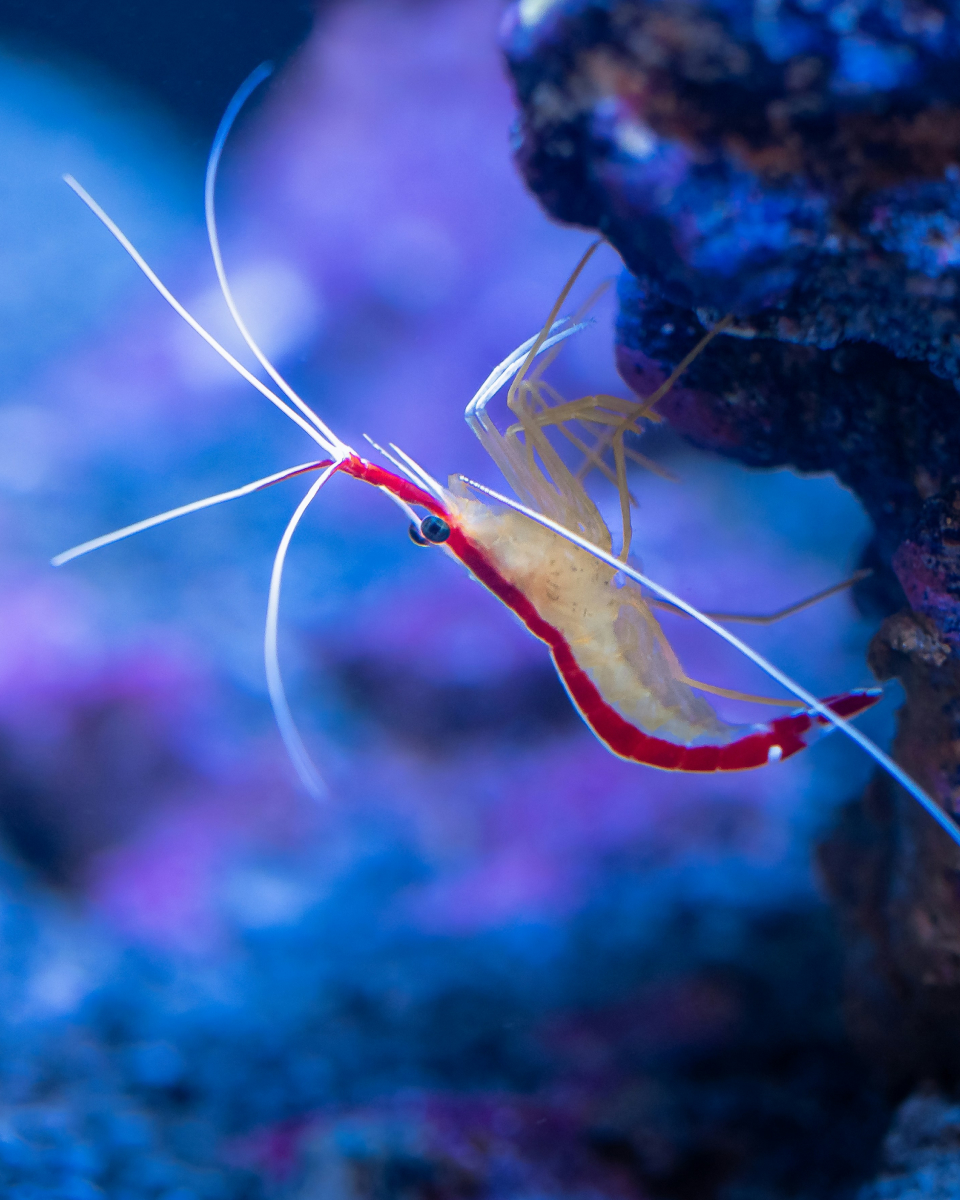
Photo by William Warby
Pandalus borealis is a protandric hermaphrodite — individuals mature first as males at approximately one year of age and then undergo sex change to female, with total lifespan up to approximately 8 years. This sex-change sequence is physiologically distinct from the protandrous hermaphroditism of gilthead sea bream and has implications for stock structure: fishing pressure on larger (female) individuals affects the reproductive capacity of the population differently than sex-neutral harvesting would. P. borealis inhabits soft and muddy substrates at 80–500 m depth (recorded to approximately 700–1,300 m) in cold, stable water masses. It is demersal, aggregating in patterns determined by depth, temperature, and substrate; it displays diel vertical migration — remaining near the seabed by day and rising to feed at night. Schooling behaviour is documented.
Crangon crangon is a small estuarine and coastal shrimp inhabiting shallow sandy and muddy substrates in the Northeast Atlantic, North Sea, and adjacent seas. Life cycles show latitudinal variation with near-continuous reproduction in warmer southern habitats and seasonal patterns further north; P/B ratios of 8.7–10.9 per year in one Portuguese estuary study indicate high annual biomass turnover.
Both species are decapod crustaceans. No species-specific cognitive testing is widely documented for P. borealis or C. crangon, but EU and UK regulatory reviews on decapods — drawing on the broader decapod sentience literature — conclude that decapods as a group are sentient and capable of experiencing pain, and recommend welfare protections at capture and slaughter. Documented responses to stress in related species include mechanoreception and chemoreception, escape behaviour, reduced feeding, and physiological indicators consistent with pain and stress physiology.
Lifecycle Summary
Cold-water shrimp exploitation is exclusively a wild capture fishery. Pandalus borealis — Northern shrimp — is caught by bottom trawl fleets operating in the North Atlantic and Arctic across Norway, Iceland, Greenland, the Faroe Islands, Canada, and Russia. Crangon crangon — brown or grey shrimp — is caught by beam trawl and bottom trawl fisheries in shallow North Sea, Wadden Sea, and Northeast Atlantic coastal and estuarine waters. Together, cold-water species supply approximately 15% of global shrimp and prawn market volume by weight, with tropical penaeids accounting for the remaining 85%. P. borealis landings peaked at approximately 450,000 tonnes around 2004 and have declined since, with ocean warming identified as a contributing factor alongside fishing pressure. C. crangon landings have stabilised at approximately 40,000–50,000 tonnes annually. Animals are not held in captivity at any point in the supply chain; death occurs primarily through asphyxia, crushing, and barotrauma in trawl codends, followed by onboard cooking or chilling.
Lifespan (Natural vs Exploited)
Pandalus borealis has a natural lifespan of up to approximately 8 years, with the male phase occupying approximately the first year before sex change to female. Maximum size and longevity are influenced by water temperature; individuals in warmer waters mature earlier and at smaller sizes. Fishing pressure truncates the age structure of exploited populations, removing individuals — primarily larger females — before they reach maximum potential age.
Crangon crangon is shorter-lived with high population turnover; cohort production studies document P/B ratios that imply rapid replacement of individual biomass annually. Growth rates and longevity vary with latitude and estuarine conditions.
Under exploitation, there is no captive grow-out period — time from capture to death is typically minutes to hours in trawl codends, on deck during sorting, and in cooking or chilling systems. There is no equivalent to the farmed species’ shortened lifespan through controlled production; instead, fishing mortality directly truncates wild age structure. Individual-level cause-of-death breakdowns are not reported in fisheries literature, which operates at stock and population level.
Exploitation Systems
Cold-water shrimp exploitation operates through a single system: industrial wild capture trawl fisheries.
Pandalus borealis fisheries. Bottom trawl and, in some fleets, midwater trawl vessels operate across the North Atlantic and Arctic. Major producing countries are Norway, Iceland, Greenland, the Faroe Islands, Canada, and Russia. Tow durations vary by fishery and regulation, ranging from less than an hour to several hours; shrimp experience crowding, turbulence, and mechanical compression in the codend before hauling. Onboard processing is standard practice in many fleets — particularly Norwegian and Icelandic vessels — where shrimp are cooked in boiling water immediately after sorting, while still alive or moribund. The product chain delivers cooked and peeled, cooked shell-on, or raw shell-on frozen product to European, North American, and global markets. A significant fraction of P. borealis landings is transported for peeling in third countries — including Morocco and parts of Asia — before re-export to consumer markets.
Crangon crangon fisheries. Beam trawls and small bottom trawls operate in shallow coastal and estuarine waters — the German Bight, Dutch and Danish North Sea coasts, the Wadden Sea, and estuaries across northern and western Europe including Portugal. German, Dutch, and Danish fleets are the primary contributors. Products include fresh, cooked, peeled, and processed brown shrimp; “North Sea brown shrimp” is a regionally significant culinary product consumed across Northern Europe. Onshore peeling and processing is standard for C. crangon, often involving manual peeling in processing plants.
Downstream product flows from both species include cooked and peeled product, cooked shell-on, frozen raw, and processed ingredients. Shell and head fractions from processing are available for chitin and chitosan extraction or rendering into protein meal, though volumes from cold-water shrimp processing are smaller than from tropical penaeid processing at global scale.
Living Conditions Across Systems
Wild habitat — pre-capture. P. borealis lives on soft substrates at 80–500 m depth in cold, stable water masses with species-appropriate dissolved oxygen, temperature, and salinity. C. crangon occupies shallow coastal and estuarine habitats at high local densities in productive intertidal and subtidal zones. Both species experience natural predation pressure, seasonal environmental variability, and density-dependent competition for food and substrate.
During trawl capture. Bottom and beam trawl gear concentrates large numbers of shrimp into codends alongside by-catch species. Animals experience very high transient densities, mechanical compression, turbulence, reduced water flow as the net fills, and progressive accumulation of waste and injury as the tow continues. Tow duration — from minutes to several hours depending on fishery and regulation — determines the duration of these conditions before hauling. On surfacing, rapid pressure reduction from operating depth contributes to barotrauma, particularly for P. borealis hauled from significant depth.
On deck and in processing. After hauling, shrimp are discharged onto sorting tables or into hoppers where they are sorted, often together with by-catch. Animals not immediately cooked are moved to chilling systems — ice bins or refrigerated seawater (RSW) tanks — where death occurs through hypothermia and asphyxia. P. borealis in many fleets is transferred live or moribund directly to cooking systems. Holding densities in onboard containers are not standardised or systematically reported.
Lifecycle Under Exploitation
Genetic Selection
No artificial selection programme exists. Fisheries exploit wild stocks with their natural genetic variation. Size-selective fishing gear — particularly minimum mesh size regulations — applies indirect selection pressure by preferentially removing larger individuals, which over time can affect population size-at-age distributions. No domesticated or selectively bred lines exist for either species.
Reproduction
Reproduction occurs entirely in the wild. P. borealis spawns in deep water following sex change; larvae develop planktonically over months before settling to benthic juvenile habitats. C. crangon reproduction patterns vary with latitude; multiple recruitment peaks per year occur in warmer southern estuaries. No captive hatchery phase exists for commercial production.
Birth & Early Life
Larval and juvenile stages develop in marine or estuarine environments without human intervention. For P. borealis, planktonic larval duration is extended; juveniles settle to progressively deeper habitats as they grow. C. crangon juveniles are abundant in shallow coastal nursery habitats.
Growth & Rearing
Growth and maturation occur entirely in natural habitats under ambient environmental conditions. Temperature, food availability, and population density govern growth rates. No feeding, water management, or confinement occurs at this stage.
Production
The production stage is the fishing operation: the annual removal of biomass from wild stocks through trawling. Stock assessments model recruitment, growth, fishing mortality, and natural mortality to estimate sustainable harvest levels; where management systems are operational, total allowable catch (TAC) or effort limits constrain annual removals. Quota systems for P. borealis operate across North Atlantic states; C. crangon management varies by national jurisdiction and is less uniformly codified.
Transport
Live transport is absent or minimal. P. borealis is typically cooked or chilled onboard before landing; C. crangon may be landed alive for onshore cooking in some nearshore fisheries. Post-processing product is transported as chilled or frozen material from landing ports to processing plants and consumer markets, including international third-country peeling operations before re-export.
End of Life
Death in trawl-caught cold-water shrimp occurs through a combination of mechanisms: crushing and mechanical injury in the filling codend during the tow; asphyxia as oxygen is depleted in the crowded net; barotrauma from rapid pressure change on hauling — particularly for P. borealis from depth; and continued asphyxia, hypothermia, and thermal shock during sorting, chilling, and processing on deck. For P. borealis in fleets using onboard cooking, alive or moribund animals are immersed in boiling water without prior stunning. No pre-stun protocol is applied in commercial cold-water shrimp fisheries. Welfare guidance for decapods recommends against boiling alive and recommends effective stunning before slaughter, but these recommendations are not yet codified in enforceable standards for cold-water shrimp fisheries in any major producing jurisdiction.
Processing
Standard processing for P. borealis includes sorting, onboard or onshore cooking, cooling, peeling (manual or mechanical), freezing, and packaging. C. crangon is typically cooked and peeled onshore. Further value-added processing may occur in importing countries. Shell and head fractions are available for chitin and chitosan extraction or rendering.
Chemical Medical Interventions
No pharmaceutical or medical interventions are applied to live cold-water shrimp at any point in the wild capture supply chain. Animals are not held in captivity prior to processing and receive no treatments for disease, reproduction, or growth.
Sulfite compounds — primarily sodium metabisulfite — are applied as preservatives post-catch to prevent melanosis (blackspot discolouration caused by enzymatic browning). Sulfite application is regulated by food safety authorities with maximum residue limits in consumer markets; specific compounds and permitted concentrations vary by jurisdiction.
Cleaning agents and sanitisers including chlorine-based compounds are used in vessel processing areas and onshore plants for food safety management; these are not applied to live animals.
Research on electrical stunning for decapod crustaceans is ongoing; no validated commercial electrical stunning system has been adopted in cold-water shrimp fisheries as of early 2026.
Slaughter Processes
Cold-water shrimp do not pass through a distinct slaughter step in most operations — death is a consequence of the capture and processing sequence rather than a targeted killing event. The primary death mechanisms are asphyxia and mechanical injury in the trawl codend during the tow, barotrauma during rapid ascent to the surface, and continued asphyxia or hypothermia during sorting and chilling on deck.
For P. borealis in fleets conducting onboard cooking — standard practice in many Norwegian, Icelandic, and Greenlandic operations — alive or moribund shrimp are transferred to boiling water immediately after sorting. Experimental work on decapod crustaceans indicates that small shrimp reach estimated stunning and killing temperatures more rapidly than larger species under boiling conditions, but measurable exposure durations are still required before confirmed death. No pre-stun protocol is applied. Welfare guidance for decapods identifies boiling alive and chilling without prior stunning as methods that do not provide rapid and reliable insensibility, and recommends electrical stunning before slaughter. These recommendations are general to decapods and have not been codified in enforceable slaughter standards for cold-water shrimp fisheries in any major jurisdiction.
Species-specific data on time-to-insensibility, pain response, and welfare outcomes under capture and processing conditions for P. borealis or C. crangon are not available in peer-reviewed literature; welfare conclusions are extrapolated from the broader decapod crustacean literature.
Religious slaughter frameworks are not documented as a significant factor for cold-water shrimp processing.
Slaughterhouse Labour Impact
Trawler crews working cold-water shrimp fisheries operate in physically demanding conditions: offshore and sometimes remote Arctic or North Atlantic environments, cold temperatures, long voyages, and the physical demands of net hauling, sorting, and onboard cooking or chilling operations. EU Parliamentary analysis of the fishing sector identifies elevated injury risk, long working hours, limited medical access at sea, and in some contexts vulnerability to labour exploitation including among migrant workers as structural characteristics of this workforce. Species-specific injury rate data for cold-water shrimp fisheries are not available; available statistics aggregate across the fishing sector.
Onshore and third-country processing — particularly manual peeling of P. borealis, which frequently occurs in dedicated peeling plants in Morocco and parts of Asia before re-export — involves highly repetitive manual tasks. Musculoskeletal strain, repetitive motion injuries, and cold working environment effects are documented risks in seafood processing broadly and apply structurally to shrimp peeling lines. Forced and exploitative labour in seafood processing supply chains is documented in EU and international reports, though attribution specifically to P. borealis or C. crangon processing is limited by the generic categorisation of such reporting.
Scale & Prevalence
Cold-water shrimp — dominated by P. borealis — supply approximately 15% of global shrimp and prawn market volume, with tropical penaeids and their farmed equivalents accounting for the remaining 85%.
P. borealis landings increased by approximately 68.5% between 1990 and 2008 across the cold-water shrimp complex, with the P. borealis fishery specifically peaking at approximately 450,000 tonnes around 2004 before declining below 400,000 tonnes by 2008 and continuing downward thereafter. Major producing nations are Norway, Iceland, Greenland, the Faroe Islands, Canada, and Russia.
C. crangon landings from Northern European waters show a long-term series that peaked in the mid-twentieth century and stabilised at approximately 40,000–50,000 tonnes in the early twenty-first century, with German, Dutch, and Danish fleets as primary contributors. Catch rates show spatial and temporal variation linked to environmental conditions in the German Bight and Wadden Sea.
For P. borealis, the directional trend is decline: multiple stock assessments and industry reports describe reduced catches since the mid-2000s peak, associated with ocean warming affecting distribution, recruitment, and population productivity in the Arctic and sub-Arctic. C. crangon fisheries are stable to variable, with ongoing management efforts to characterise sustainable exploitation levels.
Production and trade statistics for cold-water shrimp are frequently aggregated with tropical penaeid shrimp in trade and policy documents, making precise species-specific time series difficult to reconstruct from public sources.
Ecological Impact
Cold-water shrimp fisheries rely predominantly on mobile bottom-contact gear — bottom trawls for P. borealis and beam trawls for C. crangon — that disturbs seabed habitats and benthic communities with each tow. Reviews of bottom trawling document local mortality of benthic invertebrates, physical disturbance of habitat-forming species including cold-water corals and sponge beds in some trawled areas, and potential long-term effects on benthic food web structure and productivity. The magnitude of these effects depends on trawling intensity, the sensitivity of local benthic communities, and the presence and enforcement of spatial management measures such as closed areas and effort limits.
By-catch in cold-water shrimp trawls includes non-target fish, invertebrates, and juvenile shrimp below commercial size; quantitative by-catch ratios are fishery-specific and vary substantially by gear configuration, selectivity device use, and management system. Some cold-water shrimp fisheries have implemented sorting grids and escape panels that substantially reduce finfish by-catch; adoption and enforcement vary.
Fuel consumption per tonne landed is relatively high for trawl fisheries compared with passive gear alternatives, contributing to greenhouse gas emissions per unit product. Comparative analyses suggest that per kilogram of edible protein, some bottom-trawl seafood products have lower emissions than certain terrestrial meats depending on fleet efficiency, though the comparison is method-dependent.
P. borealis stocks are sensitive to ocean temperature; warming waters in the North Atlantic and Arctic are associated with distributional shifts, reduced recruitment in some areas, and altered population dynamics. Continued ocean warming is projected to affect stock productivity and the geographic distribution of commercially viable fishing grounds. C. crangon population dynamics are tied to estuarine and coastal environmental conditions, with latitudinal studies documenting growth and recruitment variation linked to salinity, temperature, and freshwater inflows.
Language & Abstraction
P. borealis is marketed as “cold-water prawns,” “Northern shrimp,” “coldwater shrimp,” or generically as “prawns” or “shrimp”; C. crangon as “brown shrimp,” “North Sea shrimp,” or “grey shrimp.” These names emphasise geographic or thermal origin and product colour over species identity. The “cold-water” descriptor primarily signals a quality and flavour positioning in premium retail and catering markets rather than a biological classification.
Trade and policy documents routinely aggregate cold-water species with tropical penaeids under “shrimps and prawns” in statistics, sustainability assessments, and regulatory categories. This aggregation makes it difficult to separate data on P. borealis and C. crangon from the far larger penaeid trade, and means that welfare or environmental assessments of “shrimp” in general consumer contexts may inadvertently apply to cold-water species whose production systems differ fundamentally from farmed tropical shrimp.
Fisheries management language — “stock,” “biomass,” “landings,” “effort,” “CPUE,” “TAC,” “F,” “M” — frames exploited animals as population-level resource units. Individual animals are absent from management discourse; exploitation is assessed through aggregate metrics of biomass removal and recruitment. “Sustainable fishing” as applied to cold-water shrimp references stock-level population replacement capacity rather than individual welfare outcomes at capture or processing.
Onboard cooking of P. borealis is described in industry and supply chain documentation as a “processing” or “quality” step — the practice of boiling alive is not named as such, absorbed into the neutral language of post-catch product handling. This framing positions the killing method as a product quality operation rather than a slaughter event with welfare implications.
“Third-country peeling” or “imported peeling” describes the supply chain practice of shipping product to low-wage processing countries for manual shrimp peeling before re-export to consumer markets. This framing locates the practice within trade and logistics language rather than making visible the labour conditions in the peeling operations that are positioned outside the primary producing country’s regulatory oversight.
Terminology
Northern shrimp, coldwater prawns, coldwater shrimp, Pandalus borealis, brown shrimp, grey shrimp, Crangon crangon, pandalids, crangonids, coldwater trawl fishery, bottom trawl, beam trawl, shrimp trawl, trawl codend, by-catch, discards, landings, fishing effort, CPUE, LPUE, stock assessment, quota, total allowable catch, TAC, Northern shrimp advisory, cooked and peeled, cooked shell-on, headless, plate frozen, block frozen, refrigerated seawater, RSW, sorting, grading, peeling, processing plant.
Within The System
Developments
Report a development: contact@systemicexploitation.org
Notice an inaccuracy or omission?
If you believe information on this page is incorrect, incomplete, or missing important context, you may submit a suggested correction for review.