
Rats
Scientific Name:
Rattus norvegicus / Rattus rattus
Scope
Covers genus Rattus, primarily brown/Norway rat (Rattus norvegicus) and black/roof rat (R. rattus), across four exploitation systems: laboratory and biomedical research, pest control operations targeting wild and commensal populations, the companion animal trade, and feeder animal production. Includes domesticated and selectively bred R. norvegicus strains (Sprague-Dawley, Wistar, Long-Evans, Fischer 344, Lewis, WAG/Rij) used in research and testing; wild and feral commensal populations subject to pest control; fancy rats in the companion trade; and feeder production for reptiles, raptors, and carnivores. Excludes non-Rattus murids (Mus musculus covered separately), wild non-commensal Rattus species used only incidentally, and rats used primarily in ecological field studies.
Species Context
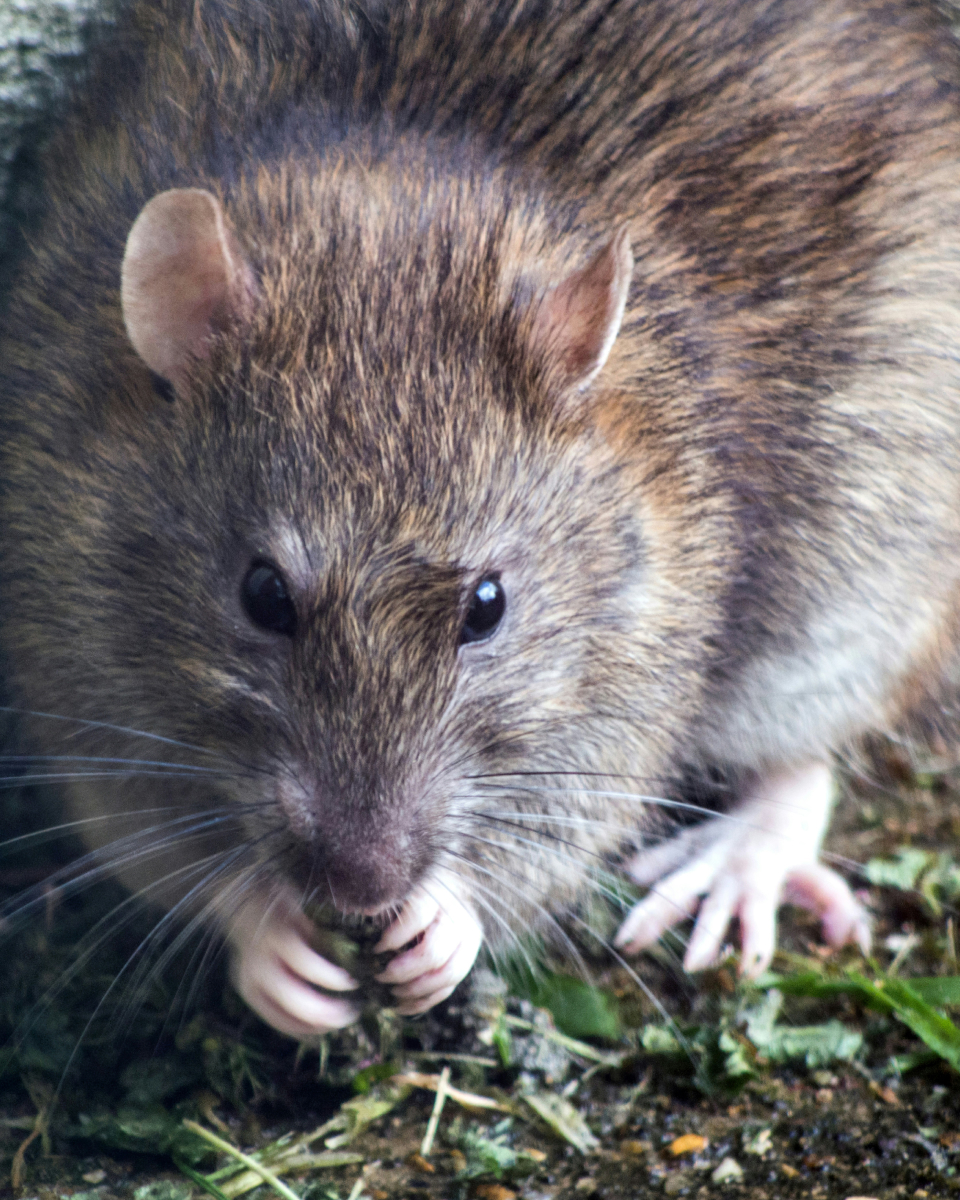
Photo by Brett Jordan
Rattus norvegicus adults typically weigh 250–500 g; R. rattus is slightly smaller and more arboreal. Sexual maturity occurs at approximately 6–8 weeks; gestation is approximately 21–23 days with litters of commonly 6–12 pups and multiple litters per year under favourable conditions. Wild Norway rats form burrow-based colonies with multi-male, multi-female structure, dominance hierarchies, and documented cooperative interactions. Strong behavioural motivation to burrow, gnaw, explore, and engage in social contact is established; preference for dark, sheltered nesting areas with gnaw material and opportunities for vertical and horizontal movement is well documented and informs laboratory housing guidelines.
Stress physiology is well characterised: chronic restraint, social isolation, crowding, high noise, and barren environments produce elevated corticosterone, stereotypies, and altered immune and cardiovascular parameters in experimental studies. Rats demonstrate spatial learning and memory, problem solving, emotional contagion, and strain-specific learning profiles across maze and operant tasks; WAG/Rij and Sprague-Dawley strains show quantified differences in short- and long-term memory performance. They are used as models for anxiety, depression, and epilepsy in ways that presuppose functional affective states. Scientific consensus accepts rats as capable of pain perception, affective states, and complex learning processes.
Rats are also the most widely distributed and ecologically impactful invasive mammal globally alongside mice. R. norvegicus and R. rattus are present on every inhabited continent and most island groups, functioning simultaneously as subjects of exploitation in laboratory systems and as targets of killing in pest management systems.
Lifecycle Summary
Rats are among the most numerically significant animals in global exploitation systems by animals killed annually, but the dominant killing system — pest control — operates without welfare regulation, without systematic kill counts, and without any equivalent to the slaughter standards that apply to food animals. In the US, rats and mice bred for research are explicitly excluded from Animal Welfare Act protections by a 2002 legislative amendment, making them the most-used research animals with the least regulatory oversight of any vertebrate group in the country. In Europe, rats account for approximately 13.9% of all animals used in research — second only to mice — governed by EU Directive 2010/63/EU. A 2021 extrapolation estimated approximately 111 million rats and mice used annually in US laboratories combined, with rats comprising a substantial but unspecified fraction. Pest control kills are not systematically counted globally; urban and agricultural rat management using second-generation anticoagulant rodenticides causes death through internal haemorrhage over days, with documented secondary poisoning of non-target predators and scavengers at scale.
Lifespan (Natural vs Exploited)
Wild and feral R. norvegicus have a typical lifespan of approximately 1–3 years, with many individuals dying within the first year from predation, disease, food limitation, and pest control. Maximum recorded lifespans reach approximately 4–5 years under favourable conditions.
In laboratory research colonies, median lifespans under standard pathogen-controlled conditions are approximately 2–3 years, with some individuals in low-stress enriched settings reaching 3–4 or more years depending on strain. Most research animals are killed at scheduled protocol endpoints — often young adult age — before natural senescence. OECD guideline 408 (90-day oral toxicity) and carcinogenicity studies terminate all animals at fixed endpoints determined by protocol, not age.
Pet rats in hobbyist settings commonly live 2–3 years; neoplasia and respiratory disease are the primary causes of mortality. Upper limits of 4 or more years are occasionally reported.
In pest control operations, death from anticoagulant rodenticides typically occurs over days to weeks following exposure, depending on compound and dose; acute rodenticides (zinc phosphide) kill more rapidly. Large proportions of targeted local populations can be eliminated within weeks during intensive control campaigns.
Exploitation Systems
Rats are exploited across four systems with substantially different regulatory frameworks, scales, and operational logics.
Biomedical and toxicological research. The primary documented system. Laboratory rats — predominantly Sprague-Dawley, Wistar, and Fischer 344 outbred and inbred strains — function as disease models, pharmacokinetic and toxicokinetic subjects, behavioural assay subjects, and surgical training animals. Core applications include neuroscience, physiology, pharmacology, oncology, carcinogenicity testing, and regulatory safety assessment. OECD test guideline 408 mandates 90-day repeated-dose oral toxicity studies using rodents as the standard regulatory requirement for chemical safety assessment globally; carcinogenicity testing (OECD TG 451, 452, 453) uses rats over 24-month study periods. Downstream product flows include tissues, organs, and biofluids for histopathology, molecular analysis, cell lines, and biobanked reference material. Biotechnology and pharmaceutical applications include preclinical efficacy and safety evaluation of drugs, biologics, and devices, with rat data underpinning regulatory submissions.
Pest control. The operationally dominant system by animals killed, entirely unquantified. R. norvegicus and R. rattus are managed as invasive and nuisance species in urban infrastructure, agricultural storage, food processing facilities, and island conservation contexts. Control methods include anticoagulant rodenticides delivered via bait stations, acute toxicants (zinc phosphide), snap and kill traps, live traps followed by manual killing, and habitat modification. Second-generation anticoagulant rodenticides — brodifacoum, bromadiolone, difenacoum — are dominant in urban and agricultural applications; first-generation compounds (warfarin, chlorophacinone) are used where resistance to second-generation agents has not developed. Documented anticoagulant resistance in some populations has prompted regulatory reviews and restrictions in parts of Europe and North America. Kill totals are not recorded; no welfare standard, stunning requirement, or kill method regulation applies to pest control killing in any jurisdiction reviewed.
Companion animal trade. Domesticated “fancy rats” — selectively bred R. norvegicus variants — are sold through pet shops, breeders, and rescue organisations. Coat colour, pattern, coat type (standard, rex, hairless), ear type, and temperament are selection targets. Pet rat populations overlap partially with surplus laboratory animals redirected to the companion market. Global population counts are not available; the system is present across Europe, North America, and Australia.
Feeder animal production. Rats are bred and killed as food for captive reptiles, raptors, and carnivorous mammals in private collections and zoological institutions. Feeder production uses rack systems with plastic tubs similar to laboratory housing, with size grades — pinkies (newborn), fuzzies, weaners, jumbo — determining market category. Carcasses are sold frozen or live. Kill methods include CO₂ chambers and cervical dislocation; production scale and welfare conditions are not systematically reported in scientific literature.
Living Conditions Across Systems
Laboratory housing. European standards, including ETS 123 and GV-SOLAS interpretations, specify minimum floor areas of 800 cm² per cage with at least 200 cm² per rat up to 200 g body weight, with recommendations for cages of 1,500–1,800 cm² for groups and multi-level configurations. Typical practice groups 2–6 same-sex animals; single housing requires protocol-specific justification. Standard features include solid-bottom polycarbonate or polysulfone cages or individually ventilated cages (IVCs), absorbent bedding (wood shavings, corn cob), nesting material, shelters or tubes, and 12:12 light-dark cycles. IVC systems reduce inter-cage olfactory contact and can increase background airflow noise. Barren cage configurations — absent nesting, enrichment, or shelter — are documented in some laboratory settings; welfare literature consistently documents adverse effects of environmental deprivation on this species.
Pest control environments. Wild rats occupy self-constructed burrow systems, building cavities, sewers, and vegetation cover, with no human provisioning. During intensive control campaigns, bait station exposure may be the primary environmental contact with the human system. No captive holding conditions apply.
Companion animal housing. Pet rats are commonly kept in wire or plastic multi-level enclosures; no globally standardised minimum space requirements exist. Welfare recommendations from veterinary and hobbyist sources emphasise group housing, substrate for burrowing, gnaw material, and environmental complexity, but compliance is unmonitored.
Feeder production facilities. Rack systems with plastic tubs similar to laboratory nursery housing; published data on stocking densities, enrichment provision, and environmental conditions are limited.
Lifecycle Under Exploitation
Genetic Selection
Laboratory systems maintain and develop inbred, outbred, and transgenic strains with defined genetic backgrounds: Sprague-Dawley (outbred, general purpose), Wistar (outbred, general purpose), Fischer 344 (inbred, carcinogenicity studies), Lewis (inbred, immunology), WAG/Rij (inbred, absence epilepsy model), and Long-Evans (outbred, behavioural studies). Selection targets specific physiological, behavioural, or disease-model traits alongside fecundity and viability. Selective Breeding in companion and feeder systems targets coat characteristics, temperament, and growth rate through informal hobbyist and small-breeder networks. Pest populations undergo unmanaged selection pressure from rodenticide exposure, producing documented resistance alleles in some European and North American populations.
Reproduction
Laboratory breeding colonies use controlled monogamous or harem mating, timed pregnancies, and SPF health status maintenance. Breeding records manage strain integrity and lineage; litter size and weaning rates are monitored against colony performance targets. Reproductive Cycle Manipulation through photoperiod control is applied in some research facilities to coordinate breeding schedules.
Birth & Early Life
Laboratory pups are born in cages and remain with the dam until weaning at approximately 3–4 weeks. Early-life interventions include Identification Marking via ear notching, ear tags, or microchip implantation for individual tracking, and tissue sampling (tail tip or ear punch) for genotyping. High early mortality is the norm in wild commensal populations from predation, disease, and environmental disturbance.
Growth & Rearing
Post-weaning laboratory rats are grouped by sex and housed in standard cages with ad libitum formulated diet and water; body weight and growth trajectory are monitored for study eligibility. Toxicology studies require acclimation periods before dosing begins. Feeder production accelerates growth via high-energy diets to reach target size grades as rapidly as possible.
Production
In research and regulatory testing, the production phase is experimental use: oral gavage, injection, inhalation exposure, blood sampling, imaging, behavioural testing, and surgical procedures under defined study protocols. OECD guideline 408 studies dose animals for 90 days with daily monitoring; carcinogenicity studies extend to 24 months. In education, production consists of anatomy dissection, anaesthetised physiological demonstrations, and behavioural studies. In feeder production, production is growth to target size grade. Animal Experimentation is the defining practice of the research phase.
Transport
Laboratory transport between commercial breeders and research facilities uses ventilated transport crates with bedding and food, governed by institutional and regulatory guidelines for temperature and ventilation. Journey durations range from hours to more than one day. Feeder and pet rats move through supply chains from breeders to wholesalers to retailers in plastic tubs or ventilated boxes with limited published welfare monitoring.
End of Life
Laboratory euthanasia follows institutional and national guidelines. CO₂ inhalation in chambers with controlled fill rates is the dominant method in many facilities, often preceded by anaesthetic induction to reduce aversive responses; a secondary physical method — cervical dislocation, bilateral thoracotomy — is required to confirm death. CO₂ is classified as conditionally acceptable by AVMA (2020) but is documented as aversive: rats show escape behaviour, increased activity, and vocalisations during CO₂ exposure before loss of consciousness, and the method generates ongoing welfare debate in the laboratory animal literature. Anaesthetic overdose — injectable barbiturates intraperitoneally or intravenously — is used where CO₂ is contraindicated. Physical methods including cervical dislocation and decapitation are used under anaesthesia or as secondary confirmation steps.
Pest control killing via anticoagulant rodenticides produces death through progressive internal haemorrhage over a period of days to weeks; the animal remains ambulatory and feeding-active for part of this period before haemorrhagic collapse. No analgesia or welfare monitoring applies. Snap traps deliver cranial or cervical trauma on trigger; failure rates are not systematically reported. Live traps require subsequent manual killing.
Processing
Laboratory post-mortem processing includes full necropsy with organ and tissue collection for histopathology, molecular analysis, and biobanking; the protocol scope determines which organs are weighed and sampled. Carcasses are disposed of as biohazardous waste via incineration, or as chemical waste where experimental exposures require it. Pest control carcasses are left in situ, collected for incineration, or in conservation contexts sampled for rodenticide residue analysis. Feeder carcasses are eviscerated or left whole, frozen, and packaged for distribution.
Chemical Medical Interventions
Anaesthetic agents used in laboratory procedures include inhalational agents (isoflurane, sevoflurane) and injectable combinations (ketamine with xylazine or medetomidine). Analgesics include buprenorphine, meloxicam, and carprofen for peri-operative pain management.
Euthanasia chemicals include CO₂ as the dominant inhalational method, delivered at fill rates of approximately 30–70% chamber volume per minute per institutional SOP; overdose of pentobarbital or other barbiturates via intraperitoneal or intravenous injection is the alternative for larger animals or where CO₂ is contraindicated. CO₂ is documented as aversive in rats before unconsciousness — elevated corticosterone, escape attempts, and vocalisation are observed during exposure — and is subject to ongoing welfare scrutiny despite its widespread adoption.
Experimental compounds administered across research protocols span investigational drugs (small molecules and biologics), contrast agents, tracers, and toxicological test substances delivered by oral gavage, injection, inhalation, or dermal application in accordance with OECD and ICH test guidelines.
Surgical interventions include catheter implantation, telemetry device insertion, electrode placement, and disease-model induction — WAG/Rij rats are used in absence epilepsy research involving electrode-based seizure characterisation; specific strain-disease pairings determine the surgical and chemical protocol suite.
Rodenticides used in pest control include first-generation anticoagulants (warfarin, chlorophacinone — multiple feeds required, lower secondary poisoning risk) and second-generation anticoagulants (brodifacoum, bromadiolone, difenacoum, difethialone — single feed lethal dose, high secondary poisoning risk, persistent tissue accumulation). Resistance to first-generation and some second-generation compounds is documented in R. norvegicus populations across Europe and North America, driven by VKORC1 gene variants; regulatory restrictions on second-generation agent use in outdoor and agricultural settings have been implemented in some EU member states and US states in response. Zinc phosphide is used as an acute rodenticide in some agricultural and conservation contexts; mode of action is production of phosphine gas in the stomach on contact with moisture and acid.
Secondary poisoning of non-target species from anticoagulant rodenticides is documented at scale: approximately 44% of examined dead birds, mammals, and reptiles in one US study dataset showed anticoagulant rodenticide exposure.
Slaughter Processes
CO₂ chamber exposure is the dominant method for batch euthanasia of laboratory rats; AVMA Guidelines 2020 classify it as “conditionally acceptable”, requiring fill rate compliance and secondary method confirmation. CO₂ aversion in rats is well established through behavioural studies — a documented response that distinguishes this method from the more contested hypothermic shock debates in fish welfare literature — and the method remains in use primarily due to operational convenience and cost. Physical methods — cervical dislocation and decapitation — are restricted to specified body weight ranges and competency requirements; their acceptability as primary methods without prior anaesthesia is contested in current guidelines.
Pest control killing occurs without welfare regulation, without method standards, and without throughput monitoring. Anticoagulant rodenticide death — the dominant method — is prolonged haemorrhagic disease over days, without analgesia, stunning, or welfare assessment. Snap trap failure — traps that injure but do not kill, or kill slowly — is not systematically studied for rats specifically. No regulatory framework requires a welfare threshold for pest animal killing in any jurisdiction reviewed.
Feeder animal killing uses CO₂ and cervical dislocation in production settings; practices are not standardised or subject to external audit.
Religious slaughter frameworks do not apply to rats in any system.
Slaughterhouse Labour Impact
Laboratory euthanasia is performed by animal facility technicians, researchers, and veterinarians. Batch CO₂ euthanasia of large cohorts — standard at study endpoints in regulatory toxicology — involves repetitive high-volume killing. Broader laboratory animal welfare literature documents moral distress and psychological impact among staff performing routine animal killing as a structural feature of this work; rat-specific occupational health data are not separately reported.
Pest control technicians apply rodenticides and traps in residential, commercial, agricultural, and conservation environments; their occupational health data are aggregated with the broader pest control industry and are not rat-specific. Rodenticide handling involves occupational exposure risks managed through PPE requirements.
The broader slaughterhouse literature documents elevated rates of PTSD-like symptoms, depression, and physical injury among high-volume animal-killing workers; this literature is not specific to rat systems. Its applicability to batch laboratory euthanasia contexts — where volume, repetition, and the routine nature of the killing are structurally similar — is noted but not directly evidenced.
Scale & Prevalence
Research and testing: in the EU, rats account for approximately 13.9% of all animals used in research, second only to mice at 60.9%. A 2021 analysis extrapolating from partial US institutional datasets estimated approximately 111 million rats and mice used annually in US laboratories combined; the rat fraction is not separately reported in this estimate. US rats and mice bred for research are excluded from Animal Welfare Act reporting requirements under a 2002 legislative amendment, meaning no official count of research rats exists in the US — the world’s largest research user.
Pest control: global kill totals are not systematically recorded. R. norvegicus and R. rattus are present across all inhabited continents and most island groups. Urban and agricultural pest management programmes operate continuously; island eradication campaigns have targeted millions of individuals per operation in conservation contexts. No global or national aggregate kill figure is available.
Companion and feeder systems: global population counts are not available. Pet rat ownership is present across Europe, North America, and Australia; feeder production operates globally in parallel with reptile and raptor keeping. Neither system is reported in FAO agricultural statistics.
Directional trends: sustained or increasing laboratory use is consistent with growth in biomedical and toxicological research outputs. Pest control use is stable given the persistence of commensal rat populations in urban and agricultural systems globally. Resistance development in target populations may be shifting rodenticide use patterns.
Ecological Impact
R. norvegicus and R. rattus are identified as among the most impactful invasive species globally, contributing to crop and stored food losses, infrastructure damage, and direct predation on native wildlife. Rodent predation on islands is documented as a driver of local extinction and range contraction for native birds, reptiles, and small mammals; eradication campaigns on islands are conducted specifically to protect endangered species. Rat presence suppresses seabird breeding success on invaded islands at documented scale; eradication restores seabird populations in documented case studies.
Second-generation anticoagulant rodenticides used in pest control accumulate in food chains. Approximately 44% of examined dead non-target birds, mammals, and reptiles in one US carcass study showed rodenticide exposure, evidencing systemic secondary poisoning across terrestrial food webs. Regulatory restrictions on outdoor and agricultural use of second-generation compounds in some EU member states and US states have been implemented in response.
Rats in laboratory systems consume formulated feed, bedding, and facility resources. Direct environmental impact per animal is small; aggregate facility-level ecological footprints — energy, water, materials — are not reported species-specifically. Wastewater from research facilities may contain experimental compound residues; disposal is governed by institutional environmental health and safety protocols.
Language & Abstraction
In research and regulatory contexts, rats appear as “model organism,” “test system,” “test species,” “rodent model,” and “laboratory rat” — positioning individual animals as standardised biological instruments within experimental design. Strain and line designations — “Sprague-Dawley,” “Wistar,” “Fischer 344,” “WAG/Rij” — function as quality and consistency descriptors, framing rats as interchangeable units of a defined specification. Lifecycle stages are described as “acclimation,” “dosing period,” “satellite group,” “dose group,” and “necropsy” — a technical sequence in which the death of the animal is the “necropsy” endpoint rather than a killing event requiring welfare framing.
The aggregation of rats with mice in most reporting frameworks — “rats and mice,” “rodents,” “small mammals” — is the most structurally significant abstraction in this record. It means that rats, as the second most-used research animal in Europe and a major research species globally, have no independently reported use figure in the US or in most global assessments. The 2002 Farm Bill exclusion of rats and mice from the US Animal Welfare Act is the regulatory expression of this aggregation: the legislative amendment explicitly removed them from the definition of “animal” for AWA purposes, producing a gap between research scale and regulatory oversight that has no equivalent for any other vertebrate group in the US system.
In pest control contexts, “pest,” “vermin,” “commensal rodent,” “target species,” and “rodent pressure” frame rats as population-level management problems rather than individual animals. Secondary poisoning of non-target wildlife is described as “non-target species exposure” or “incidental” take — terms that position the killing of eagles, owls, foxes, and other predators as collateral management rather than a direct consequence of rodenticide use.
“Fancy rat” in the companion trade distinguishes the domesticated pet-trade animal from the wild pest — the same species, R. norvegicus, positioned at opposite ends of the value spectrum within a single record. This bifurcation — where the same species is simultaneously killed at mass scale without regulation and kept as a companion with welfare product lines — is a structural feature of rat exploitation not present in any other record in the database.
Terminology
Model organism, test system, rodent model, laboratory rat, Sprague-Dawley, Wistar, Long-Evans, WAG/Rij, Fischer 344, Lewis rat, specific pathogen-free, SPF colony, dose group, control group, satellite group, breeding stock, breeder pair, weanling, juvenile, adult, naïve animal, test article, vehicle control, necropsy, carcass disposal, pest, vermin, commensal rodent, target species, non-target species, rodent pressure, rodent control, bait station, anticoagulant rodenticide, first-generation anticoagulant, second-generation anticoagulant, rodenticide resistance, feeder rat, pinkie, fuzzy, weaner, jumbo rat, fancy rat.
Within The System
Developments
Report a development: contact@systemicexploitation.org
Notice an inaccuracy or omission?
If you believe information on this page is incorrect, incomplete, or missing important context, you may submit a suggested correction for review.