
Cows
Scientific Name:
Bos taurus / Bos indicus
Scope
Covers domestic cattle: Bos taurus, Bos indicus, and their hybrids, including dairy, beef, and dual-purpose breeds. Includes all cattle managed within agricultural systems for meat, milk, draught, breeding, and by-product extraction, including blood- and foetal-derived materials used in pharmaceutical and biomedical manufacturing. Excludes wild bovines (Bos gaurus, Bos javanicus, Bison spp.) and unmanaged feral populations.
The record title uses “Cows” as the common display name; body content uses “cattle” as the correct collective term covering animals of all sexes and ages within the species.
Species Context
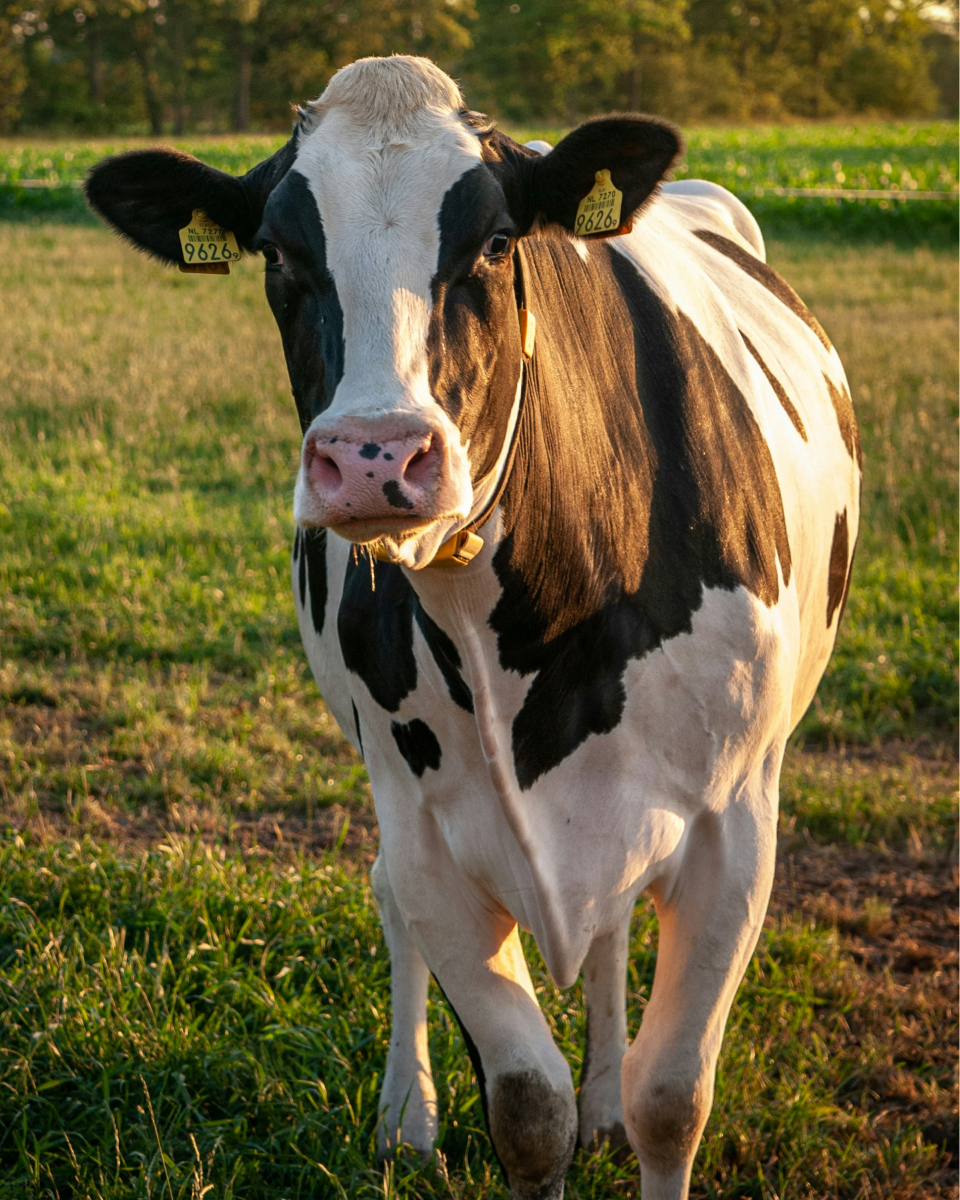
Photo by Jorien Loman
Cattle are large ruminant herbivores with a four-compartment digestive system adapted to continuous grazing and rumination. In unmanaged conditions they form stable social groups with matrilineal cores, linear dominance hierarchies, and long-term affiliative bonds between individuals.
They display consistent behavioural motivation for locomotion, lying with adequate space and soft substrate, grooming, exploration, and social interaction. Restriction of these behaviours in confined systems is associated with stereotypies including bar-biting, tongue-rolling, and cross-sucking. Scientific evidence supports nociception, affective pain processing, associative and spatial learning, long- and short-term memory, and individual recognition of both conspecifics and humans, with measurable stress responses to handling, confinement, weaning, and environmental change.
Lifecycle Summary
Cattle exploitation systems are structured around controlled reproduction — primarily through Artificial Insemination and Reproductive Cycle Manipulation — early-life separation of calves from mothers, and selective growth pathways determined at birth. Dairy and beef systems are structurally interconnected: surplus male dairy calves are diverted into Veal Production, early slaughter, or low-value beef pathways within days or weeks of birth. Outputs extend beyond meat and milk into hides, rendered materials, and blood- and foetal-derived products — including foetal bovine serum — used across industrial and biomedical sectors.
Lifespan (Natural vs Exploited)
Under low-mortality conditions, cattle can reach 18–22 years. Within exploitation systems, lifespan is determined by production role.
High-input dairy cows are typically culled at 5–7 years following 2.5–4 productive years after first calving. Main culling causes include fertility failure, mastitis, lameness, and metabolic disease. Pasture-based and dual-purpose systems report marginally longer productive lifespans. Beef cattle are slaughtered at 12–24 months in intensive feedlot systems and 18–36 months in extensive systems. Breeding cows in extensive systems may remain 8–12+ years before culling.
Surplus male dairy calves represent the shortest lifespans in the system: on-farm killing within days of birth, early slaughter at a few weeks of age, or entry into veal systems with slaughter at 5–7 months (classified as veal at ≤8 months under EU definitions).
Exploitation Systems
Cattle exploitation operates across primary production, secondary subsystems, genetic systems, and downstream material extraction.
Dairy. Continuous lactation systems producing milk for direct consumption and processing into cheese, butter, and powder. Sustained through repeated calving, mechanical milking, and early calf separation. Surplus offspring — predominantly males — are diverted into secondary pathways.
Veal. Structurally linked to dairy. Surplus male dairy calves are moved to veal units at a few weeks of age and reared on controlled liquid diets for slaughter at 5–7 months. White veal systems restrict iron and roughage to maintain pale meat colour. Rosé veal systems use higher iron and fibre diets and group housing.
Beef. Meat production through cow-calf, backgrounding, and finishing systems, including pasture-finished and feedlot pathways. Carcasses processed into cuts, offal, and rendered products.
Dual-purpose. Combined milk and meat systems with lower output intensity per function. Longer productive lifespans than high-input dairy.
Draught. Use of cattle — particularly Bos indicus — for agricultural labour in parts of Asia and Africa. Work animals subjected to repeated load-pulling and extended working hours.
Breeding and genetics. Controlled reproduction systems distributing genetic material via Artificial Insemination and Embryo Transfer. Nucleus and multiplier herds supply semen, embryos, and breeding stock globally.
By-products and biotech. Slaughter supplies hides for leather, bones and fat for gelatin and tallow, blood for bovine serum albumin (BSA), and offal for rendering. Foetal bovine serum (FBS) is derived from foetal blood collected by cardiac puncture from foetuses removed from pregnant cows at slaughter. FBS is used as a nutrient supplement in cell culture, vaccine production, and biomedical research.
Entertainment. Cattle — including bulls and steers — are used in rodeo events (bull riding, steer wrestling, team roping) and regional bull-based spectacles in some countries. Animals are selected for temperament, transported frequently, and exposed to repeated high-stress handling events.
Living Conditions Across Systems
Intensive dairy (freestall/loose housing). Indoor group housing in freestall barns with cubicles, concrete alleys, and centralised feeding. Social groups of 50–200+ cows. Limited or no pasture access. Mechanical milking 2–3 times daily.
Tie-stall dairy. Individual tethering by the neck restricting movement to standing and lying. Some seasonal pasture access provided, but daily locomotion is otherwise highly constrained. Associated with impaired expression of lying behaviours and altered affective measures relative to loose housing.
Pasture-based dairy. Substantial time on pasture with free movement and grazing. Associated with lower rates of lameness, hock lesions, mastitis, and uterine disorders relative to continuous indoor housing.
Feedlot systems. High-density outdoor or partially covered pens with bare soil or compacted ground. Ad libitum high-energy grain rations. Large, frequently mixed social groups with competition at feed bunks.
Extensive systems. Low-density grazing over large land areas. Animals can move and form stable social groups. Welfare concerns include variable nutrition, disease, parasitism, and climatic extremes rather than confinement.
Veal systems. Indoor housing. Conventional white veal: individual crates or narrow stalls with severe movement restriction, iron-poor liquid diets, limited roughage. Associated with anaemia risk, poor rumen development, and stereotypies. EU regulations prohibit individual housing beyond 8 weeks. Rosé veal: group housing, deeper bedding, higher iron and fibre diets.
Calf rearing. Dairy calves housed individually in hutches or small pens immediately after separation. Restricted milk feeding associated with cross-sucking and other abnormal oral behaviours. Group housing with adequate space is associated with more normal social development.
Lifecycle Under Exploitation
Genetic Selection
Selective Breeding defines production traits across dairy, beef, and dual-purpose systems. Dairy selection targets lactation yield, udder conformation, milking speed, and fertility. Beef selection targets growth rate, feed conversion, carcass composition, and climate adaptability.
Reproduction
Artificial Insemination and Reproductive Cycle Manipulation regulate breeding timing, frequency, and genetic distribution. Oestrus synchronisation and hormonal protocols manage calving intervals. Target in dairy is calving every 12–14 months to maintain continuous lactation. Embryo Transfer is used in elite breeding herds.
Birth & Early Life
In dairy systems, calves are separated from the dam within hours to 1–2 days and reared on milk replacer. Surplus male dairy calves — with limited economic value in dairy breeds — are subject to on-farm killing within days of birth, transport for early slaughter, or sale to veal units. Premature Weaning and Separation structures early-life detachment across all dairy-linked pathways.
Growth & Rearing
Dehorning and Disbudding are performed within the first weeks of life across horned breeds in both dairy and beef systems, commonly without full anaesthesia or analgesia depending on jurisdiction. Castration and Identification Marking are applied in many systems. Dairy heifers are reared to target breeding weight. Veal calves enter controlled rearing on restricted diets. Beef calves grow with dams in cow-calf systems before entering backgrounding or Feedlot Housing for finishing. Growth Acceleration interventions including implants are used in some beef systems depending on regulatory context.
Production
Milk Extraction maintains continuous lactation in dairy systems via milking parlours or robotic systems 2–3 times daily. Feedlot cattle are fed high-energy rations for rapid weight gain with close health monitoring. Extensive beef and dual-purpose systems rely on grazing with supplemental feed.
Transport
Live Transport moves animals between production stages — farm to rearing unit, rearing to feedlot, farm to market, and farm or feedlot to slaughter. Journeys range from short local trips to multi-day transits. Stressors include handling, mixing, stocking density, thermal load, and deprivation of feed and water.
End of Life
Slaughter terminates production cycles for dairy cull cows, beef cattle at target weight, and veal calves at 5–7 months. On-Farm Slaughter occurs for animals unfit for transport. Selective Culling removes non-productive animals across lifecycle stages. Male dairy calves not entering veal or beef pathways are subject to on-farm killing within days of birth.
Processing
Cattle are stunned prior to exsanguination, primarily using penetrating captive-bolt devices. Audits from high-throughput facilities report non-negligible initial stunning failure rates requiring repeat application. Religious slaughter exemptions permitting pre-stun omission apply in various jurisdictions for halal and kosher supply chains, with significant regional variation. High line speeds in large abattoirs constrain time for effective restraint and stun verification. Carcasses are processed into meat cuts, offal, hides, and rendered materials. Blood is collected for BSA production. Foetal bovine serum is extracted from foetuses recovered from pregnant cows at slaughter via cardiac puncture.
Chemical Medical Interventions
Antimicrobials, vaccines, and antiparasitic agents are used across systems to manage disease and maintain productivity. Metaphylactic antimicrobial treatment for bovine respiratory disease is standard practice in some feedlot systems.
Hormonal treatments are used in reproductive cycle management — including prostaglandins, GnRH analogues, and progesterone inserts — for oestrus synchronisation and calving interval control.
Growth-promoting implants containing natural and synthetic hormones are used in beef systems in jurisdictions where permitted (including the United States); banned in the EU and several other markets.
Caustic paste, hot-iron cautery, and surgical dehorning are used for horn removal. Best-practice guidelines recommend local anaesthesia and systemic analgesia; uptake is variable by jurisdiction and enforcement.
Slaughter Processes
Cattle are stunned prior to exsanguination in most jurisdictions. Penetrating captive-bolt devices are the dominant method, delivering a bolt to the frontal or poll region of the skull to induce immediate unconsciousness. Non-penetrating bolt and electrical stunning are used in some contexts.
Captive-bolt failure rates — requiring repeat stunning — are documented in audit literature from high-throughput facilities but are not consistently reported across jurisdictions. Effective stun verification before shackling and hoisting is subject to variable enforcement.
Religious slaughter exemptions permitting slaughter without prior stunning apply to halal and kosher supply chains in multiple jurisdictions. Some regulatory frameworks require immediate post-cut stunning; others permit full exemption. The proportion of cattle slaughtered without pre-stun varies significantly by country and market.
Throughput in large abattoirs operates at industrial scale. Line speed pressures can constrain effective restraint, stunning accuracy, and consciousness verification.
Slaughterhouse Labour Impact
Slaughter and processing are labour-intensive, high-throughput operations associated with repetitive physical tasks, high rates of musculoskeletal injury, and documented psychological stress in workers performing killing and cutting tasks. Injury rates in beef processing are among the highest in manufacturing sectors in documented markets.
Labour sourcing in large processing facilities frequently relies on migrant or precarious workforces in multiple production regions, including the United States, Australia, and parts of Europe. Union presence varies significantly by country and facility. Workforce demographics and labour conditions in low- and middle-income production contexts remain poorly documented in publicly available sources.
Scale & Prevalence
The global cattle population was approximately 1.58 billion head in 2024 (FAO/Our World in Data). Major national herds: Brazil ~197 million (ABIEC 2024 — note: earlier figures of ~238 million overestimate relative to recent Brazilian sector data), India ~195 million, United States ~87 million, Ethiopia ~72 million, China ~70 million.
Cattle populations are distributed across intensive commercial systems concentrated in North America, Europe, parts of Latin America, and Australia; mixed crop-livestock systems across Asia, Africa, and Latin America; and extensive pastoral systems across sub-Saharan Africa, South Asia, and parts of South America.
Global cattle populations have remained stable to increasing overall, with growth concentrated in low- and middle-income regions. Intensification — higher output per animal — is the dominant trend in high-income production systems.
Major disease events have caused significant episodic mortality outside normal production cycles. BSE outbreaks in the UK and parts of Europe from the 1980s onward resulted in large-scale culling and long-term structural changes to herd composition and slaughter profiles. The UK 2001 foot-and-mouth disease outbreak resulted in the slaughter of approximately 6 million cattle and other livestock under stamping-out policy.
Ecological Impact
Cattle systems are among the largest contributors to agricultural greenhouse gas emissions globally. FAO’s 2013 assessment attributed approximately 14.5% of global anthropogenic greenhouse gas emissions to livestock supply chains, with cattle contributing roughly two-thirds of that figure — approximately 3.8 Gt CO2-equivalent annually, primarily through enteric methane. FAO’s 2023 communications have revised methodology and sectoral estimates; the 14.5% figure should be treated as specific to the 2013 life-cycle framework rather than as a current fixed value.
Enteric fermentation in cattle accounts for a substantial share of global agricultural methane, released primarily via eructation. Manure contributes to nutrient loading, ammonia emissions, and nitrous oxide release. Liquid manure systems are associated with higher methane emissions than solid manure management.
Cattle production drives land use for grazing and feed crop cultivation, contributing to deforestation and biodiversity loss in expansion regions — particularly the Brazilian Cerrado and Amazon biomes. Extensive systems occupy large land areas per unit of output; intensive systems concentrate local environmental impacts including nutrient surpluses and odour.
Foetal bovine serum production requires the slaughter of pregnant cows and collection of foetal blood. FBS volumes are linked to the incidence of pregnant cows in slaughtered populations, which is poorly quantified in global inventories.
Language & Abstraction
Cattle are classified by production role and lifecycle stage — dairy cow, beef cattle, cull cow, replacement heifer, feeder, finisher, stocking unit — framing animals as interchangeable functional units within production systems. Classification erases individual variation and frames culling decisions as resource allocation.
Surplus male dairy calves are described in industry and policy documents as “surplus calves,” “bobby calves,” or “unwanted calves,” framing systematic early-life killing as the management of overflow rather than as a structural mortality category produced by the dairy system. “Veal” and its subcategories — “white veal,” “rosé veal” — foreground meat colour and product attributes, obscuring the underlying housing and feeding regimes and the structural relationship to dairy.
Terms such as “culling,” “processing,” and “throughput” describe removal and slaughter as operational processes. “Cull cow” and “salvage value” frame animals at the end of productive life as commodities for residual extraction.
Biotech products derived from cattle — foetal bovine serum, bovine serum albumin, collagen — are described in commercial and scientific literature by biochemical function and purity parameters, with limited explicit reference to the slaughter procedures and foetal collection processes underlying their production.
Terminology
Livestock, cattle, dairy cow, beef cattle, cull cow, replacement heifer, bobby calf, surplus calf, veal calf, feeder, finisher, steer, bullock, heifer, bull, ox, draught animal, herd, stock, production animals, slaughter cow, spent cow, stocking unit, dressed weight, hot carcass weight, throughput, processing, offal, by-products, foetal bovine serum, bovine serum albumin, tallow, rendering.
Within The System
Developments
Operation Carne Fraca meatpacking corruption
Ban on live animal maritime exports
Health of Animals Regulations transport amendments
SAG Decrees implementing welfare regulations
Investigation into livestock auction market conditions
Law 2385 progressive bullfighting ban
Regulation for scaled livestock & poultry farms
Mandatory pre-stunning ends religious slaughter exemption
Live export ban will not be repealed this term
Farm Animal Confinement Initiative
Restriction on live animal exports to non-EU countries
Mandatory CCTV in slaughterhouses
Ban on livestock exports for slaughter
Multi-year epizootic & poultry & dairy depopulations
Report a development: contact@systemicexploitation.org
Notice an inaccuracy or omission?
If you believe information on this page is incorrect, incomplete, or missing important context, you may submit a suggested correction for review.