
Sheep
Scientific Name:
Ovis aries
Scope
Covers domestic sheep (Ovis aries), including primary commercial breeds and crossbreds kept for meat, wool, milk, skins, and research — among them Merino, Suffolk, Dorper, and East Friesian. Includes farmed populations across extensive rangeland systems, semi-intensive pasture with housing, intensive feedlot and fattening units, dairy sheep systems, commercial breeding flocks, and research animals.
Excludes wild sheep species (mouflon, bighorn, and related Ovis taxa) except where used as lifespan or biological comparators. Excludes feral sheep populations where no commercial use occurs. Excludes other small ruminants (goats, antelope).
Species Context
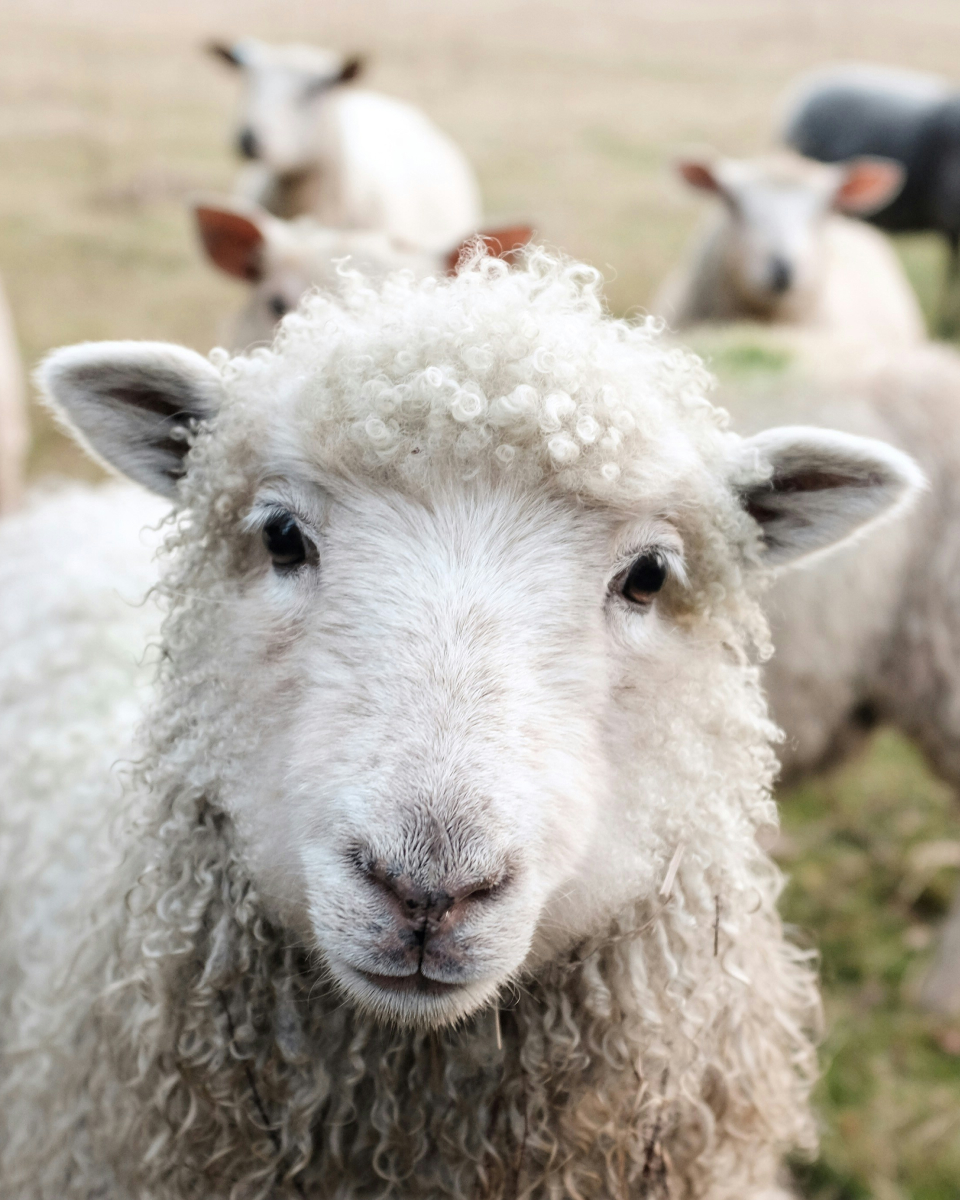
Photo by Sam Carter
Sheep are medium-sized ruminant herbivores with a four-compartment digestive system adapted to grazing grasses and forbs. They are highly gregarious, forming stable flocks with subgroups based on kinship, age, and social familiarity. Strong ewe-lamb bonds are established within hours of birth. Social facilitation governs grazing and vigilance behaviour, and isolation from conspecifics produces acute and measurable distress responses.
Environmental needs include open habitats with good visibility, shelter from wind and extreme weather, dry lying areas, stable social groups, and sufficient foraging area. Thermoregulation is significantly influenced by fleece length and condition. Common stressors include handling, restraint, isolation, social regrouping, pain, and novelty — all of which activate the hypothalamic-pituitary-adrenal axis, producing elevated cortisol, increased heart rate, vocalisation, and avoidance behaviour.
Scientific evidence supports complex cognition and sentience. Sheep recognise individual conspecific and human faces and retain these recognitions in long-term memory. They demonstrate learning in discrimination and reversal tasks, and executive functions engaging prefrontal cortex comparable in some domains to primates (Kendrick et al.; McLeman et al.). Evidence of judgement bias, emotional contagion, and discrimination of human emotional odours by ewes and lambs supports differentiated affective processing and underpins scientific consensus that sheep are sentient mammals with developed emotional and cognitive capacities.
Lifecycle Summary
Sheep exploitation operates across meat, wool, dairy, and breeding systems, with most animals participating in more than one system across their productive lives. Lambs destined for meat are slaughtered at 4–8 months in most high-income systems; breeding ewes are culled at 5–7 years when reproductive performance declines. Wool sheep undergo annual Wool Shearing throughout their productive lives. Mulesing is applied to Merino-type sheep in Australia and parts of South America as a surgical intervention to prevent flystrike. Live Export moves significant volumes of sheep — particularly from Australia — on multi-week sea voyages to slaughter or fattening destinations. All production sheep enter slaughter systems at the end of their productive lives.
Lifespan (Natural vs Exploited)
Domestic sheep kept outside exploitation systems commonly live 10–12 years, with potential lifespans up to 15–20 years. Individual records up to 28 years have been reported.
Lambs reared for meat are slaughtered at approximately 4–8 months of age in most high-income producing countries. Some systems targeting hogget or mutton markets slaughter at 12–24 months.
Breeding ewes used primarily for wool and lamb production are typically culled at 5–7 years, approximately half or less of their potential lifespan, when reproductive performance or fleece quality declines. Dairy ewes are culled on similar timescales following several lactations.
Primary causes of on-farm mortality and culling include perinatal lamb mortality from hypothermia, starvation, and dystocia; infectious diseases including pneumonia and clostridial disease; internal parasitism; lameness; mastitis; dental deterioration; reproductive failure; and age-related productivity decline.
Exploitation Systems
Sheep exploitation operates across meat, wool, dairy, breeding, and biomedical systems, with extensive, semi-intensive, and intensive production models operating across all major regions.
Meat production. Lambs, hoggets, and cull adults slaughtered for lamb, hogget, and mutton. Systems range from extensive grazing on rangeland and upland pastures — predominant in Australia, New Zealand, Central Asia, and sub-Saharan Africa — to semi-intensive pasture finishing and intensive feedlot fattening. New Zealand and Australia are the dominant global exporters of sheepmeat.
Wool and fibre production. Fine and medium wool harvested annually or more frequently via Wool Shearing. Merino breeds dominate fine wool production, primarily in Australia. Dual-purpose breeds provide both wool and meat. Wool enters textile and carpet manufacturing; coarse wool supplies industrial applications.
Dairy production. Specialised dairy breeds — primarily East Friesian and Lacaune — managed for milk production in semi-intensive systems. Sheep milk is processed into cheeses including Roquefort, Manchego, Pecorino, and feta, and other dairy products. Lambs in dairy systems may be separated early to divert milk to processing.
Breeding and genetics. Nucleus and multiplier flocks producing genetic lines distributed via natural mating, Artificial Insemination, and Embryo Transfer. Selection targets growth rate, carcass composition, wool quality, fecundity, lamb survival, and disease resistance.
By-products and downstream materials. Slaughter produces hides and pelts for leather, offal for rendering and food, lanolin from wool for cosmetics and pharmaceuticals, intestinal membranes for surgical sutures and sausage casings, and bones and blood for fertiliser and feed ingredients.
Research and testing. Sheep used as biomedical models in orthopaedics, cardiovascular device testing, and reproductive physiology research, and in agricultural studies on grazing and pasture ecology. Use involves laboratory or controlled-environment housing and experimental procedures.
Living Conditions Across Systems
Extensive rangeland and upland grazing. Large open pastures or rangelands at low stocking density per hectare, often unfenced or lightly fenced. Minimal housing; shelter may be natural or simple lambing sheds. Social groups are large flocks with stable kinship-based subgroups. Welfare concerns centre on variable nutrition, disease, parasitism, climatic extremes, and predation rather than confinement.
Semi-intensive pasture with housing. Common in Europe and parts of the Southern Hemisphere. Sheep graze pasture for most of the year and are housed in winter or around lambing in loose, bedded sheds or slatted-floor buildings. Typical recommended indoor space allowances in EU contexts are approximately 1.0–1.2 m² per ewe on fully slatted floors, with higher allowances (approximately 1.5 m²) under some organic standards.
Intensive finishing and feedlot systems. Lambs grouped in pens on slatted or solid floors, fed high-concentrate rations, with limited environmental complexity. Stocking densities approach or exceed 0.8–1.0 m² per lamb depending on liveweight and local guidelines. Social groups are formed by weight class rather than stable kin groupings. Used for rapid finishing prior to slaughter, particularly in the Middle East, North Africa, and parts of Europe.
Dairy sheep systems. Ewes in loose housing with access to exercise yards or pasture; milked once or twice daily in milking parlours. Housing periods are longer than in meat systems due to milking requirements. Space allowances and stocking densities follow national dairy welfare standards.
All intensive and semi-intensive systems share common stressors identified in welfare literature: high stocking density, inadequate ventilation, abrupt social regrouping, poor flooring and bedding, and handling-associated stress. These affect lying time, lameness incidence, and behavioural indicators of chronic discomfort.
Lifecycle Under Exploitation
Genetic Selection
Selective Breeding targets traits including growth rate, carcass composition, wool micron and yield, fecundity, lamb survival, and resistance to specific diseases and parasites. Selection is implemented via estimated breeding values and structured breeding programmes. Purebred nucleus flocks supply genetics to multiplier and commercial tiers; terminal sire crossbreeding is standard in most meat systems.
Reproduction
Sheep are seasonally polyoestrous, with breeding aligned to photoperiod. Reproductive management uses ram introduction, controlled mating groups, and in some intensive or out-of-season lambing systems, Reproductive Cycle Manipulation via progestagen-releasing intravaginal sponges with or without equine chorionic gonadotropin (eCG) to synchronise oestrus. Artificial Insemination is used in some regions to distribute elite genetics. Pregnancy diagnosis by ultrasound is standard in intensive and semi-intensive systems to manage nutrition and lambing groups.
Birth & Early Life
Lambing occurs on pasture or in lambing sheds. Standard neonatal practices include monitoring for dystocia, assisting difficult births, ensuring colostrum intake within hours of birth, and applying identification via ear tags or notches. Tail Docking and Castration of male lambs are performed in most producing regions, typically by rubber ring, cutting, or hot iron, within the first weeks of life. Orphan and triplet lambs may be fostered or reared artificially on milk replacer, involving Premature Weaning and Separation from the ewe.
Growth & Rearing
Lambs remain with ewes for 6–14 weeks before weaning. Post-weaning, lambs enter pasture-based growth, semi-intensive finishing, or feedlot systems depending on market and region. Parasite control via anthelmintic treatment is a central ongoing intervention. In Merino and fine wool systems in Australia and parts of South America, Mulesing — surgical removal of skin folds around the breech — is performed on young sheep to prevent flystrike, typically without anaesthesia or analgesia.
Production
In meat systems, lambs are grown to target carcass weights and condition scores. Breeding ewes produce multiple lamb crops until culling. In wool systems, Wool Shearing is performed annually or more frequently; fleece yield and micron measurements are used in selection and marketing. In dairy systems, Milk Extraction is continuous across defined lactation periods; lambs may be separated early to divert milk to processing.
Transport
Live Transport moves sheep between farms, markets, feedlots, and slaughter plants by road. Live Export moves sheep on multi-week sea voyages primarily from Australia to the Middle East and North Africa for slaughter or further fattening. Live Export is associated with high mortality rates, heat stress, respiratory disease, and severe welfare compromise during transit. Transport at all stages involves loading stress, mixing with unfamiliar animals, vibration, and deprivation of feed and water.
End of Life
Slaughter at abattoirs terminates productive lives for finished lambs, cull ewes, cull rams, and spent dairy ewes. Selective Culling removes non-productive, injured, or diseased animals at farm level throughout the production cycle. On-Farm Slaughter is used for animals unfit for transport and for emergency disease-control depopulation.
Processing
Carcasses are dressed, chilled, and broken into primal cuts, offal, hides, and pelts. By-products including lanolin, intestinal membranes, bones, and blood enter cosmetic, pharmaceutical, food, and rendering supply chains.
Chemical Medical Interventions
Anthelmintics are the most structurally significant pharmaceutical intervention in sheep systems globally, reflecting the high burden of gastrointestinal nematode parasitism in grazing sheep. Broad-spectrum anthelmintic classes in use include benzimidazoles, imidazothiazoles, and macrocyclic lactones. Anthelmintic resistance is widespread and drives rotational use of drug classes and targeted selective treatment protocols.
Vaccines are standard across commercial systems, targeting clostridial diseases (Clostridium perfringens, C. tetani), pasteurellosis (Mannheimia haemolytica), and region-specific endemic diseases. Vaccination schedules target ewes pre-lambing and lambs at defined ages.
Reproductive hormones — principally progestagen-releasing intravaginal sponges combined with equine chorionic gonadotropin (eCG) — are used to synchronise oestrus and enable out-of-season lambing in intensive and semi-intensive systems.
Antimicrobials are used to treat bacterial infections including pneumonia, footrot, and mastitis. Usage is subject to antimicrobial stewardship policies in many jurisdictions and may be restricted or monitored.
Non-steroidal anti-inflammatory drugs (NSAIDs) are used for pain relief around surgical procedures and lameness treatment. Uptake in routine husbandry procedures varies by jurisdiction and professional guidelines.
Surgical and physical modifications routinely applied include Tail Docking and Castration, performed by rubber ring, cutting, or hot iron in the first weeks of life. Mulesing — surgical removal of breech skin folds — is performed on Merino-type sheep in Australia and parts of South America to prevent flystrike; it is performed without general anaesthesia in most commercial contexts, though pain relief is increasingly required or incentivised under industry standards. Growth promoters and hormonal implants are restricted or prohibited in the EU and several other jurisdictions; global usage data for sheep specifically are limited.
Slaughter Processes
Electrical stunning is the dominant method in industrial sheep slaughter, applying electric current via head-only or head-to-body tongs to induce immediate loss of consciousness before exsanguination by neck cutting. When correctly applied, electrical stunning produces rapid unconsciousness. Failure rates from mis-positioning or insufficient current are documented in welfare audits but are not consistently reported at a global level or disaggregated for sheep specifically.
Penetrating and non-penetrating captive bolt devices are used in some abattoirs and for field killing, directed at the poll region to produce brain disruption and loss of consciousness. On-farm killing using captive bolt or shooting is used for animals unfit for transport and for emergency depopulation.
Gas stunning is less common for sheep than for pigs and poultry, with electrical methods predominant across major producing regions.
Religious slaughter under halal and kosher certification may omit pre-slaughter stunning depending on jurisdictional rules and certifying body requirements. Reversible pre-stunning followed by throat cutting qualifies as religious slaughter in some regulatory frameworks. The proportion of sheep slaughtered without prior stunning varies significantly by country and is substantial in several major producing and importing regions.
Industrial abattoirs process from small local volumes to large facilities handling thousands of sheep per day. Line speed and staffing levels are set by plant design and regulatory inspection requirements. Detailed global throughput data for sheep are fragmented by country.
Slaughterhouse Labour Impact
Sheep slaughter and processing involve physically demanding, repetitive tasks associated with musculoskeletal injuries, lacerations, and exposure to biological agents. Documented occupational health concerns in red meat processing — including elevated injury rates, repetitive-strain disorders, and psychological stress associated with killing and cutting tasks — apply to sheep processing but are seldom reported separately from mixed red-meat sector data.
Workforce demographics in sheep and red meat processing typically include high proportions of migrant and low-wage workers. Labour sourcing patterns including temporary and seasonal arrangements are documented across major producing countries. Union presence and regulatory enforcement vary significantly.
Species-specific quantified injury rate data for sheep-only processing facilities are not available in the research output. Available evidence reflects documented patterns across red meat sectors rather than sheep-specific operations.
Scale & Prevalence
FAO data indicate a global sheep population exceeding approximately 1.2 billion animals in recent years. Leading countries by headcount include China (~183–194 million), India (~75–115 million), Australia (~70–79 million), Iran (~53–56 million), Nigeria (~50–52 million), and the United Kingdom (~31–33 million). These figures are approximate and subject to reporting methodology variation.
Sheep populations are distributed across extensive pastoral systems in Central Asia, sub-Saharan Africa, Australia, and South America; semi-intensive systems in Europe; and intensive feedlot finishing systems in the Middle East and parts of Europe and North America.
Directional trends vary by region. Some traditional wool and meat exporters in Europe have seen stable or declining sheep numbers. Populations have remained high or expanded in parts of Asia and Africa. Global sheepmeat production has grown overall, with demand increases concentrated in the Middle East, North Africa, and parts of Asia.
Ecological Impact
Sheep grazing occupies large areas of rangeland, upland and lowland grassland, and semi-natural habitats globally. Stocking density, grazing duration, and management intensity strongly determine ecological outcomes.
A global meta-analysis of livestock grazing found that grazing reduced plant productivity by approximately 26%, water conservation by 18%, and carbon sequestration by 19% on average across studied systems, with effects varying by environment and grazing intensity. These figures cover mixed livestock systems and are not attributable to sheep alone.
Sheep grazing has variable effects on biodiversity. Moderate grazing can maintain open habitats and associated invertebrate and bird communities; overgrazing reduces structural diversity and habitat quality; cessation of grazing can lead to scrub encroachment and loss of open-habitat species. Effects are highly site- and management-specific.
Ruminant enteric fermentation in sheep contributes to agricultural methane emissions. Sheep-specific methane figures are less commonly isolated than cattle figures in life-cycle assessments; quantitative attribution depends on regional stocking patterns and modelling assumptions.
Feed crop cultivation for intensive sheep finishing contributes to land-use pressures. Extensive grazing systems occupy large land areas per unit of output but may support biodiversity and carbon storage under appropriate management.
Language & Abstraction
Sheep within commercial systems are classified by sex, age, and production role — ewe, ram, wether, lamb, hogget, cull ewe, replacement ewe, terminal sire — framing individual animals as interchangeable production units. Terms such as “stocking rate,” “flock,” and “head” aggregate individuals into inventory metrics, erasing social complexity and individual variation.
Age-differentiated meat product names — “lamb,” “hogget,” and “mutton” — foreground the animal’s developmental stage as a product quality descriptor, dissociating the product from the individual animal while normalising slaughter across the full lifespan. “Merino wool” and other breed-specific fibre descriptors frame the product through quality attributes, obscuring the conditions of production and the surgical interventions that underpin wool system viability.
“Mulesing” names a painful surgical procedure using a technical husbandry term that describes the action (from the inventor’s name) rather than the tissue removed or the animal’s experience. Industry framing positions mulesing as a preventive welfare intervention — protection from flystrike — rather than as a surgical modification performed without general anaesthesia to maintain production viability under intensive Merino farming conditions.
“Culling,” “drafting,” “cast for age,” and “replacement” frame demographic management decisions — including the removal and killing of animals — as routine operational and flock composition tools. “Live export” frames the sea transport of live animals primarily as a trade and market access issue; mortality rates and welfare conditions during transit are documented but are structurally separated from the commercial framing of the practice.
Terminology
Sheep, ewe, ram, lamb, wether, hogget, mutton, lamb meat, prime lamb, store lamb, cull ewe, replacement ewe, breeding ewe, terminal sire, wool, fleece, clip, Merino, crossbred, dairy sheep, milking ewe, lambing, weaning, finishing, feedlot lamb, store sheep, fattening, liveweight, carcass weight, dressing percentage, stocking rate, stocking density, flock, draft, cull, cast for age, shearing, crutching, dagging, docking, tailing, castration, mulesing, vaccination, drenching, anthelmintic treatment, footrot control, parasite control, lamb kill, slaughter lamb, abattoir, lairage, stunning, electrical stunning, captive bolt, sticking, dressing, skin, hide, pelt, lanolin, offal, rendering, by-products.
Within The System
Developments
Ban on live animal maritime exports
Health of Animals Regulations transport amendments
SAG Decrees implementing welfare regulations
Investigation into livestock auction market conditions
Mandatory pre-stunning ends religious slaughter exemption
Live export ban will not be repealed this term
Restriction on live animal exports to non-EU countries
Mandatory CCTV in slaughterhouses
Ban on livestock exports for slaughter
Phase-out of live sheep exports by sea
Collapse in live sheep export volumes
Report a development: contact@systemicexploitation.org
Notice an inaccuracy or omission?
If you believe information on this page is incorrect, incomplete, or missing important context, you may submit a suggested correction for review.