
Turkeys
Scientific Name:
Meleagris gallopavo domesticus
Scope
Covers domesticated turkeys (Meleagris gallopavo domesticus), derived from the wild turkey (Meleagris gallopavo), including all commercial strains selected for meat or breeding purposes — heavy tom, medium, and light lines. Includes intensive indoor, free-range, and organic production systems; breeding and hatchery systems; and slaughter and processing operations. Data primarily concerns major producing regions: the United States, European Union member states, Brazil, and Canada.
Excludes wild turkey populations (Meleagris gallopavo) except where used as lifespan or biological comparators. Excludes the ocellated turkey (Meleagris ocellata). Excludes subsistence hunting and conservation management of wild populations. Coverage of lower-income producing countries is limited by available data.
Species Context
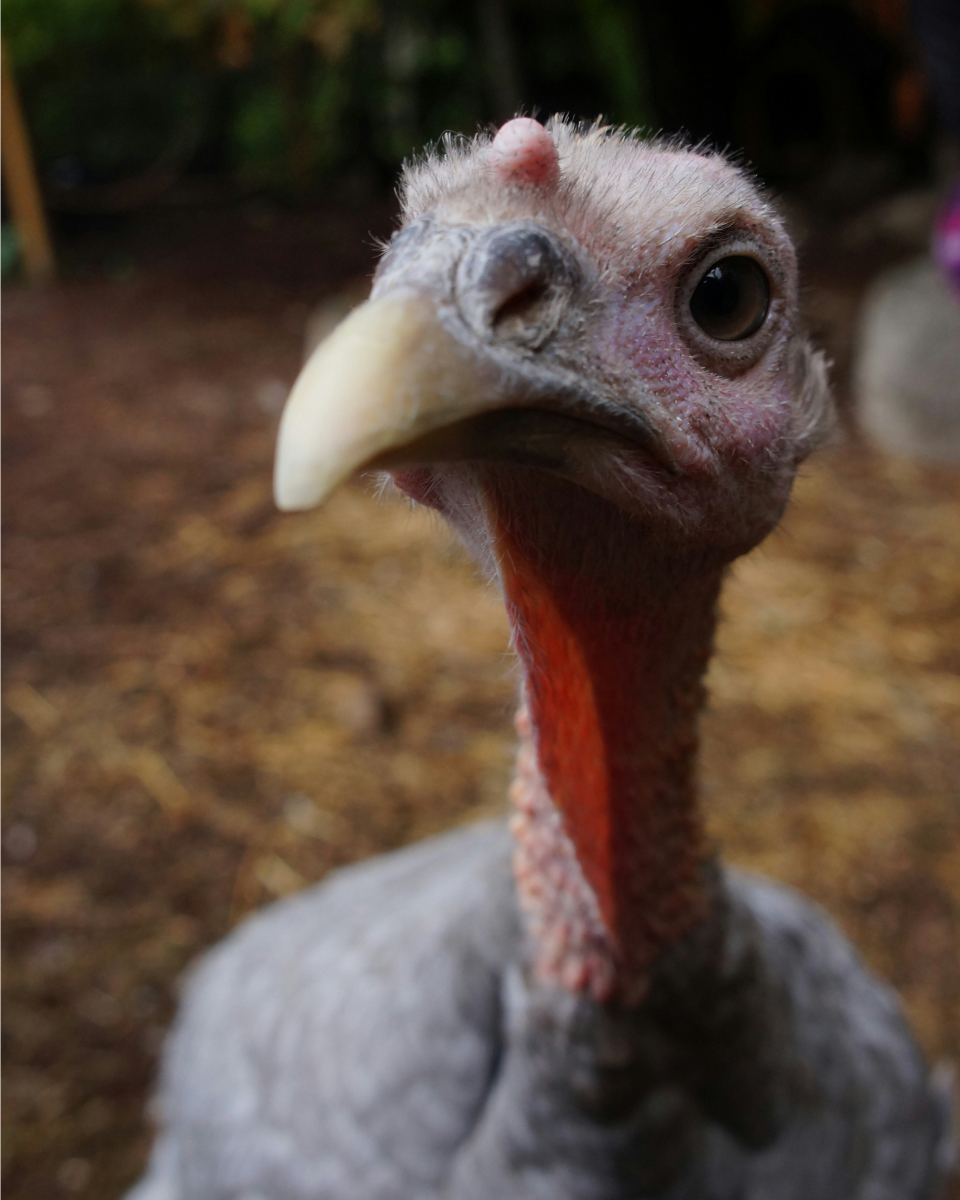
Photo by Mike Hends
Turkeys are large galliform birds with pronounced sexual dimorphism — males are significantly larger and carry ornamental features including the snood and caruncles. Commercial strains have been subjected to intensive selective breeding for rapid growth and high breast muscle mass, producing body conformations that impair natural mating and increase the risk of skeletal and metabolic disorders.
General avian sentience — including capacity for pain, fear, and stress responsiveness — is widely accepted in the scientific literature and applies to turkeys as galliform birds. Environmental needs include appropriate thermal conditions, dry friable litter for dustbathing, sufficient space for locomotion and social interaction, and access to perches or elevated platforms. Deprivation of these in intensive systems is associated with increased injurious pecking, locomotor disorders, footpad dermatitis, and behavioural indicators of chronic stress.
Wild turkeys form social groups of typically up to 20 individuals, with stable dominance hierarchies, sibling male coalitions, and differentiated responses to familiar versus unfamiliar conspecifics. Experimental work with domestic male groups demonstrates preferential aggression towards non-group members, indicating group-level social recognition and discrimination between in-group and out-group individuals. Wild turkeys use complex vocalisations, visual displays, and spatial cognition in heterogeneous environments.
Lifecycle Summary
Turkey exploitation is structured almost entirely around meat production, with a breeding sector that depends on Artificial Insemination due to the body conformation of commercial strains. Commercial toms are slaughtered at 16–22 weeks and hens at 10–16 weeks. Breeder turkeys are maintained for one or more laying cycles before culling at 60–72 weeks. Beak Trimming and toe trimming are applied in many intensive systems to reduce injurious pecking and aggression. All production turkeys — finished meat birds and culled breeders — enter industrial slaughter lines. By-products including feathers, offal, and blood are channelled into rendering and further processing.
Lifespan (Natural vs Exploited)
Wild turkeys have a mean life expectancy of approximately 1.3–1.6 years due to high annual adult mortality (~50%) from predation, hunting, and disease. Maximum recorded lifespan in the wild reaches approximately 13 years, though most individuals do not survive beyond 5 years.
Commercial meat toms are slaughtered at approximately 16–22 weeks of age; hens at approximately 10–16 weeks, depending on target weight and market. Organic and slower-growing systems may extend rearing to approximately 20–28 weeks.
Breeder turkeys are maintained for one or more laying cycles and typically culled at 60–72 weeks of age — still far below the potential species lifespan.
Mortality in intensive systems is driven by early poult mortality, infectious diseases including colibacillosis and coccidiosis, metabolic and skeletal disorders linked to rapid growth rates, and culling of injured or unthrifty birds.
Exploitation Systems
Turkey exploitation is concentrated almost entirely in meat production, with a subsidiary breeding sector.
Meat production. Turkeys reared in intensive indoor barns, barn-plus-range, free-range, or certified organic systems for whole-bird and portioned turkey products. Downstream products include fresh, frozen, processed (sausages, deli meats), and further-processed turkey products. By-products include feathers for feather meal and insulation, offal and blood rendered into protein meals and fats, and bones for mechanically separated meat or rendering.
Breeding and hatchery systems. Parent breeding flocks maintained for fertile egg production. Due to disproportionate breast muscle mass in commercial strains, natural mating is not viable and Artificial Insemination is the universal reproductive method. Hatcheries incubate fertile eggs and supply day-old poults to grow-out farms.
Research and pharmaceutical uses. Turkey-specific vaccines — including coccidiosis vaccines such as Immucox T — are developed and tested using turkeys. Turkey embryos and tissues are used in limited research contexts. The scale of biotech and pharmaceutical use is small relative to meat production.
Living Conditions Across Systems
Intensive indoor systems. Turkeys housed in enclosed deep-litter barns with minimal or no natural light in standard configurations. Artificial lighting regimes, mechanical ventilation, and large mixed-sex or sex-segregated flocks. EU regulatory frameworks permit maximum stocking densities of 52 kg/m² for females and 58 kg/m² for males under specific health-programme conditions; observed densities typically range from 37–41 kg/m². Expert guidance and some national standards recommend maxima of 30–40 kg/m². Environmental enrichment including perches, platforms, and pecking objects is increasingly mandated or recommended in some jurisdictions but absent in conventional systems.
Free-range and organic systems. Indoor housing combined with mandatory outdoor access. EU organic standards require lower indoor stocking densities and a minimum outdoor range area per bird. Certified organic housing represents less than 2% of turkey housing places in the EU. Slower-growing strains are used in higher-welfare and organic systems.
Regulatory variation. Some jurisdictions now require perch or platform access from early in the rearing period and mandate minimum dark periods per day. Welfare assessment frameworks in Europe identify feather condition, gait, footpad health, lameness, aggression, and environmental parameters as key welfare indicators.
Breeder housing. Males and females are often housed separately or in sex-ratio-controlled groups to manage reproduction. Males are maintained for semen collection; females are managed under controlled feeding and lighting schedules targeting egg production and fertility.
Lifecycle Under Exploitation
Genetic Selection
Selective Breeding targets rapid growth rate, high breast muscle yield, feed conversion efficiency, and specific carcass conformation. Commercial strains are characterised by disproportionate breast muscle mass that renders natural mating non-viable and increases the risk of skeletal disorders, lameness, and cardiovascular stress at high growth rates. Slower-growing strains are used in certified organic and higher-welfare systems.
Reproduction
Reproduction in all commercial turkey systems depends on Artificial Insemination. Males are maintained in breeder flocks for semen collection; hens are inseminated at regular intervals to maintain fertility across the laying cycle. Breeder flocks are managed with controlled feeding, lighting schedules, and bodyweight targets to optimise egg production and fertility.
Birth & Early Life
Eggs from breeder farms are incubated in specialised hatcheries under controlled temperature and humidity. Poults are sexed where applicable, vaccinated, and placed on early coccidiostat or antibiotic regimens. Day-old poults are transported in crates to grow-out farms and placed in temperature-controlled brooding areas with high light levels and easily accessible feed and water. Hatchery Incubation and Live Transport both occur within the first 24 hours of life.
Growth & Rearing
Turkeys are reared in groups within sheds or barns under controlled temperature, ventilation, lighting, and litter management. Feed is provided as phase-formulated diets — starter, grower, finisher — with anticoccidials or other additives depending on the health programme. Beak Trimming and toe trimming are applied in many intensive systems to reduce injurious pecking and aggression; regulatory frameworks differ, with some regions restricting or phasing out these practices.
Production
For meat turkeys, there is no distinct production stage separate from growth and rearing — the grow-out phase constitutes the entire productive life, with birds reaching target slaughter weight at 10–22 weeks depending on sex and system. For breeder hens, the production stage consists of laying fertile eggs under controlled lighting and nutrition; Egg Collection, grading, and transfer to hatcheries are continuous across the laying cycle of approximately 60–72 weeks.
Transport
Feed is withdrawn 8–14 hours before scheduled processing to reduce gastrointestinal contents; water remains available until catching begins. Turkeys are manually caught and loaded into crates or modules, transported by truck to slaughter plants, and held in lairage. Conditions including stocking density in crates, ventilation, and journey length vary by region and regulatory framework. Catching and loading cause acute stress and are associated with injury risk.
End of Life
At slaughter plants, turkeys are unloaded, shackled by the legs on overhead conveyors, and subjected to stunning before neck cutting and bleed-out. Breeder turkeys at end of lay are processed through standard slaughter channels or, where infrastructure and regulations permit, via on-farm killing methods. Selective Culling removes injured, unthrifty, or non-productive birds at farm level throughout the production cycle.
Processing
Carcasses are scalded, defeathered, eviscerated, and chilled on high-throughput lines before portioning, deboning, and further processing. By-products are separated for rendering into feather meal, protein meals, and fats.
Chemical Medical Interventions
Coccidiosis management is the most structurally significant pharmaceutical intervention in turkey production. Control programmes use ionophore anticoccidials such as monensin, chemical anticoccidials including amprolium, and vaccination with live coccidiosis vaccines such as Immucox T, administered via hatchery gel at day of age. These are used in rotation or shuttle programmes to manage resistance.
Antibiotics including enrofloxacin and doxycycline are used for metaphylaxis or treatment, particularly in early poult life. Research documents that early antibiotic administration can modulate immune parameters, reduce vaccine-induced immunity, and alter cytokine profiles. Use patterns vary significantly by jurisdiction, with EU restrictions substantially reducing prophylactic use; practices in other major producing countries differ.
Vaccines are standard across commercial systems for coccidiosis and for viral and bacterial pathogens encountered in early life. Vaccination at hatch affects immune development and cytokine responses in documented ways.
Beak Trimming — partial amputation of the beak tip — is applied in many intensive systems to reduce injurious pecking. Toe trimming is performed in some breeder and intensive systems to reduce injury during mating and aggressive interactions. Both practices are restricted or phased out under higher-welfare standards in some jurisdictions. Growth-promoting hormones are prohibited in major producing regions; non-hormonal growth promotion via genetics, nutrition, and permitted feed additives is standard.
Slaughter Processes
Electrical waterbath stunning and controlled atmosphere stunning (CAS) using CO₂ or gas mixtures are the dominant methods in industrial turkey slaughter. In waterbath stunning, shackled birds pass inverted through an electrified water bath before automated neck cutting. Effectiveness depends on correct current, frequency, and shackling contact; mis-stuns from inadequate parameters or shackling are documented. Pre-slaughter shackling while conscious causes acute distress and is a recognised welfare concern independent of stunning outcome.
CAS exposes birds to high-concentration CO₂ or gas mixtures before neck cutting. CO₂ at concentrations required for effective stunning is aversive, causing respiratory distress and pain during the induction phase before loss of consciousness. Alternative gas mixtures with lower CO₂ or inert gas components reduce aversion but are not yet in widespread commercial use.
Religious slaughter under halal and kosher certification may omit pre-slaughter stunning depending on jurisdictional rules and certifying body requirements. Many halal certifiers accept pre-stunning under conditions intended to preserve carcass viability; regulatory exemptions for non-stun slaughter vary by country.
In the United States, proposed regulatory changes under the New Poultry Inspection System would allow turkey processing establishments to operate at line speeds up to 60 birds per minute, increased from 55 birds per minute, contingent on maintaining process control and inspection capacity.
Slaughterhouse Labour Impact
Turkey slaughter and processing involve high-throughput, physically demanding line work associated with elevated rates of musculoskeletal disorders, repetitive-strain injuries, and lacerations. These conditions are documented across the poultry processing sector and apply to turkey operations, though turkey-specific occupational health data are rarely disaggregated from broader poultry sector statistics.
High line speeds are linked in occupational health literature to elevated worker injury risk and reduced quality of animal handling. Union and worker advocacy reports cite line speed increases — including the proposed US increase to 60 birds per minute — as worsening both worker safety and animal welfare outcomes during processing.
Workforce demographics in turkey and poultry processing typically include high proportions of migrant and low-wage workers. Labour sourcing patterns including temporary and seasonal arrangements are documented across major producing countries. Quantified injury rate data specific to turkey-only processing facilities are not available in the research output.
Scale & Prevalence
Global turkey meat production was approximately 6.1 million tonnes in 2021, representing around 4% of global poultry meat output and approximately 1.6% of total world meat supply. Production has largely stagnated between 5.5 and 6.0 million tonnes since 2008.
Production is highly concentrated. The United States and European Union member states account for the large majority of global output, with Brazil and Canada as additional significant producers. The top 15 producing countries account for most of global supply.
Turkey production represents a small but stable share of overall global poultry output. FAO projections for total poultry meat production (all species) reached approximately 142.6 million tonnes in 2023; turkey’s share has remained stable rather than expanding.
In the EU, certified organic turkey housing accounts for less than 2% of total housing places, indicating the overwhelming dominance of conventional intensive systems. Live bird population figures and system-type breakdowns are not consistently reported in publicly available global statistics; production volumes are the primary reported metric.
Ecological Impact
Turkey production contributes to land use through cultivation of feed grains and oilseeds. Intensive systems rely on externally sourced feed and concentrate manure outputs on small land areas, creating risks of localised eutrophication and groundwater contamination where manure management is inadequate.
Per-unit environmental impacts from turkey production are generally lower than those of ruminant meats. Comparative analyses indicate turkey’s per-kg environmental burden is similar to or somewhat higher than broiler chickens due to larger body size and longer rearing periods. Specific per-kg greenhouse gas emissions figures for turkeys are not isolated in the research output and vary by study methodology and system type.
Greenhouse gas emissions derive principally from feed production, manure management, and energy use in housing and processing. Extensive and organic systems may reduce some local environmental pressures through lower stocking densities and manure distribution onto pasture but require more land per unit of output.
Biodiversity impacts include habitat conversion for feed crop cultivation, interactions between free-range flocks and local wildlife, and disease transmission pathways. Quantitative turkey-specific biodiversity metrics are limited in the available literature.
Language & Abstraction
Turkeys are classified within the broader category of “poultry” in industry, regulatory, and statistical frameworks, which absorbs species-specific practices and welfare conditions into generalised poultry standards and aggregated production statistics. Species-specific conditions — including the structural dependency on Artificial Insemination and the skeletal consequences of selective breeding — are rendered invisible in aggregate poultry reporting.
Production lifecycle terminology — “poult,” “brooder,” “grower,” “finisher,” “breeder,” “grow-out” — frames the animal’s life as a sequence of production phases defined by weight gain and output function, rather than as an individual lifespan. “Spend breeder” and “breeder cull” frame the killing of breeding animals at the end of their productive utility as a routine operational endpoint.
“Beak trimming” and “toe trimming” describe surgical modifications using technical husbandry language that names the action without describing the tissue removed or the animal’s experience. In industry framing, these practices are presented as welfare interventions — reducing injurious pecking and mating injuries — rather than as physical modifications made necessary by the high-density confinement and body conformations of commercial production.
“Line speed” in slaughter regulation debates abstracts the volume of individual animals processed per hour into a throughput parameter, framing both worker safety and animal handling quality primarily as process management variables. “Controlled atmosphere stunning” and “waterbath stunning” are technical descriptors that position killing methods as engineering systems rather than interventions on sentient individuals.
Terminology
Poultry, meat turkey, breeder turkey, tom, hen, poult, brooder, grower, finisher, broiler turkey, breeder flock, hatchery, grow-out farm, finishing barn, stocking density, live weight, carcass weight, processing plant, evisceration line, line speed, depopulation, coccidiosis programme, anticoccidial, monensin, amprolium, coccidiosis vaccine, Immucox T, ionophore, waterbath stunning, controlled atmosphere stunning, CO₂ stunning, shackling, scalding, defeathering, rendering, feather meal, poultry meal, mechanically separated turkey, turkey breast, turkey thigh, ground turkey, deli turkey, further-processed turkey, free-range turkey, organic turkey, welfare certification, perches, platforms, litter, lairage, catching crew, breeder cull, spent breeder.
Within The System
Developments
Health of Animals Regulations transport amendments
SAG Decrees implementing welfare regulations
Multi-year epizootic & poultry & dairy depopulations
Report a development: contact@systemicexploitation.org
Notice an inaccuracy or omission?
If you believe information on this page is incorrect, incomplete, or missing important context, you may submit a suggested correction for review.