
Cats
Scientific Name:
Felis catus
Scope
Covers domestic cat (Felis catus, descended from African wildcat Felis lybica lybica) across five exploitation systems: companion animal keeping, commercial breeding for the pet trade, research and biomedical testing, shelter and population management including trap-neuter-return (TNR) and lethal control programmes, and working pest control deployment. Populations covered include owned indoor and indoor-outdoor cats, semi-owned and unowned free-roaming cats (stray, community, and feral), commercially bred cats in breeding establishments, cats in shelters and research facilities, and feral cats intentionally maintained or managed for rodent control. Excludes wild felids (Felis lybica, Felis silvestris, other non-domestic Felidae). Feral cat lethal control programmes — including island eradications using aerial baiting, trapping, and shooting — are integrated under pest control and population management rather than treated as a separate system.
Species Context
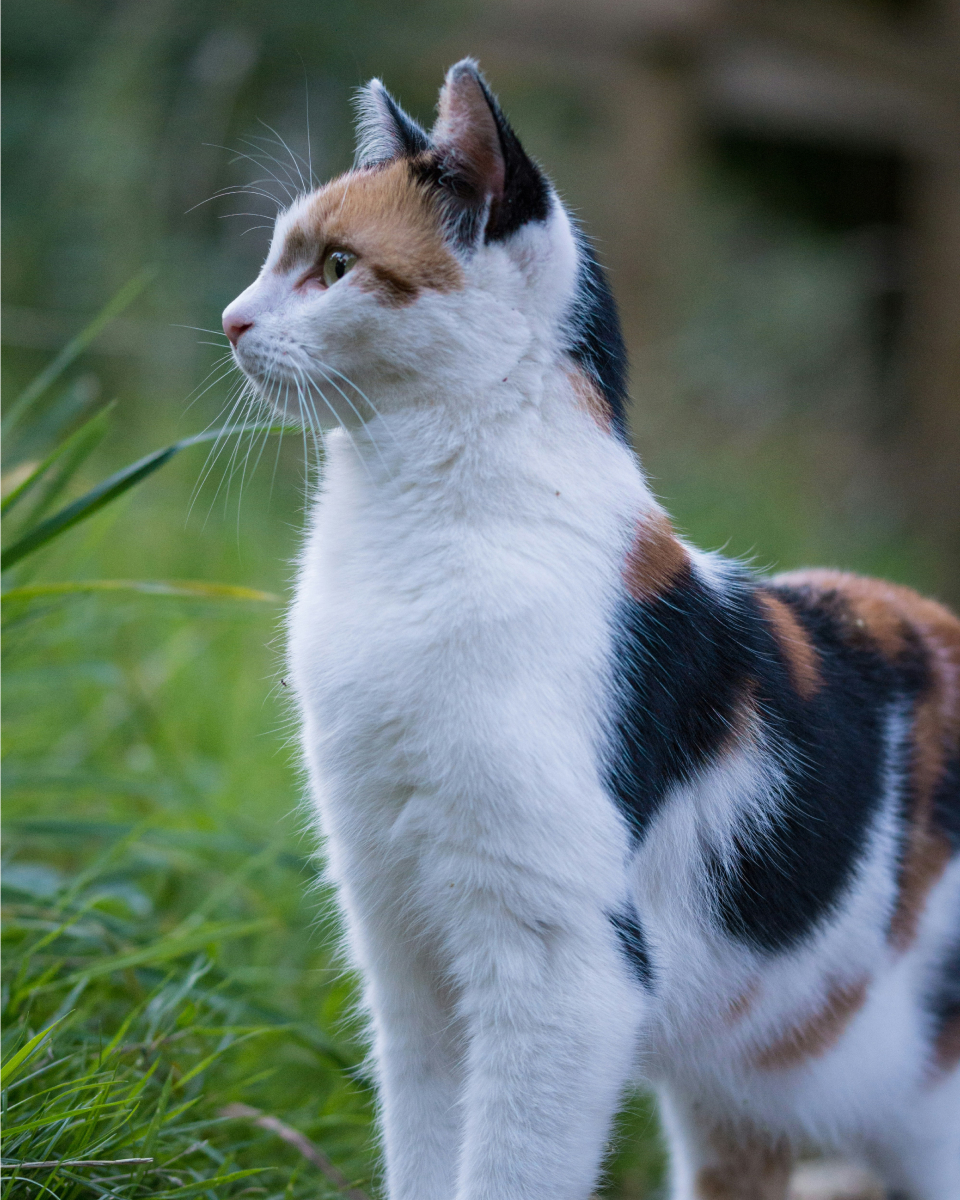
Photo by Uriel Soberanes
Felis catus is a small obligate carnivore, typically 3–5 kg adult body mass, with predatory morphology — retractile claws, dentition adapted for flesh consumption, stalking and pouncing locomotion — retained in domestication. Social structure is flexible: many individuals are solitary, but cats form matrilineal colonies around resource clusters, with overlapping male territories. They are crepuscular, use vertical space extensively, and require separate resource zones for resting, feeding, toileting, and scratching; welfare guidelines emphasise multiple distributed resources to reduce inter-cat conflict in multi-cat environments.
Stress responses include increased hiding, aggression, decreased grooming, and physiological markers including elevated cortisol and immune alterations; chronic stress is associated with behavioural disorders and disease exacerbation. Environmental enrichment — vertical structures, hiding opportunities, prey-simulation play — is the primary welfare intervention across all managed systems.
Cognitive evidence includes spatial learning, object permanence, social learning from humans, and individual recognition of humans by voice and face. Nociception and affective pain responses are comparable to other mammals. Major veterinary and welfare guidelines treat cats as sentient mammals requiring species-specific pain management and environmental provision.
Lifecycle Summary
Cats are the most ecologically impactful domestic species at global scale outside of livestock systems. Free-ranging domestic cats — the majority of the global cat population — are among the world’s most significant invasive predators: a systematic review published in Nature Communications (2013) estimated that free-ranging domestic cats kill 1.3–4.0 billion birds and 6.3–22.3 billion mammals annually in the United States alone, with unowned cats responsible for the majority of mortality. Domestic cats are listed among the “100 of the World’s Worst Invasive Alien Species” by the IUCN Global Invasive Species Database. This ecological impact is a direct structural consequence of companion animal keeping and commercial breeding systems that produce and release far more cats than can be absorbed into permanent ownership — a supply chain that generates a large and sustained free-roaming population whose predation operates beyond any management system’s reach.
Within managed systems, shelter and population management is the primary killing system for cats. In the United States, approximately 3.2 million cats are admitted to shelters annually, of whom approximately 17% are euthanised. In Australia, municipal pounds in Victoria and New South Wales euthanise approximately 46% of cat intake on average, with some councils euthanising 67–100% of intake; welfare organisations in the same analysis euthanised approximately 25%. These figures establish cats as the animal most numerically killed within formal welfare infrastructure in high-income countries.
Lifespan (Natural vs Exploited)
Indoor owned cats have average lifespans of approximately 12–18 years; some individuals reach 15–20 years. Outdoor and indoor-outdoor owned cats have substantially shorter average lifespans of approximately 2–5 years due to vehicle collisions, infectious disease, predation, and environmental exposure. Feral and free-roaming cats without veterinary care have an average lifespan of approximately 2 years, with high juvenile mortality from disease, starvation, and predation.
Cats in research colonies and commercial breeding facilities have lifespans determined by protocol and production schedule: breeding queens and toms may be maintained for multiple years of productive use, while experimental animals may be euthanised from weeks to a few years depending on study design.
Primary causes of mortality in exploited systems include vehicle collisions, infectious disease (feline immunodeficiency virus, feline leukaemia virus, upper respiratory infections), parasitism, malnutrition in feral populations, and euthanasia in shelter and research contexts.
Exploitation Systems
Cats are exploited across five systems.
Companion animal industry. Owned cats in households constitute the largest managed system globally. The companion system generates economic flows through pet food manufacturing, veterinary services, grooming, boarding catteries, insurance, and behavioural services. Pet food for cats relies primarily on livestock and fish by-products, linking the cat companion system to broader food animal and fisheries supply chains. Cats function primarily as social and emotional companions; the indoor-only model — motivated by safety and ecological impact concerns — is increasingly promoted in high-income countries but remains a minority arrangement globally.
Commercial breeding. Breeding establishments produce kittens for sale to retailers or direct to consumers. Pedigree breeding is governed by breed clubs and studbooks; extreme morphological trait selection — including brachycephaly in Persian and Exotic Shorthair breeds — produces heritable health conditions including brachycephalic obstructive airway syndrome. High-volume commercial facilities may use high-density housing, frequent litters from queens beyond welfare-compatible frequency, and limited environmental complexity. A European Commission-funded scientific review concluded that permanent housing of breeding cats in small boxes, crates, or tiered cages impairs welfare and recommended group housing, exercise space, and environmental complexity as minimum requirements.
Research and biomedical testing. Cats are used in neurology, infectious disease (feline models of HIV and toxoplasmosis), ophthalmology, and veterinary training. In the United States, 13,005 cats were reported under USDA Animal Welfare Act criteria in 2023 — covered under AWA, unlike rats and mice. EU data for 2022 group cats, dogs, and non-human primates as approximately 0.23% of research animals combined; a cat-specific EU figure is not separately reported. Research cat use is covered under EU Directive 2010/63/EU, which governs housing, procedures, and euthanasia standards. Purpose-bred specific-pathogen-free cats are used for some infectious disease and vaccine research.
Shelter and population management. Municipal and private shelters, pounds, and rescue organisations manage intake from stray, surrendered, and seized cats, delivering adoption, transfer, return-to-owner, TNR, and euthanasia outcomes. TNR — trap-neuter-return — programmes surgically sterilise free-roaming cats and return them to managed colonies; the programme’s effectiveness at reducing feral populations is contested in the ecology and public health literature, with critics arguing it maintains colonies as ongoing predation sources. Lethal control — trapping followed by euthanasia, shooting, or aerial baiting with toxicants — is used by wildlife management agencies in conservation-priority areas, particularly on islands where cat predation threatens endangered species. Island eradication programmes have achieved total cat removal from some islands with documented recovery of native bird populations.
Pest control. Feral and free-ranging cats are intentionally maintained on farms, industrial sites, warehouses, and ships for rodent control. These working cats receive minimal veterinary care and operate as generalist predators. The pest control function positions feral cats as a managed pest management tool, integrating an unowned free-ranging animal into a functional role without formal welfare oversight.
Living Conditions Across Systems
Owned companion cats. Housing conditions range from full indoor access with enriched environments to outdoor or semi-outdoor access; no standardised global welfare requirements apply. Indoor-only enrichment guidelines recommend multiple litter boxes (one per cat plus one), multiple feeding and drinking stations, vertical climbing structures, hiding spaces, and prey-simulation play. Multi-cat households require resource duplication and spatial separation to manage inter-cat competition.
Commercial breeding facilities. Enclosure dimensions in EU welfare literature: single-cat housing in shelters approximately 0.56–0.85 m² floor area plus vertical space; group housing recommendations suggest at least 1.67 m² floor space per cat to maintain lower stress indicators. Permanent housing in small tiered cages impairs welfare according to the EU scientific review; recommendations include access to exercise areas and environmental complexity. Many commercial operations do not meet these standards; enforcement is variable.
Research facilities. Indoor rooms or pens with controlled temperature, lighting cycles, and enrichment; space allowances and social housing are governed by IACUC, EU Directive 2010/63/EU, and national institutional guidelines. Purpose-bred laboratory cats are typically group-housed except where protocol requires individual housing.
Shelters and pounds. Individual or group kennels with basic shelter, feeding, and sanitation; intake volume and facility design determine conditions. High-intake facilities face disease transmission, space, and stress management challenges. Quarantine facilities use separate enclosures to prevent pathogen spread in new intakes.
Feral and free-roaming cats. Occupy urban streets, peri-urban margins, agricultural land, dumps, and natural habitats; no captive conditions apply. TNR colony cats are monitored but not confined; working pest control cats may receive supplemental feeding.
Lifecycle Under Exploitation
Genetic Selection
Commercial breeding applies Selective Breeding for phenotypic traits specified in breed standards — coat colour and texture, body conformation, facial morphology, and temperament — managed through studbooks maintained by breed registries. Extreme trait selection for brachycephalic conformation in Persian, Exotic Shorthair, and Scottish Fold breeds produces heritable health conditions including airway obstruction and, in Folds, severe osteochondrodysplasia. Research facilities select for SPF status and, where relevant, specific disease susceptibility or genotypic characteristics.
Reproduction
Commercial breeding queens may produce multiple litters per year; free-ranging queens average approximately 1.4 litters per year with 1–6 kittens per litter (mean approximately 3). Reproductive Cycle Manipulation via controlled breeding schedules and sometimes photoperiod management applies in commercial and research facilities. In companion and shelter populations, surgical sterilisation — ovariohysterectomy and orchiectomy — is the primary reproductive control mechanism. TNR programmes sterilise free-roaming cats as a population suppression intervention; injectable hormonal contraception (e.g. medroxyprogesterone acetate) is used in some managed colony programmes.
Birth & Early Life
Kittens are born in nesting areas in breeding facilities, homes, shelters, or outdoor colony sites. In commercial facilities, births occur in designated maternity pens. Weaning at 6–8 weeks or later is standard; early weaning before 6 weeks is associated with behavioural problems including aggression and stereotypies. Socialisation with humans during the sensitive period (approximately 2–7 weeks) is critical for companion suitability; inadequate socialisation in high-volume facilities is a documented driver of behavioural problems in sold kittens.
Growth & Rearing
Companion kittens are reared in homes or breeding facilities until sale or adoption, typically at 8–12 weeks, with core vaccination series (feline panleukopenia, herpesvirus-1, calicivirus — FHV-1/FCV/FPV combination) initiated before transfer. Kittens in high-volume commercial facilities receive variable levels of socialisation and enrichment; limited human contact is associated with fearfulness and poor welfare outcomes at point of sale. Feral kittens reared in outdoor colonies face high mortality from disease, predation, and environmental exposure.
Production
Companion cats provide companionship and associated human wellbeing outputs. Commercial breeding operations produce kittens as the commodity output, measured per breeding queen per year. Research cats provide experimental data from physiological measurement, tissue sampling, and procedure endpoints. Working pest control cats deliver rodent suppression services. Animal Experimentation is the defining practice for the research system. In all managed systems, the “production” output is distinct from food animal production in that no physical commodity for human consumption is generated.
Transport
Cats are transported for sale, adoption, veterinary procedures, shows, and research in carriers or cages with ventilation requirements. Feral cats are trapped in live traps and transported to TNR facilities or lethal control sites. International transport for breeding or research involves airline compliance with IATA live animal regulations.
End of Life
Owned cats are typically euthanised by veterinary pentobarbital injection for age-related disease, injury, or quality-of-life decisions. Shelter and pound euthanasia uses the same method at higher volume; US shelter data document approximately 17% of 3.2 million annual intakes euthanised (2019). Australian municipal pounds euthanise approximately 46% of cat intake, with some councils reaching 67–100%, while welfare organisations in the same dataset euthanised approximately 25%. Research cats are euthanised at protocol endpoints by barbiturate overdose or other AVMA-approved methods. Feral cats under lethal control programmes are killed by trapping followed by pentobarbital injection, shooting, or toxicant exposure (sodium fluoroacetate, compound 1080, or Para-aminopropiophenone — PAPP — on islands).
Processing
Companion and shelter euthanasia carcasses are managed as clinical or municipal waste — incineration or rendering where regulated. Research carcasses are categorised as biomedical waste and incinerated or processed under biohazard protocols. Feral cat carcasses from control programmes are left in situ or collected for disposal according to local management protocols.
Chemical Medical Interventions
Core vaccines per international feline practitioner guidelines: feline panleukopenia virus (FPV), feline herpesvirus-1 (FHV-1), and feline calicivirus (FCV), administered as combination products. Non-core vaccines include rabies (mandatory in some jurisdictions and for international travel), feline leukaemia virus (FeLV) for at-risk cats, and Bordetella bronchiseptica. Vaccination schedules and non-core recommendations follow regional epidemiological risk assessment.
Anaesthetic agents used in veterinary and research contexts include inhalational isoflurane and sevoflurane, injectable propofol, ketamine, and medetomidine or dexmedetomidine combinations; local anaesthetics including lidocaine, bupivacaine, and ropivacaine are used for locoregional procedures. Analgesics include buprenorphine and morphine as opioids, and NSAIDs including meloxicam and robenacoxib; some NSAIDs are licensed specifically for cats in certain jurisdictions and used off-label in others.
Surgical sterilisation — ovariohysterectomy (spaying) in females and orchiectomy (castration) in males — is the dominant reproductive management tool across companion, shelter, and TNR systems globally. Castration is listed as a Mutilation & Body Alteration practice in the Practices CPT and applies here to cats both as a routine companion animal procedure and as the operative intervention in TNR programmes.
Declawing (onychectomy) — surgical amputation of the third phalanx of each digit to remove the claw — has been performed in some countries, particularly the United States and Canada historically, for behaviour management. The procedure is banned or restricted in the UK, EU member states, Australia, and many other jurisdictions as a non-therapeutic mutilation. Its prevalence in remaining markets is declining under veterinary association pressure. No equivalent surgical mutilation for behaviour management is documented in any other companion animal record in this database.
Antiparasitic drugs — macrocyclic lactones for endoparasites, isoxazolines and pyrethroids for ectoparasites — and antimicrobials are used in breeding and research populations under increasing regulatory pressure to reduce antimicrobial use.
Lethal population control uses toxicants including sodium fluoroacetate (1080) and PAPP (Para-aminopropiophenone) in island eradication programmes; PAPP produces loss of consciousness before death; 1080 causes prolonged dying without prior loss of consciousness. Both are documented in regulatory approval processes for island eradication programmes. Regulatory approval for these toxicants varies by country.
Slaughter Processes
Clinical euthanasia — the dominant killing method across companion, shelter, and research systems — uses intravenous pentobarbital sodium overdose as the primary method per AVMA guidelines and International Society of Feline Medicine (ISFM) guidance, typically preceded by sedation using medetomidine, acepromazine, or butorphanol combinations. Unacceptable methods under current guidelines include inhaled agents alone as the sole method, potassium chloride in conscious cats, and physical methods without prior anaesthesia.
Shelter euthanasia is the highest-volume institutional cat killing system in high-income countries. US shelters euthanised approximately 544,000 cats in 2019 from 3.2 million intakes (17%); Australian data document substantially higher proportional rates in municipal pounds. A peer-reviewed systematic review identified participation in euthanasia tasks as a statistically significant predictor of secondary traumatic stress and burnout in shelter, veterinary, and research animal care staff — making this the most specifically documented occupational psychological harm associated with cat exploitation in any record in this database.
Feral cat lethal control uses trapping followed by pentobarbital injection at facility level, or field methods including shooting and toxicant application for island and large-scale programmes. Island eradication programmes — documented for islands off New Zealand, Australia, and sub-Antarctic territories — have achieved complete cat removal using combinations of aerial bait drops (PAPP or 1080), ground trapping, and hunter networks, with documented recovery of ground-nesting seabird populations following eradication.
Religious slaughter frameworks are not codified for cats.
Slaughterhouse Labour Impact
A peer-reviewed systematic review (PubMed, 2015) of euthanasia-related occupational strain across shelter workers, veterinary nurses, and research animal technicians found high incidence of occupational stress and euthanasia-related strain, with statistically significant associations between euthanasia task participation and secondary traumatic stress and burnout. This is the most specific and methodologically robust occupational impact data documented for any companion animal system in this database. Shelter staff demographics in available studies are predominantly female and include substantial volunteer components; compensation and institutional support structures vary significantly across operations.
Physical risks in cat handling include bites and scratches carrying zoonotic disease exposure (Pasteurella multocida, Bartonella henselae causing cat scratch disease, Capnocytophaga canimorsus); allergen exposure from Fel d 1 cat dander is a significant occupational respiratory risk in research facility staff. Musculoskeletal strain from cage cleaning, animal handling, and restraint tasks applies structurally.
Scale & Prevalence
Global cat population estimates are uncertain but substantial. US estimates: 32–61 million owned cats and 30–80 million unowned free-roaming cats (Wildlife Society, 2025). Australian feral cat population: estimated 2.1–6.3 million depending on seasonal conditions. Global owned and unowned populations are in the hundreds of millions; the Wildlife Society (2025) and other compilations estimate the global domestic cat population in the range of 600 million to over 1 billion, with free-roaming cats constituting a large fraction.
Research use: US USDA 2023 — 13,005 cats used under AWA reporting criteria (out of 649,159 total covered animals). EU 2022 — cats, dogs, and non-human primates together approximately 0.23% of 9.24 million animals used; cat-only EU figure is not separately reported.
Shelter intake: US — approximately 3.2 million cats admitted annually (2019), 17% euthanised. Australia (Victoria/NSW peer-reviewed dataset) — municipal pounds: ~46% average euthanasia of intake, upper quartile 67–100%; welfare organisations: ~25% euthanasia of intake.
Commercial breeding: no global systematic production figures for cats exist. Pedigree cat registration data are maintained by breed registry organisations (TICA, GCCF, FIFe) but are not aggregated into public global production statistics. The majority of cats in companion systems are non-pedigree.
Directional trends: companion cat ownership is stable to expanding in most high-income markets. Research use is declining slightly across EU and US. Free-roaming cat populations are subject to ongoing management pressure but not declining globally.
Ecological Impact
Free-roaming domestic cats are the most ecologically impactful companion animal documented in any record in this database. A 2013 peer-reviewed systematic review in Nature Communications estimated that free-ranging domestic cats kill 1.3–4.0 billion birds and 6.3–22.3 billion mammals annually in the United States, with unowned cats responsible for the majority of mortality. These predation levels exceed impacts from all other human-associated wildlife mortality sources in the US combined for birds. Domestic cats are listed in the IUCN Global Invasive Species Database among the “100 of the World’s Worst Invasive Alien Species.”
On islands, cat predation has driven or contributed to the extinction of native bird, reptile, and small mammal species. Island eradication programmes have documented native species recovery following cat removal: seabird breeding success, reptile population growth, and vegetation recovery from reduced herbivore pressure have all been documented post-eradication across multiple island systems.
Toxoplasma gondii — a protozoan parasite with cats as definitive host — is transmitted through cat fecal material into soil and water systems, with documented effects on wildlife behaviour and documented human infection pathways; large free-roaming cat populations in urban and peri-urban environments maintain sustained environmental contamination.
Pet food consumption for cats links the companion system to livestock slaughter by-products and fish reduction industries; specific lifecycle assessment data for cat food are limited in scope and vary in methodology, but the food footprint of approximately 600 million or more pet cats constitutes a material resource draw on animal production systems.
Language & Abstraction
The classification of cats as “companion animals,” “domestic animals,” “community cats,” “stray cats,” or “feral cats” across different legal and management contexts determines the regulatory regime applicable to any individual cat — and therefore whether it receives protection, management, or lethal control. A cat classified as a “community cat” in a TNR programme occupies a different legal status than the same cat classified as a “feral pest” in a wildlife management context; classification drives management outcome rather than documenting it.
“Trap-neuter-return” and “trap-neuter-release” describe the same operational practice under names that differ in whether “return” or “release” emphasises the restored habitat of the individual animal or the release of an animal into free-roaming status. The terminological choice reflects contested positions on the ecological legitimacy of the practice: “return” implies restoration; “release” implies disposal into an environment where the animal continues to function as a predator. Neither name foregrounds the sterilisation as the welfare intervention that benefits the individual animal.
“Euthanasia” in shelter contexts describes planned killing of healthy animals for capacity management — a use of the term that extends beyond its standard meaning of humane death for an individual animal’s benefit. “Population management,” “intake management,” and “live release rate” are the administrative metrics through which mass shelter killing is assessed; these terms position euthanasia as a throughput management variable rather than as the killing of individual animals.
Declawing (onychectomy) was historically described in US veterinary contexts as “declaw surgery,” “nail removal,” or “scratching control procedure” — terms that foreground the behavioural problem being addressed rather than the surgical amputation being performed. The shift toward “onychectomy” and explicit description as “amputation of the distal phalanx” in veterinary discourse reflects a successful professional reframing campaign that has accompanied the procedure’s restriction across multiple jurisdictions.
Brachycephalic breeding terminology — “flat-faced,” “cobby build,” “rounded head” — in pedigree breed standards describes as aesthetic attributes a morphology that produces documented medical conditions including airway obstruction, dental crowding, and birthing complications. Breed standard language naturalises the pathological consequence as a desirable trait; regulatory and veterinary discourse increasingly uses clinical terminology to counter this framing.
Terminology
Companion animal, pet, domestic cat, owned cat, semi-owned cat, unowned cat, stray cat, feral cat, community cat, colony cat, breeding queen, stud cat, tom, litter, kitten, weanling, pedigree, purebred, crossbred, moggie, cattery, commercial breeding establishment, boarding cattery, quarantine cattery, shelter, pound, rescue, foster care, intake, surrender, relinquishment, rehoming, adoption, return-to-owner, trap-neuter-return, trap-neuter-release, population management, pest control, working cat, laboratory cat, research model, SPF cat, euthanasia, culling, surplus animal, breeding stock, show cat, stud book, registration, microchipping, desexing, spay, neuter, onychectomy, declaw.
Within The System
Developments
Report a development: contact@systemicexploitation.org
Notice an inaccuracy or omission?
If you believe information on this page is incorrect, incomplete, or missing important context, you may submit a suggested correction for review.