
Rabbits
Scientific Name:
Oryctolagus cuniculus
Scope
Covers domestic rabbit (Oryctolagus cuniculus domesticus) across four primary exploitation systems: meat production, research and biomedical testing, companion animal keeping, and Angora wool production. Fur and skin are by-products of meat production in most systems and are addressed within that system; dedicated fur lines (Rex and similar) are covered where they diverge from standard meat production. Wild conspecific populations (O. cuniculus) are referenced for biological baseline comparison and for ecological impact of invasive populations; wild rabbit hunting systems are not detailed. Other lagomorphs — hares, cottontails — are excluded except where FAO statistics aggregate them with rabbits. Within O. cuniculus, the record covers meat breeds (New Zealand White, Californian, Rex), fibre breeds (Angora), and laboratory inbred and outbred lines.
Species Context
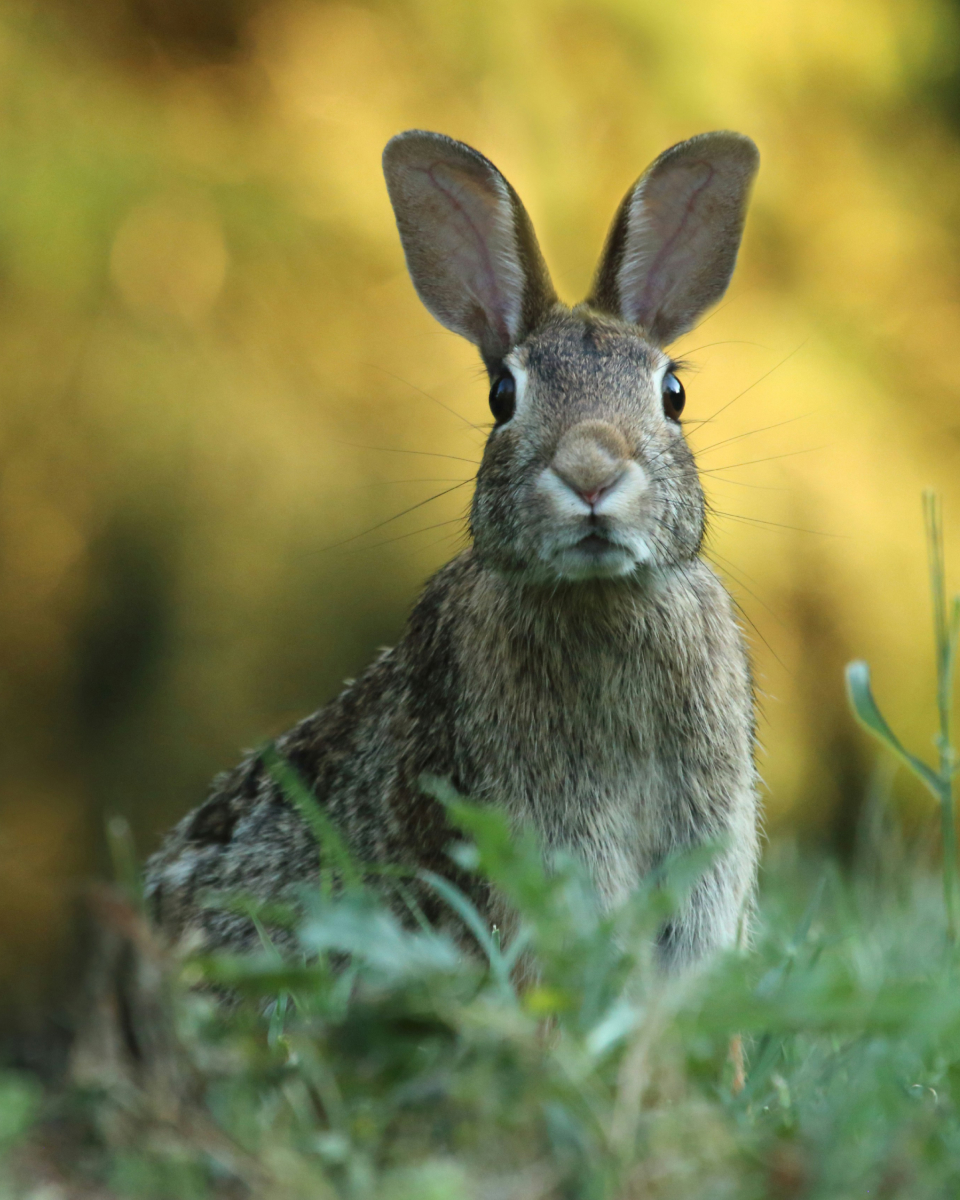
Photo by Gary Bendig
Domestic rabbits are medium-sized herbivorous mammals — hindgut fermenters — with high reproductive rates (gestation approximately 31 days, litters of 8–10 kits), rapid post-weaning growth, and efficient feed conversion. Wild European rabbits live in territorial social groups in complex burrow systems (warrens), with stable hierarchies and matrilineal composition; domestic rabbits retain these social tendencies and express allogrooming, play, and agonistic behaviours when group-housed. Species-adapted behaviours include digging, hiding, gnawing, running, and jumping; EFSA identifies adequate space, solid resting areas, gnawing material, and social contact as primary welfare determinants in farm systems.
As prey animals, rabbits exhibit pronounced startle and flight responses, stress-induced tachycardia and hyperventilation, and behavioural freezing; they tend to mask signs of pain and debility, which complicates welfare assessment and clinical detection of disease in farm and laboratory contexts. Scientific work on domestication shows structural brain changes in domestic rabbits consistent with altered fear processing and increased cortical control of emotional behaviour compared with wild counterparts, indicating preserved but modulated emotional and cognitive processing. General mammalian sentience is supported in the welfare literature and rabbits are treated as sentient in regulatory frameworks including EU Directive 2010/63/EU.
A biologically distinctive feature with welfare implications is caecotrophy: rabbits ingest soft cecal pellets (caecotropes) directly from the anus as a normal component of hindgut fermentation, recycling microbial protein and B vitamins. Conventional wire cage configurations that restrict posture or movement can prevent caecotrophy, with documented nutritional and health consequences in farm systems.
Lifecycle Summary
Approximately 570 million rabbits (including hares as aggregated in FAOSTAT) were slaughtered globally in 2021 for meat, producing approximately 756,000 tonnes — a substantial decline from a peak of approximately 1.32 million tonnes in 2014. China alone accounts for approximately 53% of global rabbit meat production. Rabbits are numerically one of the most slaughtered land mammals globally after chickens, pigs, and cattle. The dominant production system — intensive indoor wire cage housing — is documented by EFSA as producing five primary welfare consequences at industrial scale: restricted movement, inability to gnaw, impaired resting, limited positive social behaviour, and prolonged hunger. As of 2017, approximately 85% of EU farmed rabbits were housed in conventional barren wire cages. A defining biological characteristic relevant to welfare in all captive systems is caecotrophy — the ingestion of soft cecal pellets directly from the anus for nutritional recycling — which is impaired or prevented in some confinement configurations, with documented health consequences.
Lifespan (Natural vs Exploited)
Wild O. cuniculus have typical free-living lifespans of approximately 1–3 years due to predation, disease, and environmental hazards; some individuals reach up to approximately 9 years in low-predation conditions. Indoor companion rabbits under veterinary care commonly live 8–12 years; large breeds tend toward shorter average lifespans.
Commercial meat rabbits are slaughtered at approximately 70–90 days (10–13 weeks) at 2.2–2.5 kg live weight in intensive systems; some systems target 3–4 months at 2–3 kg; traditional backyard units may slaughter later at 4–5 months. This places slaughter far below the species’ natural lifespan potential.
Breeding does in intensive systems are typically culled after 1–1.5 years following 7 or more litters per year, as reproductive performance declines; semi-intensive systems may retain does for 2–3 years at 4–6 litters per year. Major causes of mortality in breeding does include reproductive pathologies, digestive disease, and culling for decreased productivity.
Laboratory rabbits are killed at protocol endpoints ranging from weeks in short-term toxicity studies to months in antibody production or longer-term studies.
Exploitation Systems
Rabbit exploitation operates across four primary systems.
Meat production. The dominant system globally by animal numbers. Pekin-type and Californian-derived meat breeds are raised in intensive indoor cage systems in EU, Chinese, and other major producing countries; semi-intensive small commercial rabbitries and backyard units operate in parallel, particularly across Africa, Asia, and Latin America. Intensive systems use tiered wire cage batteries with formulated concentrate diets, rapid growth to slaughter weight in approximately 70–90 days, and controlled environmental conditions. The system’s by-product streams include pelts and skins entering leather and fur processing, offal and blood entering rendering and pet food chains, and manure used as fertiliser. China accounts for approximately 53% of global production; significant EU producers are Italy, Spain, France, and Germany; Egypt is a significant African producer.
Research and biomedical testing. Rabbits are the standard non-rodent small mammal for dermal and ocular irritation testing (Draize tests), reproductive and developmental toxicology under OECD test guidelines, pyrogen testing of pharmaceuticals, and polyclonal antibody production via repeated immunisation and blood collection. Research use has declined substantially over recent decades: in Germany, 94,240 rabbits were used in research in 2020 (approximately 4% of all animals used). US data show a decline from approximately 447,570 in 1973 to approximately 210,172 in 2010. The primary driver of reduction has been replacement of the Rabbit Pyrogen Test (RPT) by validated in vitro alternatives including the Monocyte Activation Test (MAT); uptake is incomplete across sectors and countries. Rabbits remain in use for cardiovascular, immunology, and ophthalmology research and for vaccine development, and are covered under USDA Animal Welfare Act reporting.
Companion animal trade. Commercial breeders produce rabbits for the pet market across Europe, North America, and Australia, with selection for phenotype, temperament, and breed standards. Indoor companion rabbits under appropriate husbandry can live 8–12 years; the companion system generates demand for veterinary services, specialised nutrition, and housing products. Welfare organisations document a significant mismatch between marketing of rabbits as “low-maintenance” pets and their actual behavioural and environmental needs (space for running and jumping, social companionship, hay access for caecotrophy and dental health).
Angora wool production. Long-haired Angora rabbits — primarily English and French Angora breeds — are kept for fibre production, with harvesting by shearing or live-plucking every approximately 3 months. China is the dominant producer; smaller operations exist in Europe and the Americas. Angora fibre enters textile supply chains for yarn, knitwear, and blended fabrics. Live-plucking — removal of fibre from non-moulting animals — causes documented distress responses; shearing is the standard alternative in higher-welfare operations. Retailer boycotts of live-plucked Angora following NGO investigation campaigns (H&M, Zara/Inditex, Gap, approximately 2013–2016) shifted some commercial sourcing practices, though the long-term supply chain outcome is not fully documented. This system overlaps structurally with the Angora Rabbits record, which covers it in greater depth.
Living Conditions Across Systems
Intensive meat production — conventional wire cages. Wire mesh cages, typically stacked in tiers, with fully wire floors and walls; cage height approximately 28–39 cm. Space allowance of 450–600 cm² per growing rabbit — approximately the footprint of an A4 sheet of paper — at stocking densities of 45–50 kg/m² at slaughter weight. Breeding does housed singly in cages with attached nest boxes. EFSA identifies five primary welfare consequences in these systems: restricted movement insufficient to allow normal locomotor behaviour, inability to gnaw, impaired resting behaviour from wire floors, severely limited positive social interactions, and prolonged hunger from restricted feeding regimens. As of 2017, approximately 85% of EU farmed rabbits were in conventional barren wire cages.
Enriched cages. Larger cages with platforms, gnawing blocks, and partial solid flooring; stocking density generally reduced to approximately 12–18 rabbits/m²; cage heights approaching EFSA recommendations of 38–40 cm. EFSA ranks enriched systems as welfare improvements over conventional cages while noting they do not fully address locomotor restriction.
Elevated and floor pens. Group housing in larger pens with solid or slatted floors, resting areas, and enrichment provision; one documented configuration records average stocking density of approximately 16 rabbits/m² total pen space. EFSA ranks elevated pens highest for welfare of growing rabbits relative to cage systems.
Outdoor, organic, and backyard systems. Variable conditions including outdoor hutches with runs, paddock systems, and mixed-feeding smallholder units; organic standards typically require lower stocking densities, solid flooring, roughage access, and outdoor areas.
Laboratory housing. Indoor rooms or pens with solid or slatted floors; cage height matching or exceeding 38–40 cm per EU Directive 2010/63/EU specifications; limited enrichment (chew sticks, shelters) in some facilities. Social housing depends on study protocol and compatibility.
Angora fibre systems. Individual wire-bottom cages to protect coat quality; minimal enrichment and limited space are characteristic in commercial operations, though systematic stocking-density data are sparse.
Lifecycle Under Exploitation
Genetic Selection
Selective Breeding applies across all commercial systems. Meat lines — New Zealand White, Californian, Rex, and commercial hybrids — are selected for growth rate, feed conversion ratio, litter size, and carcass yield through nucleus and multiplier breeding programmes. Fur lines are selected for pelt density, texture, and colour. Angora lines are selected for fibre length, fineness, and yield. Laboratory lines are inbred or outbred for defined genetic backgrounds, disease susceptibility, or physiological traits consistent with their research application.
Reproduction
Three production intensities govern commercial breeding. Extensive systems target approximately 4 litters per doe per year with weaning at approximately 7 weeks. Semi-intensive systems target 5–6 litters per year with weaning at approximately 5 weeks. Intensive systems target 7 or more litters per year with weaning at approximately 2–3 weeks and a breeding cycle of 45–50 days, with mating occurring approximately 10–12 days post-kindling. Artificial Insemination is used in some intensive operations to synchronise mating across large facilities and reduce disease transmission risk compared with hand-mating. Reproductive Cycle Manipulation via controlled photoperiod may be applied in intensive facilities to regulate cycling.
Birth & Early Life
Kits are born in nest boxes attached to the doe’s cage or pen; typical litter size 8–10 kits. Does nurse once or twice daily for short periods — a pattern adapted to avoid predator attention in the wild. Early mortality is associated with nest conditions, insufficient maternal care, chilling, and disease. Premature Weaning and Separation in intensive systems occurs at 2–3 weeks — substantially earlier than the natural weaning period of approximately 6–8 weeks — and is associated with increased digestive disorders (enteropathies) in growing rabbits due to immature gut colonisation.
Growth & Rearing
Post-weaning rabbits are moved to group cages or grow-out pens and fed formulated concentrate diets with or without hay supplementation; Growth Acceleration via high-energy, high-protein diets drives rapid muscle accumulation to slaughter weight. Health management focuses on controlling coccidiosis and bacterial enteropathies — the primary causes of mortality in growing rabbits — through coccidiostats, hygiene management, and antibiotic treatment. Selective Culling removes animals failing to meet growth targets or presenting health problems.
Production
Meat rabbits reach slaughter weight at approximately 70–90 days. Breeding does produce multiple litters per year for the duration of their productive life. Angora rabbits produce fibre through repeated harvests over several years until yield declines. Laboratory rabbits are used in experimental procedures — injections, ocular and dermal exposures, blood sampling — or maintained as antibody production animals through repeated immunisation and bleeding protocols. Animal Experimentation is the defining practice for the research system.
Transport
Meat rabbits are transported from farms to slaughter facilities in stacked crates or containers by road; journey durations range from under one hour to several hours. EU transport regulations set maximum durations and handling standards; rabbit-specific welfare data during transport are limited compared with larger livestock species.
End of Life
Commercial slaughter uses electrical stunning (head-only current) or mechanical stunning (penetrating or non-penetrating captive bolt, or percussive blow to the head) followed by neck cutting or decapitation. Gas stunning using high CO₂ was historically used but is prohibited in the EU under Council Regulation (EC) No 1099/2009; it remains in use in some non-EU contexts. Breeding does are culled at end of productive life; laboratory rabbits are euthanised by barbiturate overdose or other AVMA/institutional guideline methods.
Processing
Post-slaughter: bleeding, skinning, evisceration, carcass chilling, and cutting into whole carcasses, portions, or further-processed products (sausages, pâtés). Pelts enter leather and fur processing; offal, blood, and bones enter rendering and pet food ingredient chains; manure is applied as fertiliser or composted. Angora animals culled for declining fibre yield are processed as above when not retained as companion animals.
Chemical Medical Interventions
Vaccines used commercially include those targeting myxomatosis and rabbit haemorrhagic disease virus (RHDV and RHDV2) in regions where these diseases are endemic; licensing and specific products vary by country. RHDV2 emerged as a distinct variant after 2010 and has spread into previously unaffected regions, creating ongoing vaccine demand.
Anticoccidials are standard in intensive meat production: sulfonamides and toltrazuril are used for both intestinal and hepatic coccidiosis prevention and treatment; anticoccidial use is integrated into feeding regimes in some systems. Antiparasitic agents including ivermectin are applied for mite and endoparasite control.
Antibiotics — fluoroquinolones, tetracyclines, sulfonamides — are used for bacterial enteritis, respiratory disease, and mastitis; EU and US regulatory frameworks increasingly restrict metaphylactic and prophylactic antibiotic use and impose withdrawal period compliance before slaughter. Growth-promoting antibiotics are banned in the EU and some other markets.
Gonadotropin hormones are used in some intensive AI programmes to synchronise or stimulate ovulation, enabling coordinated mating across large facility cohorts; systematic data on prevalence are limited.
Laboratory rabbits receive investigational compounds, biologics, vaccines, and test substances under OECD test guidelines — including systemic toxicity (oral, dermal, inhalation), reproductive toxicity, and developmental toxicity studies. Ocular and dermal irritation testing via the Draize protocols exposes animals to test substances applied directly to the eye or skin surface under restraint. Anaesthesia and analgesia using isoflurane, ketamine combinations, opioids, and NSAIDs are required for invasive procedures under institutional and national ethical frameworks.
The Rabbit Pyrogen Test — historically a dominant use of laboratory rabbits — has been substantially replaced by the in vitro Monocyte Activation Test (MAT) for pharmaceutical pyrogen testing, contributing to the documented decline in rabbit laboratory use over recent decades. Replacement is incomplete; some regulatory agencies and product categories still require or prefer the in vivo test.
Slaughter Processes
Commercial rabbit slaughter uses electrical stunning (head-only current application to induce immediate loss of consciousness), mechanical stunning via penetrating or non-penetrating captive bolt or percussive blow to the head, or historically gas stunning. EFSA notes that electrical and mechanical methods can induce immediate unconsciousness when properly applied; misapplication — through incorrect electrode placement, insufficient current, or poor captive bolt positioning — risks animals regaining consciousness before bleeding is complete. Post-stun killing uses neck cutting severing carotid arteries and jugular veins, or decapitation. Cervical dislocation and percussive methods may be used in small-scale or emergency situations. Quantitative failure rates specific to rabbit slaughter are not consistently reported across facilities; operator training and equipment maintenance are the primary determinants of outcome.
Gas stunning using CO₂ is banned in the EU under Council Regulation (EC) No 1099/2009 for rabbits; it remains in use in some non-EU producing countries without equivalent regulatory prohibition.
Halal slaughter with and without prior electrical stunning is practiced in rabbit meat systems in some markets; studies of meat quality parameters from both approaches are documented in the World Rabbit Science literature.
Global throughput at approximately 570 million animals per year (including hares) places rabbit slaughter among the highest volumes of any farmed land mammal globally. Plant-level throughput statistics are not consistently reported.
Slaughterhouse Labour Impact
Rabbit-specific slaughter and processing occupational health data are not available in peer-reviewed literature; workforce statistics are aggregated across meat processing species. General meat processing labour risks — musculoskeletal injuries from repetitive cutting and handling tasks, lacerations, cold environment exposure, and psychological stress from repetitive killing work — apply structurally to rabbit processing, where high-volume line processing is the dominant model.
Workforce demographics in rabbit meat processing vary by country; EU and some Asian operations employ significant proportions of migrant and contracted workers in processing roles. No comprehensive global demographic dataset specific to rabbit facilities has been identified.
Scale & Prevalence
Approximately 570 million rabbits and hares were slaughtered globally in 2021 (FAOSTAT-based estimates), producing approximately 756,000 tonnes of meat — a substantial decline from a peak of approximately 1.32 million tonnes in 2014. China accounts for approximately 53% of global rabbit meat production; EU producers include Italy, Spain, France, and Germany; Egypt is a significant African producer; some Latin American countries contribute modest volumes.
EU production has declined over the reporting period; some African and Asian countries show stable or modestly increasing production. The global trend is declining, driven primarily by reduced EU demand and disease pressure (RHDV2).
System-type distribution in the EU (EFSA 2017): approximately 85% of farmed rabbits in conventional barren wire cages; approximately 9% in enriched cages; a minority in floor/elevated pens, outdoor, and organic systems.
Research use: Germany 2020 — 94,240 rabbits (approximately 4% of approximately 2.2 million total research animals). US historical trend: approximately 447,570 in 1973 to approximately 210,172 in 2010. EU-wide use is declining, with replacement of pyrogen testing as a primary driver.
Pet and companion rabbit populations are present across Europe, North America, and Australia; global population counts are not available from any primary statistical source.
Angora wool production is concentrated in China; precise global herd size is not reported in accessible primary statistics.
Ecological Impact
Farmed rabbit production generates greenhouse gas emissions estimated at approximately 3.13–3.25 kg CO₂-equivalent per kg live weight in intensive indoor cage systems, with the majority from feed production, manure management, and energy use. This is substantially lower than ruminant meat on a per-kilogram output basis but significant at the scale of hundreds of millions of animals. Intensive rabbit operations contribute nitrogen and phosphorus loading from manure to local water bodies and ammonia emissions to air; particulate matter from housing and manure handling is documented as a local air quality concern.
Wild European rabbits (O. cuniculus) introduced to Australia, New Zealand, and other regions are major invasive species with extensively documented ecological impacts. In Australia, overgrazing by rabbits at densities below one animal per hectare suppresses native and pasture vegetation, competes with domestic livestock and native herbivores, destabilises soil through burrowing, prevents regeneration of shrubs and trees, alters wetland vegetation, increases erosion rates, and modifies predator-prey dynamics by providing prey subsidies for introduced foxes and cats. Myxomatosis virus and Rabbit Haemorrhagic Disease Virus (RHDV, later RHDV2) were deliberately introduced as biological control agents in Australia, representing a biocontrol application with ongoing management complexity.
The ecological impacts of invasive wild rabbits are a systemic consequence of deliberate human introduction for hunting and food production; they are not attributable to current commercial farming systems but are structurally connected to the same species.
Language & Abstraction
Rabbits are classified as “livestock,” “small livestock,” or “micro-livestock” in FAO and agricultural documentation — framings that embed them within the production-animal regulatory category and emphasise conversion function (feed to meat, feed to fibre) over individual biology. The micro-livestock framing specifically positions rabbits as an accessible entry point for smallholder animal protein production, foregrounding development and nutritional efficiency while backgrounding the welfare characteristics that distinguish rabbits as prey species requiring species-specific environmental provision.
Production documents describe animals by functional role and performance metric: “does” and “bucks” define breeding animals by reproductive function; “fattening rabbits” or “growing rabbits” define slaughter-destined animals by their growth trajectory; “replacement does” and “culling” describe herd management decisions in throughput language. Breeding intensity is expressed in “litters per doe per year” and “breeding cycle days,” converting reproduction into a production rate metric. The intensive system’s 45–50 day cycle — in which a doe is mated approximately 10–12 days after giving birth while nursing a current litter — appears in production manuals as a scheduling optimisation rather than as a description of continuous pregnancy and nursing in a confined animal.
Housing system terminology in welfare literature produces a normalisation ladder: “conventional cages” as the default baseline, “enriched cages” as the welfare improvement, “welfare cages” as a marketing term. The designation of wire-floor barren cages as “conventional” and “standard” positions them as the unmarked starting point from which enrichment is a discretionary improvement, rather than as a documented source of five specific welfare harms. The term “enriched” in “enriched cage” carries positive connotation that absorbs the continued restriction of movement and gnawing opportunity in those systems.
“Angora wool” or simply “angora” as a textile product term removes all reference to the animal species and production method from the commercial material. “Live-plucking” describes the procedure by its mechanical action without naming it as a distress-inducing practice; retailer withdrawal language describes the practice as “not meeting [retailer’s] animal welfare standards” — a procedural compliance frame rather than a description of documented distress.
The aggregation of “rabbits and hares” in FAOSTAT and some national statistics conflates a farmed species and hunted wild species into a single production category, making species-specific trend analysis dependent on secondary data processing.
Terminology
Livestock, micro-livestock, breeding stock, doe, buck, kit, grower, growing rabbit, fattening rabbit, replacement doe, breeding doe, breeding buck, litter, weaner, fryer, fryer rabbit, slaughter rabbit, broiler rabbit, commercial rabbit, meat rabbit, fur rabbit, wool rabbit, angora rabbit, pelt, skin, hide, fur, angora, angora wool, rabbit meat, rabbit carcass, carcass, offal, by-product, rendering, cull, culling, depopulation, slaughter, stunning, conventional cage, battery cage, enriched cage, welfare cage, elevated pen, floor pen, outdoor system, organic system, intensive system, semi-intensive system, extensive system, backyard rabbitry, rabbitry, rabbit farm, nucleus herd, multiplier herd, commercial herd, artificial insemination, breeding cycle, production cycle, stocking density, feed conversion ratio.
Within The System
Developments
Report a development: contact@systemicexploitation.org
Notice an inaccuracy or omission?
If you believe information on this page is incorrect, incomplete, or missing important context, you may submit a suggested correction for review.