
Salmon
Scientific Name:
Salmo salar / Oncorhynchus spp.
Scope
Covers Atlantic salmon (Salmo salar) as the dominant farmed salmonid globally and major anadromous species of the North Atlantic, and Pacific salmon (Oncorhynchus spp.: chum O. keta, pink O. gorbuscha, sockeye O. nerka, coho O. kisutch, Chinook O. tshawytscha) in both aquaculture and wild capture contexts. Includes rainbow trout/steelhead (O. mykiss) where part of shared aquaculture systems. Farmed populations are intensively selected strains of Atlantic salmon bred for growth, feed conversion, delayed maturation, and disease resistance; wild populations include naturally reproducing Atlantic and Pacific salmon and hatchery-origin fish released for stock enhancement. The record covers marine net-pen aquaculture (dominant system), land-based recirculating aquaculture systems (RAS), freshwater hatchery production, and wild capture fisheries. Excludes purely ornamental salmonids and research fish not directly supporting production technologies.
Species Context
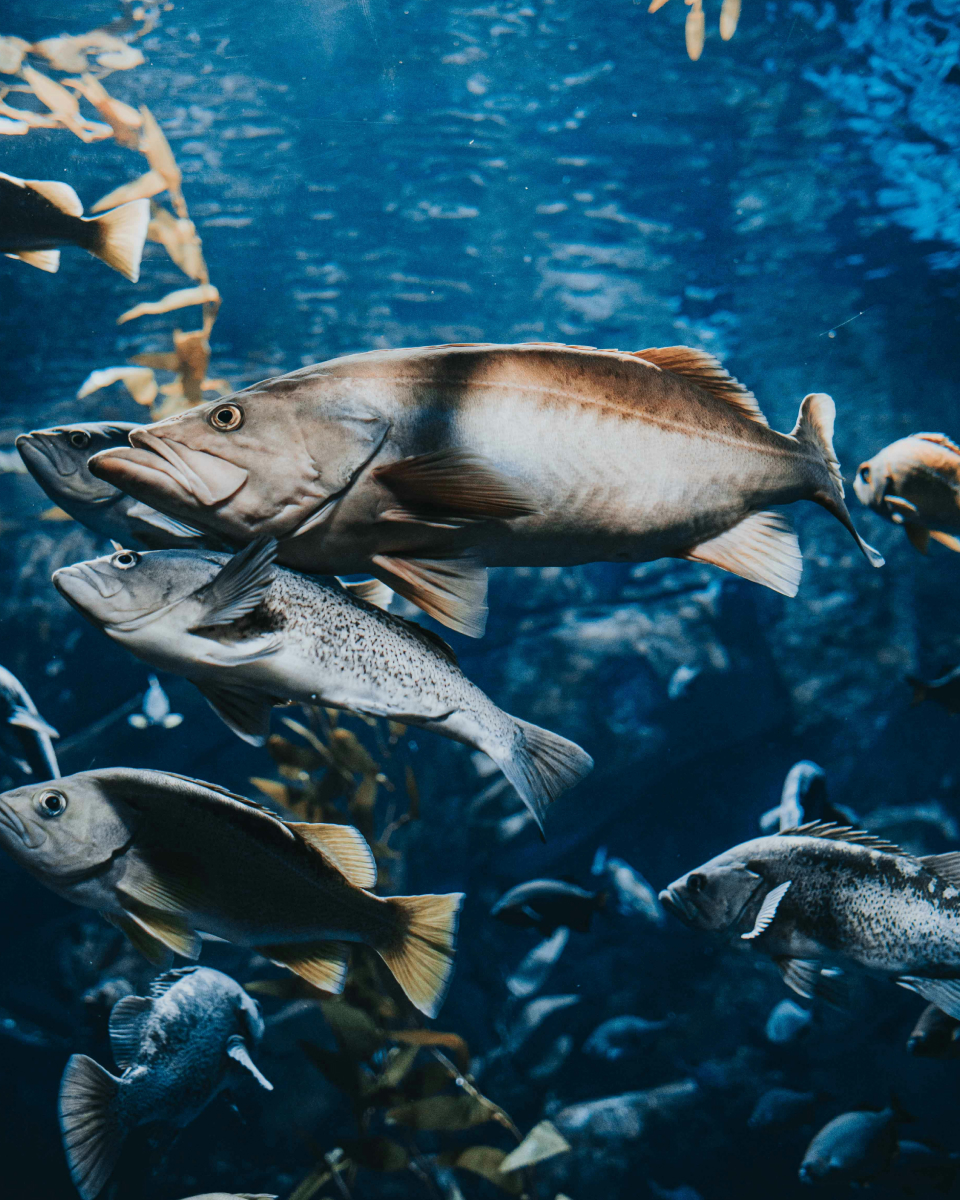
Photo by Marcos Prado
Salmon are anadromous salmonids with complex life cycles: eggs incubate in gravel redds in freshwater; alevins and parr remain in rivers for months to several years; smoltification transforms juveniles physiologically for marine life before migration to sea feeding areas; adults return to natal rivers to spawn using olfactory imprinting. Atlantic salmon are iteroparous — capable of spawning multiple times — while most Pacific salmon species are semelparous, dying after a single spawning event.
Environmental requirements span both freshwater and marine phases: temperature ranges approximately 0–20°C with optimal grow-out around 8–16°C for farmed Atlantic salmon; well-oxygenated water; substrates suitable for redd construction; and appropriate salinity at each life stage. At sea, salmon undertake migrations of hundreds to thousands of kilometres between natal rivers and offshore feeding grounds.
Social behaviour includes territorial occupation by juveniles in streams, shoaling behaviour in post-smolt and sea stages, and aggressive interactions that intensify under high stocking density in cages. The hypothalamic-pituitary-interrenal stress axis is well characterised in salmonids: handling, crowding, elevated temperature, low dissolved oxygen, and high parasite loads elevate cortisol and suppress growth, immunity, and survival.
Evidence for salmon sentience and pain perception is robust within the contemporary fish welfare science consensus. Experimental work across salmonids demonstrates learning, spatial and olfactory memory for natal streams, predator recognition, and avoidance learning. Major peer-reviewed reviews on fish sentience conclude that teleosts including salmonids show nociceptive processing and behavioural responses consistent with pain perception; this evidence base is considered strong and is incorporated into welfare legislation in several jurisdictions including Norway and the UK.
Lifecycle Summary
Farmed Atlantic salmon production reached approximately 2.87 million metric tonnes (round weight equivalent) in 2022–2023, with projections of approximately 3.0–3.1 million tonnes by 2024–2025. Norway accounts for approximately half of global farmed output; Chile approximately one-third; Scotland, the Faroe Islands, and Canada together contribute approximately 10–15%. Farmed Atlantic salmon production now exceeds wild-caught salmonid volumes in both tonnage and market value. Individual counts derived from biomass and average harvest weights suggest tens of billions of individual salmon are farmed globally each year across all life stages, though this figure requires conversion from biomass data and carries substantial uncertainty.
Two structural tensions define the salmon record. First, wild Atlantic salmon — the source species for the farmed industry — are severely depleted across their native range, with many populations endangered or functionally extinct in rivers they historically occupied. The farmed industry and wild salmon share the same species name and interact ecologically through sea lice pressure on wild fish and genetic introgression from escaped farmed animals. Second, sea lice (*Lepeophtheirus salmonis* and *Caligus rogercresseyi*) constitute the primary welfare and ecological challenge of open net-pen farming, driving a pharmaceutical and mechanical treatment regime that generates documented external environmental impacts through dispersal of antiparasitic compounds.
Lifespan (Natural vs Exploited)
Wild Atlantic salmon have typical total lifespans of approximately 4–8 years, with maximum recorded ages around 12–14 years; spawning age varies with smolt age (1–4 years) and sea residence (1–3 years to first spawning). Pacific salmon species have total lifespans of approximately 2–7 years depending on species and population, with most dying immediately after a single spawning event.
Farmed Atlantic salmon are typically slaughtered at approximately 18–36 months from hatching — total life commonly around 24–30 months — substantially below the upper typical wild lifespan. Primary causes of mortality in production: infectious diseases (infectious salmon anaemia, pancreas disease, bacterial kidney disease, amoebic gill disease), sea lice infestation, handling and crowding stress during treatments and grading, harmful algal bloom events, hypoxia, and storm damage.
Exploitation Systems
Salmon exploitation operates across two primary systems.
Marine net-pen aquaculture. The dominant production system globally. Atlantic salmon smolts produced in freshwater hatcheries are transferred to open sea cage systems — circular or square cages of typically 80–160 m circumference and volumes of approximately 2,000–40,000 m³ — moored in coastal fjords, sea lochs, and sheltered bays. Fish are fed formulated diets multiple times daily or via demand feeders; grow-out to harvest weight of approximately 4–6 kg takes 12–24 months in sea cages. Sea cages are open to the surrounding marine environment, exposing fish to ambient temperature, salinity, current, and the full spectrum of marine pathogens and parasites. Sea lice are endemic in open-net systems at the stocking densities used, requiring a treatment regime of pharmaceutical baths, in-feed antiparasitic compounds, and mechanical or thermal delousing. Norway and Chile operate at the largest scale in sea-cage aquaculture. At harvest, fish are transported by wellboat — a specialised live fish transport vessel maintaining controlled water quality — to shore-based slaughter facilities.
Land-based recirculating aquaculture systems (RAS). Closed-containment facilities using mechanical and biological filtration to recycle water, allowing production in locations without access to coastal sites and removing open-water interactions. Currently used primarily for freshwater smolt production; a growing number of full grow-out RAS facilities are operational in Europe, North America, and Asia. RAS enables tighter control of water quality, photoperiod, and biosecurity, substantially reducing sea lice pressure, escape risk, and antiparasitic use. Capital and energy costs are substantially higher than net-pen systems.
Hatchery production for wild stock enhancement. Salmon produced in freshwater hatcheries and released as fry, fingerlings, or smolts to support commercial, recreational, or subsistence fisheries rather than being reared to harvest. Dominant in Pacific salmon management, particularly in Alaska, the US Pacific Northwest, Japan, and Russia, where hatchery releases support the majority of some commercial harvest volumes.
Wild capture fisheries. Commercial fisheries for Pacific salmon — principally in Alaska, British Columbia, Russia, and Japan — harvest fish by purse seine, drift gillnet, set gillnet, troll, and fish wheel. Sockeye, pink, and chum are the primary commercial species by volume. Wild Atlantic salmon commercial fisheries are largely closed or severely restricted across the species’ range due to conservation status; small subsistence and indigenous food fisheries persist in some areas.
Transgenic and biotech production. AquAdvantage Atlantic salmon — expressing a Chinook salmon growth hormone gene under an ocean pout AFP gene promoter — grow to market size in approximately half the time of conventional farmed Atlantic salmon. Approved for human food production by the US FDA (2015) and Health Canada (2016); commercial production has begun in a closed land-based facility. AquAdvantage represents the first commercially approved transgenic food animal globally. All marketed AquAdvantage fish are triploid females, intended to be sterile and all-female.
By-product flows. Processing generates heads, frames, skin, and viscera processed into fishmeal and fish oil for aquaculture feeds and livestock nutrition; trimmings and lower-grade flesh directed to pet food; blood and wastewater treated as regulated effluent. Salmon skin and collagen are processed for nutraceuticals, cosmetics, and biomedical applications.
Living Conditions Across Systems
Sea cages. Standard commercial stocking densities for farmed Atlantic salmon are approximately 10–25 kg/m³, with some operations reaching approximately 30 kg/m³; welfare guidelines from organisations such as CIWF recommend a maximum of approximately 15 kg/m³ where health and injury indicators are satisfactory, with 10 kg/m³ as a welfare-preferred ceiling. At a 10 kg/m³ density and average harvest weight of approximately 4–5 kg, approximately 2–2.5 fish occupy each cubic metre. Fish within cages form large undifferentiated groups — commonly tens to hundreds of thousands per cage — with no ability to establish or maintain stable territories. Aggressive interactions and fin damage occur at rates influenced by stocking density and feed distribution. Environmental conditions fluctuate with ambient sea temperature, dissolved oxygen, current speed, and storm frequency.
Light regimes in sea cages may be manipulated with submersible artificial lighting to suppress early sexual maturation, which reduces growth and increases handling demand; photoperiod manipulation is standard practice in Norwegian and Scottish salmon farming.
RAS. Tank-based systems with controlled water flow, filtration, and oxygenation; stocking densities can exceed 40–60 kg/m³ depending on system design; water quality and photoperiod are actively managed; biosecurity is higher than in open net-pens with substantially reduced lice pressure. Reduced turbidity and absence of natural environmental cues are characteristic of RAS conditions.
Freshwater hatchery phase. Incubation of fertilised eggs in trays or upwelling incubators; fry and parr rearing in flow-through raceways or tanks; feeding with high-protein dry diets; routine vaccination at parr or pre-smolt stage.
Lifecycle Under Exploitation
Genetic Selection
Multi-generation Selective Breeding programmes for farmed Atlantic salmon are conducted by dedicated breeding companies supplying eggs globally. Selection targets include growth rate, feed conversion efficiency, delayed sexual maturation, disease and parasite resistance (particularly against sea lice, furunculosis, and viral diseases), fillet yield, and deformity rate. Genomic selection using SNP panels is applied by major breeding companies. AquAdvantage salmon represent an extreme case — transgenic growth hormone over-expression producing year-round growth at rates impossible through conventional selection.
Reproduction
Broodstock are maintained in tanks or pens with controlled photoperiod and temperature to regulate spawning timing. Strip-spawning — manual expression of milt and eggs from anaesthetised or physically restrained broodfish — is standard for artificial fertilisation. Hormonal induction may be used to synchronise gamete maturation. Reproductive Cycle Manipulation via photoperiod is applied both to broodstock and to growing fish in sea cages to delay maturation.
Triploid production uses pressure or temperature shocks applied to fertilised eggs at defined time points to prevent second polar body extrusion, producing fish with three chromosome sets. Triploid salmon are sterile and do not undergo the energetically costly sexual maturation process; they are used specifically to prevent genetic introgression from escapes and to maintain growth through the sea phase. Triploids carry higher rates of skeletal deformities, cataracts, and cardiac anomalies than diploids — a welfare cost of the sterility intervention.
Birth & Early Life
Fertilised eggs are incubated in freshwater hatcheries in trays or upwelling incubators under controlled temperature and water flow; eyed eggs may be sold and transported internationally to supply hatcheries in producing countries. Hatching produces alevins that absorb the yolk sac before transferring to first-feeding tanks; fry are reared to parr stage in flow-through or RAS systems.
Growth & Rearing
Parr are reared in tanks or raceways with controlled feeding and photoperiod regimes that manage smoltification timing — the physiological transformation for marine life. Vaccination is administered by immersion and injection at parr or pre-smolt stage against multiple bacterial and viral diseases; multivalent oil-adjuvanted injectable vaccines are standard in Norwegian and other major producing systems. Growth Acceleration via nutritionally optimised high-energy diets and genetic selection is central to the production system.
Production
Post-smolt salmon are transferred to sea cages or marine grow-out facilities at approximately 80–150 g. Fed multiple times daily or via demand feeders, they are monitored for biomass, sea lice counts, mortality, and environmental parameters. Parasite and disease management — including multiple lice treatment cycles per grow-out — is the most resource-intensive and welfare-impactful phase of sea-cage production. Selective Culling of underperforming or visibly diseased individuals is conducted during grading events.
Transport
Live transport occurs at multiple points: from hatchery to smolt facilities, between farm sites during grading or treatment procedures, and from sea cages to shore slaughter plants via wellboat. Wellboats maintain controlled water temperature, oxygen, and density during transport. Crowding and pumping events associated with lice treatment — concentrating fish, transferring through treatment systems, and returning to cages — constitute repeated high-stress transport-equivalent events even when fish do not leave the farm.
End of Life
Pre-slaughter fasting of approximately 48 hours at temperatures above 10°C empties the gut to below approximately 5% of body weight, reducing metabolic load during handling and transport and improving product quality. Fish are crowded within pens using nets, then pumped or brailed into wellboats or directly to slaughter systems.
Processing
At slaughter plants: stunning and killing (see Slaughter Processes), followed by bleeding by gill-cut or throat-cut, heading, gutting, washing, and chilling. Further processing includes filleting, trimming, skinning, portioning, smoking, and packaging. By-products are separated for rendering, pet food, or pharmaceutical streams.
Chemical Medical Interventions
Vaccines are the primary bacterial disease prevention tool in Norwegian and other high-standard salmon farming. Multivalent oil-adjuvanted injectable vaccines targeting furunculosis (*Aeromonas salmonicida*), vibriosis (*Vibrio anguillarum*, *V. ordalii*, *V. salmonicida*), enteric redmouth (*Yersinia ruckeri*), infectious salmon anaemia (ISA), and pancreas disease are administered by injection to parr before sea transfer. Vaccine coverage has substantially reduced antibiotic use in Norwegian aquaculture since the 1990s; other producing countries vary in vaccination adoption and antibiotic dependency.
Antibiotics remain in significant use in Chile and some other producing countries for bacterial enteritis, furunculosis, and other infections. Florfenicol and oxytetracycline are principal agents; regulatory frameworks and usage levels vary substantially between jurisdictions. Norwegian antibiotic use is among the lowest globally relative to production volume; Chilean use remains higher.
Sea lice treatment is the most chemically complex and welfare-impactful pharmaceutical management in salmon farming. Emamectin benzoate (Slice) is an in-feed avermectin treatment; resistance has developed widely. Bath treatments include azamethiphos (organophosphate, Salmosan), deltamethrin and cypermethrin (pyrethroids), and hydrogen peroxide. Non-chemical methods include freshwater baths, mechanical hydrolicer (pressurised water brushes), and thermolicer (warm water immersion at approximately 28–34°C for brief periods to kill lice). Cleaner fish — lumpfish (*Cyclopterus lumpus*) and wrasse species — are placed in salmon cages as biological lice control; tens of millions of lumpfish are used annually in Norwegian salmon farming, with documented welfare concerns for the cleaner fish themselves.
Chitin synthesis inhibitors (diflubenzuron, teflubenzuron) suppress lice moult; these have been associated with non-target impacts on crustaceans and are subject to regulatory restrictions in some countries.
Photoperiod manipulation using submersible artificial lights in sea cages suppresses early sexual maturation during the grow-out phase, maintaining growth and delaying the metabolic costs of maturation. This is the primary reproductive control intervention in sea-cage systems.
Triploid production via pressure or temperature shock is a physical-chemical intervention at fertilisation producing sterile fish; the welfare consequences — elevated rates of skeletal deformity, cataracts, and cardiac anomaly — are a known trade-off.
Surgical fin clipping and adipose fin removal mark hatchery-origin fish for identification in fisheries; these are permanent physical modifications performed on early-stage fish.
Slaughter Processes
Pre-slaughter fasting and crowding constitute the welfare-critical period before killing. Fasting for approximately 24–48 hours reduces gut content and metabolic activity; crowding and pumping associated with wellboat loading are high-stress events. Pre-slaughter handling mortality — fish dying during crowding, pumping, and transport before reaching the slaughter point — is a documented production loss and welfare concern.
Stunning methods in commercial Atlantic salmon slaughter include: automated percussive stunning (mechanical impact to the head delivered by automated systems), which can be effective when impact force is sufficient but may damage carcass quality; electrical stunning using head-to-body systems applying AC or DC current — experimental and field studies indicate electrical head-to-body systems can render fish unconscious in approximately 0.5 seconds at sufficient current parameters (approximately 668 mA at approximately 107 V in specific documented configurations); and CO₂ narcosis in water, which is widely used but considered poor welfare practice in current guidance because CO₂ is aversive and produces a prolonged period of distress before unconsciousness.
Post-stun killing uses gill cutting or decapitation; correct and prompt bleeding following stunning is required to prevent recovery of consciousness and maintain product quality. Mis-stuns — animals not rendered unconscious by the primary method — can occur; monitoring for indicators of consciousness (opercular movement, response to stimuli) and secondary method availability are components of welfare-compliant slaughter protocols.
Wild-caught Pacific salmon are killed by a variety of methods depending on fishery type and vessel conditions: spiking (iki jime — brain destruction via spike through the skull), clubbing (priest), or bleeding without prior stunning is common in fishery contexts where automated stunning is unavailable. Pre-rigor freshness is commercially valuable and drives some handling practices.
No validated species-specific religious slaughter framework applies to salmon.
Slaughterhouse Labour Impact
Salmon processing plants employ a mix of permanent local workers and seasonal and migrant labour; a high proportion of tasks involve repetitive manual operations — filleting, trimming, portioning — in cold, wet environments with sustained exposure to noise from processing machinery. CDC analysis of offshore seafood processor injury patterns documents non-fatal injuries dominated by contact with objects and equipment (approximately half of injury cases), with musculoskeletal injuries to upper extremities and trunk the most frequent injury category; production-line work, stacking frozen product, and equipment maintenance are consistently associated with injury events.
Specific injury rates for salmon processing operations separate from other seafood processing categories are not systematically reported in public occupational health datasets. General seafood processing occupational health research is applicable structurally; salmon-specific psychosocial impact data are not available.
Wellboat crews handling live fish transfers and slaughter plant operators performing high-volume fish processing are the primary at-risk workforce segments in the salmon production chain. The welfare demands of high-throughput, high-speed processing lines — many thousands of fish per day per plant — impose ergonomic and psychological demands documented in the broader food processing literature.
Scale & Prevalence
Farmed Atlantic salmon: approximately 2.87 million metric tonnes round weight equivalent in 2022–2023; projections of approximately 3.0–3.1 million tonnes by 2024–2025. Production fell approximately 2% in 2023 relative to 2022 due to decreases in Norway, the Faroe Islands, the UK, and Canada, partially offset by Chilean growth. Norway ~50% of global production; Chile ~30%; Scotland, Faroe Islands, Canada together ~10–15%.
Individual counts of farmed salmon require conversion from biomass data using average harvest weights (approximately 4–5 kg for Atlantic salmon); at approximately 2.87 million tonnes and 4.5 kg average weight, approximately 640 million Atlantic salmon are harvested annually from sea-cage systems. Including all life stages across the production cycle substantially increases total individuals alive at any given time.
Wild Pacific salmon: commercially significant volumes in Alaska, British Columbia, Russia, and Japan; Alaskan commercial salmon harvests are among the most substantial wild fisheries remaining globally. Wild Atlantic salmon commercial fisheries are largely closed across the historical range; total wild Atlantic salmon commercial catch is a small fraction of historical levels. Many Pacific salmon populations are listed as threatened or endangered under US Endangered Species Act and Canadian Species at Risk Act.
Directional trend for farmed salmon: stable to modest growth, constrained by environmental regulatory pressure on open-net expansion, sea lice management costs, and disease pressure rather than market demand limitations.
Ecological Impact
Open net-pen aquaculture generates organic enrichment of sediments beneath and near cages from uneaten feed and faeces; this can alter benthic community composition, promote opportunistic species, and under high-production or poorly sited conditions reduce local biodiversity. Nutrient release into the water column increases local primary productivity with variable effects depending on current flushing.
Sea lice from farm cages release planktonic larval stages into surrounding waters at elevated densities relative to natural conditions; peer-reviewed studies document negative effects on wild salmonid smolts migrating past farm sites — including increased lice burden, reduced growth, and reduced marine survival — with population-level mortality effects documented in some river systems. The magnitude of impact varies by farm density, proximity to wild migration routes, and treatment effectiveness.
Antiparasitic chemicals from bath treatments are dispersed in marine environments. A peer-reviewed ICES Journal of Marine Science study documented that azamethiphos, deltamethrin, and emamectin benzoate significantly reduce ammonium uptake by photoautotrophic and chemoautotrophic microbial communities at concentrations detected near cages, indicating perturbation of coastal biogeochemical nitrogen cycling. Antiparasitic residues are detected in sediments and biota up to approximately 1.5 km from cage installations.
Escape events from net failures or storm damage release domesticated Atlantic salmon into wild environments; farmed salmon have interbred with wild Atlantic salmon in multiple river systems, with documented effects on genetic diversity, life-history traits, and fitness of wild populations. This risk is the primary ecological rationale for triploid salmon use.
Greenhouse gas emissions for farmed Atlantic salmon fillets at European consumption point are estimated at approximately 2.5 kg CO₂-equivalent per kilogram of fillet in one industry LCA, with the majority of emissions attributed to feed production and transport. This figure is substantially lower than beef per kilogram but carries methodological uncertainty; comparisons across LCAs vary with system boundaries and feed composition assumptions.
Wild Pacific salmon are keystone species in North American and Asian coastal ecosystems: spawning adults transport marine-derived nutrients deep into freshwater and terrestrial systems; predation by bears, eagles, and other wildlife on spawning salmon redistributes ocean-derived nitrogen and phosphorus into riparian ecosystems. Commercial harvest of salmon therefore reduces marine nutrient subsidy to freshwater and terrestrial ecosystems at the scale of harvest.
Language & Abstraction
The production system for farmed Atlantic salmon operates entirely on domesticated, selectively bred fish that share a species name with critically depleted wild Atlantic salmon populations. “Atlantic salmon” as a product name describes both a farmed commodity and a conservation-listed wild species; the name does not distinguish between the two in retail markets or nutritional labelling. The ecological interaction between the farmed system and the wild species it is named after — sea lice pressure on migrating wild smolts, genetic introgression from escapes — is structurally embedded in the product category without appearing in its labelling.
“Biomass” is the primary operational unit of salmon farming — total fish weight per unit volume or per cage. This framing positions fish as fungible weight units within a density management system; welfare guidance that recommends lower densities operates within the same biomass framework, translating individual welfare concerns into density thresholds. Individual fish are absent from production metrics except when converted from biomass figures.
“Mortality” and “mortality rate” are the standard industry and regulatory terms for fish death in production. The mortality rate in salmon farming is not trivial — production-phase mortality can range from single digits to above 20% under disease or parasite pressure events — but its expression as a percentage of biomass or population normalises the deaths of millions of individual animals as a production variance metric rather than a welfare outcome.
“Delousing,” “lice treatments,” and “bath treatments” describe the welfare-impactful process of concentrating fish, pumping them through chemical or mechanical treatment systems, and returning them to cages. The crowding and pumping associated with delousing events are among the highest-stress handling events in salmon production — associated with elevated cortisol, injury, and mortality — but are described in regulatory and operational language as preventive health management rather than as welfare-significant interventions.
“Sustainable aquaculture” and certification frameworks (ASC — Aquaculture Stewardship Council) position farmed salmon within environmental and social responsibility frameworks; ASC certification covers environmental impacts, community relations, and labour standards rather than individual fish welfare. The term “sustainable” in “sustainable salmon” therefore does not address welfare dimensions of the production system.
Terminology
Atlantic salmon, Pacific salmon, smolt, parr, fry, alevin, broodstock, ova, eyed eggs, hatchery, smoltification, post-smolt, grow-out, sea cage, net pen, open-net pen, closed containment, RAS, freshwater site, marine site, biomass, stocking density, harvest, harvest weight, round weight, head-on gutted, HOG, fillet, trim, portions, smoked salmon, salmon steak, salmon caviar, roe, ikura, by-products, fishmeal, fish oil, rendering, wellboat, bath treatment, in-feed treatment, lice treatment, sea lice, delousing, mechanical delousing, thermal delousing, cleaner fish, mortality, cull, grading, fallowing, stocking, triploid, selective breeding, value-added products, processing plant, primary processing, secondary processing, export market, certified salmon, organic salmon, ASC-certified, smolt producer, grower, processor, harvest vessel.
Within The System
Developments
Report a development: contact@systemicexploitation.org
Notice an inaccuracy or omission?
If you believe information on this page is incorrect, incomplete, or missing important context, you may submit a suggested correction for review.