
Tilapia
Scientific Name:
Oreochromis niloticus
Scope
Covers tilapiine cichlids in commercial aquaculture, primarily Nile tilapia (Oreochromis niloticus) as the globally dominant farmed species, with secondary coverage of blue tilapia (O. aureus), Galilean tilapia (Sarotherodon galilaeus), and inter-specific hybrids including O. niloticus × O. aureus and O. niloticus × O. mossambicus crosses. Commercial aquaculture uses domesticated, selectively bred strains — including near-monosex male lines produced by hormonal sex reversal and genetic YY-supermale programmes — rather than wild subspecies. Wild populations in African lake systems contribute small volumes to regional fisheries (
Species Context
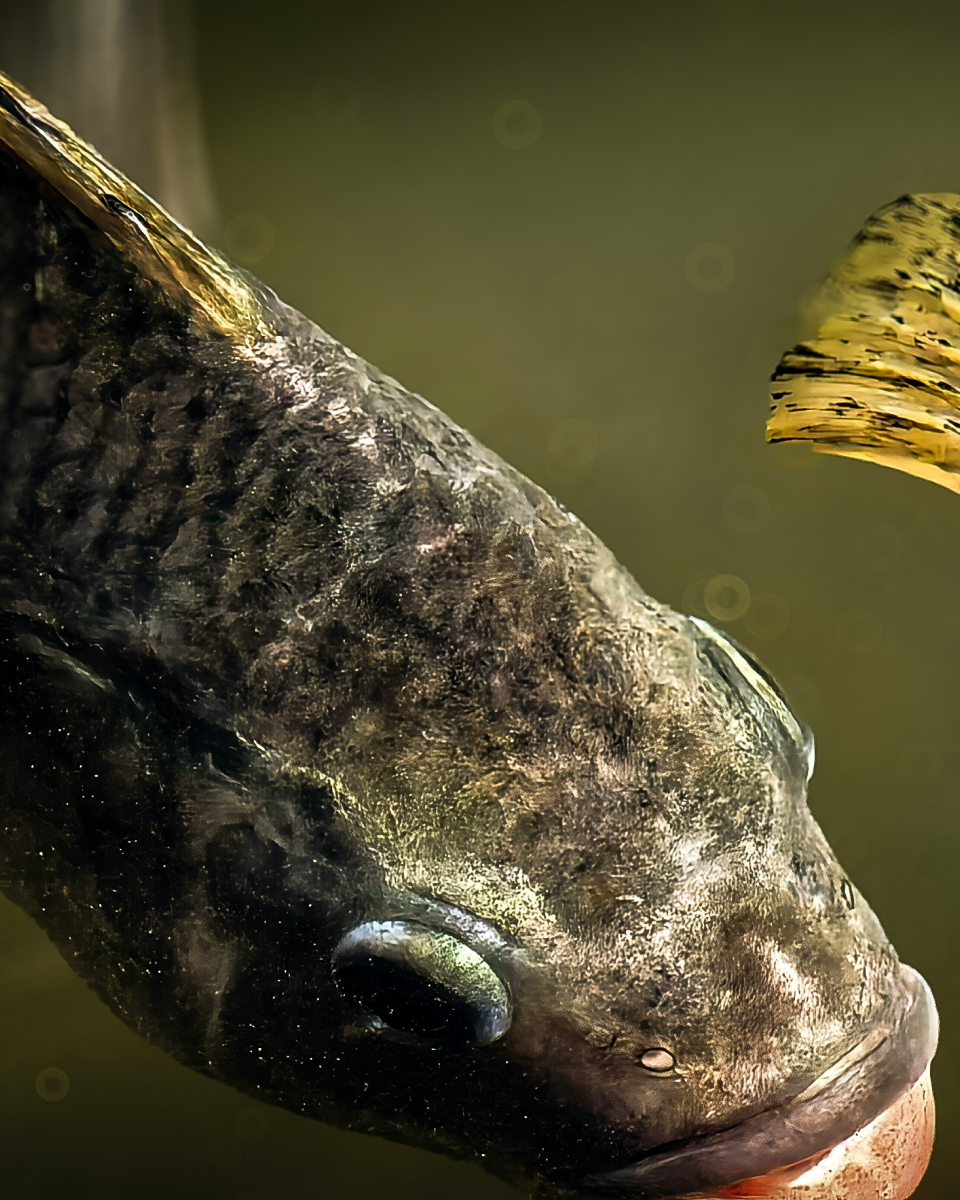
Photo by Lian Drones
Oreochromis niloticus is a freshwater cichlid native to parts of Africa, eurythermal with optimal temperature approximately 28–30°C and tolerant of a range of salinities. It is a robust, fast-maturing species capable of reaching sexual maturity as early as 4–6 months and spawning approximately every 17 days under favourable conditions — a reproductive rate that makes uncontrolled reproduction a production management problem and the primary driver of the monosex production system.
O. niloticus is a maternal mouth-brooder: females hold fertilised eggs and newly hatched fry in the buccal cavity for protection. In hatchery systems this parental care is routinely disrupted through manual removal of eggs from brooding females or artificial incubation immediately post-spawning, replacing the species-specific care behaviour with controlled incubation.
Social behaviour includes dominance hierarchies, inter-male aggression over territory and feeding positions, and territorial defence — behaviours that intensify at high stocking densities and produce agonistic injuries in farm conditions. Stress markers documented in tilapia under elevated stocking density, handling, and transport include elevated cortisol, erratic swimming, reduced feeding, and immunosuppression.
Evidence for fish sentience and nociception summarised in the Salmon and Trout records applies to tilapia as teleosts. Tilapia display avoidance learning and habituation, indicating capacity to process and remember aversive stimuli. A 2025 Frontiers in Veterinary Science welfare review treats tilapia as sentient vertebrates capable of experiencing pain and fear, consistent with the broader fish welfare scientific consensus.
Lifecycle Summary
Tilapia is the second most farmed fish globally after carp and the most widely farmed freshwater fish by value. Global aquaculture production reached approximately 5.97 million tonnes in 2018 (FAO) and is projected to exceed 7 million tonnes by 2025. China accounts for approximately 60–70% of global production; Egypt, Indonesia, the Philippines, and Brazil are the other major producing countries. Production is concentrated in low-to-middle-income countries and directed at both domestic food security and export markets — primarily the United States, the EU, and Japan — making tilapia the most globally traded farmed freshwater fish.
The defining chemical intervention in tilapia production — unlike any other farmed species in this database — is hormonal sex reversal: 17α-methyltestosterone (MT) is administered to sexually undifferentiated fry at 25–35 days post-hatch in feed at approximately 60 mg/kg for 3–4 weeks, converting genotypic females to phenotypic males. Near-monosex male populations (~95–99% male) are standard in intensive commercial production because males grow approximately twice as fast as females. MT is banned or restricted for use in food fish in the EU and some other jurisdictions, but is legal in most major producing countries; residue levels at the flesh stage typically fall below regulatory thresholds, enabling MT-treated fish to enter restricted markets through export.
Tilapia Lake Virus (TiLV), confirmed in 2016 and now spreading globally across producing countries, is an emerging disease threat causing mass mortality events of up to 90% in some outbreaks — structurally comparable to Infectious Salmon Anaemia (ISA) in the salmon industry.
Lifespan (Natural vs Exploited)
Wild O. niloticus can live approximately 10 years, with lifespan constrained by predation, competition, and environmental conditions rather than fixed senescence.
In aquaculture, market size is reached in approximately 4–7 months depending on system intensity and target weight (150–300 g for most markets; some premium markets target 500–700 g+ requiring 8–12 months). Tilapia are therefore slaughtered at approximately 4–8% of their potential natural lifespan. Survival rates in well-managed intensive systems can reach approximately 90–92%; mortality is driven by disease (streptococcosis, TiLV), hypoxia, temperature stress, handling events, and transport. In extensive systems, exposure to predators in open ponds adds a natural mortality component not present in closed systems.
Exploitation Systems
Tilapia exploitation operates through a single dominant system — freshwater aquaculture — across several production infrastructure types that differ substantially in intensity, density, and environmental control.
Extensive earthen ponds. Low-input, low-density culture using natural pond productivity and supplemental feed; ponds typically 0.1–several hectares with depths of 1–2 m. Used for small-scale and subsistence-oriented farming in parts of Africa and Asia. Fish have access to natural food sources — algae, zooplankton — and more complex pond environments, but face variable oxygen levels overnight, potential exposure to predators, and limited disease management.
Semi-intensive and intensive ponds. Higher stocking densities with regular feeding, partial water exchange, and active aeration; common across Asia, Africa, and Latin America for domestic and export markets. The primary global production system by volume.
Cage culture in lakes and reservoirs. Floating cages in freshwater bodies; large-scale cage systems operate in Indonesia (Lake Toba, Cirata Reservoir), the Philippines, and parts of Africa. Expose fish to ambient conditions but concentrate waste around the cage perimeter, altering local water quality in ways documented to affect benthic and water-column communities.
Recirculating aquaculture systems (RAS) and biofloc systems. High-intensity closed or semi-closed systems enabling very high stocking densities with controlled water quality. RAS recycles water through mechanical and biological filtration; biofloc systems maintain high-density production in turbid water dominated by microbial floc communities that convert nitrogenous waste into microbial biomass. Both systems are expanding in higher-income markets and for export-oriented production in Brazil and other Latin American countries.
All system types produce the same primary output — whole tilapia and fillets for fresh, chilled, or frozen markets. By-products from processing (heads, viscera, bones, skins) are directed to fishmeal, fish oil, fertiliser, animal feed, collagen, and gelatin production.
Living Conditions Across Systems
Stocking densities by system type: extensive ponds approximately 1–2 fish/m³; semi-intensive ponds approximately 3–8 fish/m³; intensive ponds approximately 10–15 fish/m³; super-intensive tanks and cage systems approximately 30–100 fish/m³; RAS biomass densities documented up to approximately 70–120 kg/m³; biofloc systems up to approximately 36 kg/m³ biomass. At a biofloc density of 36 kg/m³ with an average fish weight of 200 g, approximately 180 individual fish occupy each cubic metre.
Extensive systems: variable water quality, natural pond structure, some complexity. Semi-intensive: increased competition, reduced individual space, more active water management. Intensive and super-intensive: bare tank or lined pond environments with minimal structural complexity; fish are in continuous high-density contact with conspecifics; aggression and competition at feeders are characteristic. RAS: indoor controlled environment with artificial lighting; environmental enrichment absent in standard commercial configurations.
Light cycles are uncontrolled in pond and cage systems and correspond to ambient photoperiod; in RAS, artificial lighting regimes may be applied but are not standardised globally. Sensory conditions in high-density systems — constant water circulation, feeding equipment operation, handling events — differ substantially from natural pond or lake environments.
Welfare assessments applying standardised welfare protocols to tilapia in commercial systems document elevated stress indicators at higher densities, handling-associated cortisol spikes during grading and transport, and injury from inter-fish aggression.
Lifecycle Under Exploitation
Genetic Selection
Selective Breeding programmes for O. niloticus target rapid growth rate, uniform size at harvest, disease resistance (particularly against Streptococcus agalactiae and Streptococcus iniae), and male-biased sex ratios. Hybrid lines — principally O. niloticus × O. aureus — combine fast growth with environmental tolerance. YY-supermale genetic technology produces males carrying the YY sex chromosome configuration (rather than XY); crossing YY males with XX females produces a predominantly XY (male) population without hormone administration at each generation; this approach is expanding as a non-hormonal alternative to MT sex reversal but is not yet dominant globally.
Reproduction
In hatcheries, broodstock are held in tanks or ponds; spawning is induced by temperature and photoperiod control, with some operations using hormone-induced ovulation. Female O. niloticus mouth-brood eggs and fry in the buccal cavity as a species-specific parental care behaviour; in hatchery systems, eggs are removed manually from brooding females or collected from spawning substrates for artificial incubation in tanks or trays, disrupting this behaviour. Reproductive Cycle Manipulation via temperature and photoperiod management enables year-round production.
Birth & Early Life
Fry are stocked at high densities (approximately 20–25 fry/m³) in nursery ponds or tanks for 2–3 months until they reach approximately 30–40 g. Survival at this stage depends critically on water quality, feeding management, and predation control. Sex-reversal MT treatment is administered during the first 3–4 weeks of first feeding: fry receive feed containing 17α-methyltestosterone at approximately 60 mg/kg continuously through the sexually undifferentiated window at approximately 25–35 days post-hatch, masculinising genotypic females to produce near-monosex male cohorts. This is the defining pharmaceutical intervention in tilapia production.
Growth & Rearing
Fingerlings are transferred to grow-out systems at approximately 30–40 g and fed formulated diets at approximately 2–5% of body biomass per day depending on system intensity. Feeding schedules, water exchange frequency, and aeration management are the primary daily operational variables. Grading — sorting fish by size to reduce growth variation and inter-fish competition — is performed repeatedly during grow-out in intensive systems, constituting repeated handling and crowding stress events.
Production
Fish reach market size of approximately 150–300 g in approximately 4–6 months in intensive systems; larger target weights require longer grow-out. Broodstock operations run continuously in parallel with grow-out to supply fry for subsequent cohorts. Health management during production addresses streptococcosis, TiLV, protozoan parasites, and other endemic pathogens through vaccination, antibiotic treatment, and water quality management.
Transport
Live tilapia are transported in oxygenated bags or aerated tanks from hatcheries to grow-out farms and from grow-out farms to live markets or processing plants. Live fish transport is common for domestic markets in Asia and Africa; export markets receive processed (chilled or frozen) product. Transport stress — elevated cortisol, reduced oxygen at high density, physical handling — is documented in welfare studies as a significant mortality and welfare risk event.
End of Life
Pre-slaughter fasting is applied in some operations to reduce gut contents and metabolic waste during handling. Crowding and pumping for harvest constitutes a high-stress event before the killing method is applied.
Processing
After slaughter: evisceration, washing, packing as whole fish or fillets, chilling or freezing for distribution. Fillets are the primary export product; whole fish dominate domestic Asian and African markets. By-products enter fishmeal, fish oil, collagen, gelatin, and animal feed streams.
Chemical Medical Interventions
17α-methyltestosterone (MT) is the central pharmaceutical intervention in global tilapia production. Administered through feed at approximately 60 mg/kg during the 25–35 day sexually undifferentiated fry window, MT produces near-monosex male populations (~95–99% male) that grow approximately twice as fast as females. MT is a synthetic androgen classified as a controlled veterinary substance in the EU, where its use in food fish production is prohibited. It remains legal in China, Egypt, Indonesia, the Philippines, Brazil, and most other major producing countries. Residue levels in tilapia flesh at harvest typically fall below EU maximum residue limits, enabling MT-treated fish from non-EU countries to enter EU markets; this constitutes a documented regulatory arbitrage gap.
Antibiotics used for bacterial disease management include oxytetracycline, florfenicol, and amoxicillin, primarily for streptococcosis and other bacterial infections. Antiparasitic agents and antifungal treatments are applied for protozoan and fungal pathogens. Antibiotic use levels and permitted substances vary substantially between countries; some jurisdictions apply strict withdrawal periods and surveillance while others rely on producer compliance without systematic monitoring.
Vaccines targeting Streptococcus agalactiae, S. iniae, and TiLV are increasingly deployed in intensive systems, particularly in Asia and Latin America, as disease pressure and regulatory restrictions on antibiotics increase. Feed-incorporated immunostimulants — β-glucans, prebiotics — are used in some commercial operations to supplement vaccine-mediated protection.
Feed additives include synthetic amino acids, vitamins, minerals, and carotenoid pigments for growth, health, and flesh colour. Alternative protein sources — soy protein concentrate, insect meal, single-cell protein — are incorporated in some operations to reduce fishmeal dependence.
Anaesthetics including MS-222 (tricaine methanesulfonate) are used in research handling and some hatchery procedures; routine use in large-scale commercial production is limited.
Slaughter Processes
Tilapia slaughter methods vary substantially by country, facility size, and market destination. Standardised welfare-governed slaughter is not universally applied; significant proportions of global production — particularly in domestic Asian and African markets — are killed by methods classified as poor welfare in current aquaculture welfare guidance.
Ice slurry immersion — placing live fish directly into ice-water mixtures — is documented as widespread in tilapia production in multiple countries. Fish remain conscious for a period before temperature suppresses neural function; this method is classified by EFSA and contemporary fish welfare literature as welfare-inadequate due to the prolonged conscious period. Asphyxiation — removal from water without any stunning — is used in some operations; fish die over several minutes.
Electrical stunning — applying defined current parameters via wet or dry electrode systems — can induce rapid and sustained loss of consciousness in O. niloticus when properly calibrated, as documented in peer-reviewed studies including a 2024 SLU (Swedish University of Agricultural Sciences) paper specifically addressing tilapia stunning protocols. Percussive stunning using pneumatic bolt guns can cause immediate and permanent loss of consciousness in laboratory settings. Both methods are used in some facilities, particularly those supplying EU and other high-standard export markets, but adoption is uneven globally.
Gill-cut exsanguination is the standard post-stun kill method; if performed without effective prior stunning, it occurs while fish may still be conscious. Decapitation is used in some smaller operations.
Large-scale processing plants in China, Thailand, Indonesia, and Brazil process tens of thousands of tilapia per day; automated line processing at this throughput constrains the practical application of individual welfare-assessed kill methods.
No religious slaughter framework applies specifically to tilapia in any major market.
Slaughterhouse Labour Impact
Tilapia processing plant workforces in China, Thailand, Indonesia, Brazil, and Egypt rely significantly on migrant and low-wage labour, particularly in export-oriented facilities. Tasks include crowding and pumping operations, stunning (where applied), gill cutting, evisceration, filleting, trimming, and packing. Working conditions are characterised by cold, wet environments, repetitive cutting tasks, and sustained exposure to sharp tools and processing machinery — the standard aquaculture processing occupational risk profile documented in the broader seafood sector.
A 2025 PMC review of aquaculture processing occupational health notes that fish processing workers face elevated risks of musculoskeletal disorders, lacerations, and respiratory conditions from cold and damp environments; tilapia-specific injury rate statistics are not reported separately from broader seafood sector data.
Psychological impact data for tilapia processing workers are not available; systematic studies of psychological outcomes for freshwater fish processing workers have not been conducted, and the broader slaughterhouse psychology literature documenting stress and burnout is not directly applied to fish processing contexts in published literature.
Scale & Prevalence
Global tilapia aquaculture production: approximately 5.97 million tonnes in 2018 (FAO); projected to exceed 7 million tonnes by 2025 (industry estimates from Seafood Source and Aqua Asia Pacific). Tilapia is the second most farmed fish globally after carp and the most widely traded farmed freshwater fish by export volume. China accounts for approximately 60–70% of global production; Egypt, Indonesia, the Philippines, and Brazil are the other largest producers. The United States is the largest import market, followed by EU member states.
Individual count estimate: at 7 million tonnes and an average harvest weight of approximately 250 g, approximately 28 billion individual tilapia are harvested annually — among the highest individual animal slaughter counts of any farmed species in the database, though this figure is sensitive to average weight assumptions.
Wild tilapia capture fisheries contribute less than 1 million tonnes globally, primarily from African lake systems (Lake Tanganyika, Lake Malawi, Lake Victoria). This is a minor fraction of total tilapia production.
Directional trend: production growth resumed after a COVID-19-related pause in 2020–2022; production is expanding across Asia, Africa, and Latin America driven by rising global seafood demand, competitive production costs, and tilapia’s suitability for warm-water aquaculture in tropical and subtropical regions.
Ecological Impact
Tilapia introduction into non-native freshwater systems constitutes one of the most documented freshwater invasive species problems globally. Farmed tilapia escape from ponds, cages, and transport events have established invasive populations across Southeast Asia, the Americas, and Australia. Invasive tilapia displace native fish species through competitive exclusion, predation on eggs and larvae of native species, habitat modification through grazing on aquatic vegetation and bioturbation of sediments, and ecosystem-level alteration of algal community composition. The ecological pathways from aquaculture operation to invasion are direct and well-documented.
Freshwater cage culture generates localised nutrient enrichment from uneaten feed and faecal deposition around cage perimeters; in enclosed water bodies such as Lake Toba (Indonesia) and Cirata Reservoir, large-scale cage operations have produced documented water quality degradation including oxygen depletion and eutrophication affecting both the farmed fish and surrounding aquatic ecosystems.
Antibiotic residues discharged from tilapia pond and RAS operations contribute to antimicrobial resistance enrichment in freshwater environments; the same AMR pathway documented for trout farms applies structurally, though tilapia-specific AMR monitoring data are fragmented across producing countries.
Extensive pond systems at low stocking densities have a lower water quality discharge impact than intensive systems; land use for large earthen pond systems is significant in some producing regions. RAS and biofloc systems have substantially reduced direct effluent discharge relative to flow-through systems but carry higher energy footprints.
The carbon footprint of tilapia production varies substantially by system type; lifecycle assessments for intensive pond systems in Asia are limited in published literature relative to salmon and trout LCA coverage. Tilapia’s omnivorous diet allows higher incorporation of plant protein into feed, reducing the forage fish dependency characteristic of carnivorous farmed species.
Language & Abstraction
“Monosex tilapia” is the standard commercial descriptor for populations produced by sex reversal or YY genetics; the term describes the production outcome — near-uniform maleness — without referencing the hormonal mechanism or the regulatory status differences between producing and importing jurisdictions. The MT sex-reversal system operates within a regulatory structure where the substance is prohibited at the point of production in some importing markets but legal at the point of production in all major exporting countries, and residue levels at the flesh stage at import are typically below actionable thresholds. The trade flow thus moves product from a prohibited production practice to a market that prohibits that practice — legally, because the prohibition applies to use in domestic production rather than to import of resulting products.
“Fast-growing lines” and “improved strains” in tilapia industry and extension material describe the multi-decade GIFT (Genetically Improved Farmed Tilapia) and descendant breeding programmes that have substantially increased growth rates in commercial aquaculture. The framing emphasises productivity outcomes without foregrounding the sex-ratio manipulation — hormonal or genetic — that amplifies growth differentials in commercial practice.
“Tilapia” as a product name applied globally describes a taxonomically diverse group of cichlid species and their hybrids; in retail and food service markets, “tilapia” appears as a generic category without species-level identification. The generic name functions analogously to “white fish” for other species — abstracting biological diversity into a commodity category, concealing the specific species, farming system, country of origin, and hormonal treatment history of any individual fish.
“TiLV mortality” and “disease events” in aquaculture management language describe mass death events from Tilapia Lake Virus using disease management terminology. The structural parallel to ISA in salmon — a novel emerging virus spreading through trade and shared water systems, causing catastrophic production losses — is acknowledged in aquaculture literature but TiLV is not positioned in regulatory or media framing with the same systemic urgency, partly because tilapia production is concentrated in lower-income country contexts with less international regulatory attention.
“Food security fish” and “aquaculture for development” are framing terms applied to tilapia in FAO, development organisation, and policy documents that position tilapia farming as a tool for rural income generation and protein access in low-income countries. This framing coexists with the export-oriented industrial-scale production system supplying US and EU markets from large-scale facilities; the food security framing does not capture the full system including the large industrial segment.
Terminology
Tilapia, Nile tilapia, blue tilapia, tilapiine cichlid, monosex tilapia, GIFT tilapia, YY supermale, sex reversal, fry, fingerling, grow-out, broodstock, spawning, mouthbrooding, stripping, pond culture, cage culture, RAS, biofloc, super-intensive system, intensive system, semi-intensive system, extensive system, stocking density, biomass, harvest, market size, whole fish, fillet, fresh fillet, frozen fillet, by-product, heads and frames, fishmeal, fish oil, collagen, gelatin, 17-alpha-methyltestosterone, MT, streptococcosis, TiLV, Tilapia Lake Virus, vaccine, antibiotic, growth promoter, sex reversal hormone, monosex male, fast-growing strain, improved strain, production cycle, feed conversion ratio, water exchange, aeration.
Within The System
Developments
Report a development: contact@systemicexploitation.org
Notice an inaccuracy or omission?
If you believe information on this page is incorrect, incomplete, or missing important context, you may submit a suggested correction for review.