
Lions
Scientific Name:
Panthera leo
Scope
Covers Panthera leo in all exploitation contexts: African lion (P. leo leo) across sub-Saharan Africa and P. leo persica (Asiatic lion) in the Gir Forest landscape, Gujarat, India. Includes wild populations subject to trophy hunting and retaliatory killing; captive populations in zoos, safari parks, circuses, and roadside zoos; and commercial captive breeding and farming systems, primarily in South Africa, used for cub-petting tourism, trophy and canned hunting, and body-part trade. Excludes other large felids (tigers, leopards, cheetahs) except where referenced for comparative system context. Excludes symbolic and purely cultural uses not involving live animals or physical body parts.
Species Context
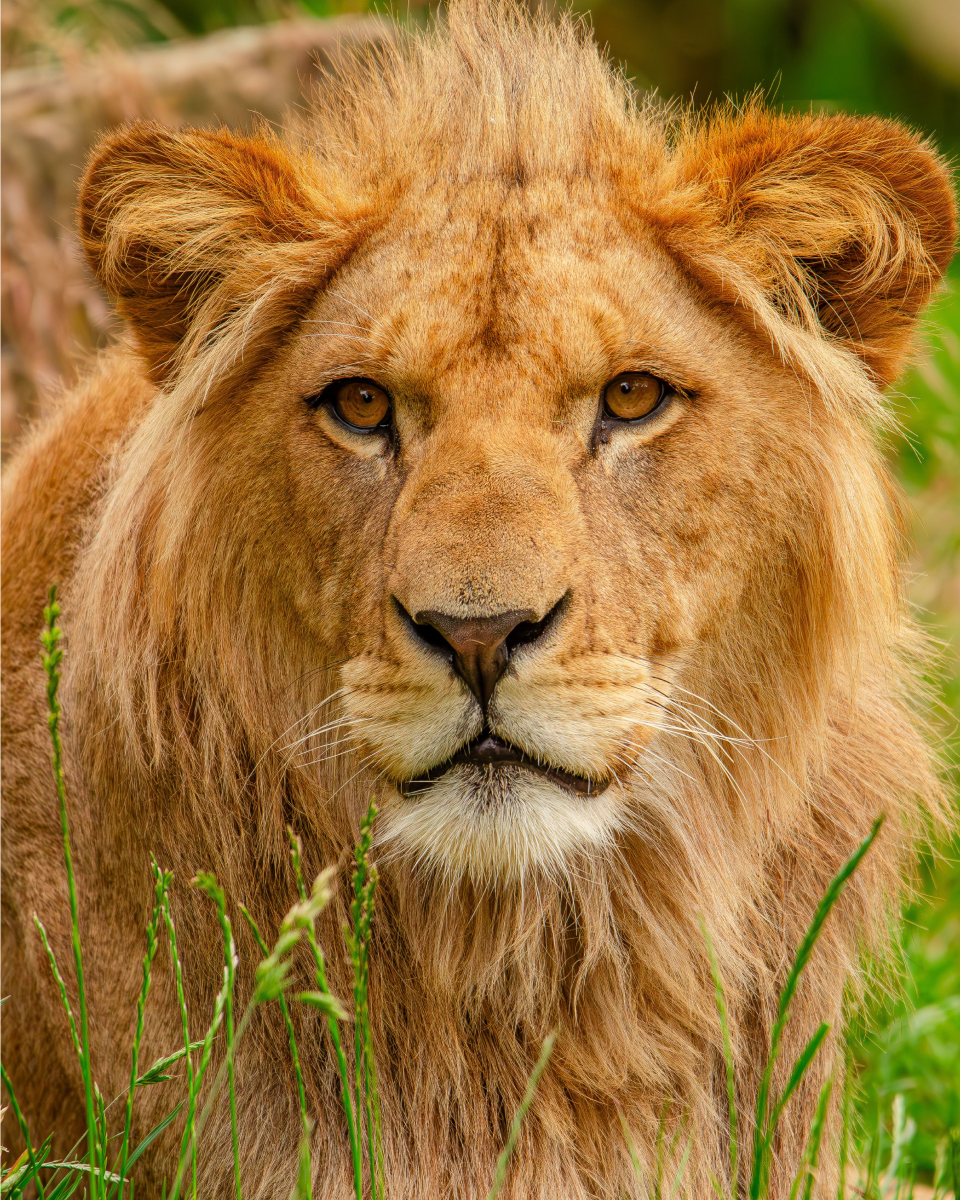
Photo by Leon Aschemann
Panthera leo is a large social felid — the only truly social species among the big cats. Adult males typically weigh 150–250 kg in African populations; females 110–180 kg; Asiatic lions are somewhat smaller. Lions are apex predators specialising in medium- to large-bodied ungulates, typically hunting cooperatively in coordinated group efforts.
Pride structure consists of related adult females, their offspring across age cohorts, and one or more resident adult males. Cooperative hunting, communal cub-rearing, and collective territorial defence are core social behaviours. Home ranges in savanna systems typically span 100–400 km² depending on prey density; territory boundaries are maintained by scent marking, roaring, and direct confrontation.
Natural habitat encompasses savannas, grasslands, open woodlands, and scrub environments. Lions now occupy approximately 12–17% of their historical African range; wild populations in North Africa, the Middle East, and Europe are extinct.
Stress responses in captive conditions include elevated glucocorticoids, pacing, stereotypic movement, reduced exploratory behaviour, and increased aggression — behavioural indicators documented in captive lions and other captive felids. Translocation, confinement, and repeated human contact are documented stress triggers.
Sentience and advanced cognition are supported by evidence of complex long-term social relationships, cooperative coordination in hunting, social memory, and problem-solving capacity in lions and closely related Panthera species.
Lifecycle Summary
Lions enter exploitation systems through two primary pathways: wild populations subject to trophy hunting and removal, and captive populations bred and managed across multiple sequential commercial uses. In South Africa’s commercial captive breeding system — the most structurally developed lion exploitation system in the database — cubs are removed from mothers within days of birth for cub-petting tourism via Premature Weaning and Separation, reared through juvenile tourist-interaction phases via Conditioning and Training and Captive Display, and killed at ages ranging from a few months to several years for trophy hunts or bone and skeleton export. Selective Breeding, Intensive Confinement, and Caging structure the captive system throughout. Slaughter and Selective Culling are the terminal practices, with bones and skeletons processed for export to Asian traditional medicine markets. South Africa announced a phase-out of commercial captive lion breeding in 2021; implementation is ongoing.
Lifespan (Natural vs Exploited)
Wild lions typically live 8–10 years; some individuals reach 10–14 years. High cub mortality limits recruitment: approximately 80–87% of cubs die before adulthood from infanticide, predation, disease, and starvation. Primary adult mortality causes include intraspecific conflict, injury from prey, disease, retaliatory killing by livestock owners, and trophy hunting.
In accredited zoos and well-managed captive settings, lions frequently reach 15–20 years and may exceed 25 years, supported by controlled diet, veterinary care, and absence of predation and territorial conflict. Chronic degenerative disease, neoplasia, and obesity-related conditions are documented causes of captive death.
In South Africa’s commercial captive breeding and cub-petting system, lifespans are determined by commercial utility rather than biology. Cubs used in petting operations may be killed or transferred within months; animals cycled through lion walk operations are typically killed at 2–6 years for trophy hunts or bone trade. Animals killed for skeleton export are documented at a range of ages; systematic age-at-death distributions for the sector are not published.
Exploitation Systems
Trophy and canned hunting. Wild and captive-bred lions are shot by paying hunters for trophies — skulls, skins, mounted heads, and associated body parts. “Canned hunting” denotes the killing of captive-bred lions in fenced or semi-confined conditions where the animal has been habituated to human presence, substantially reducing its flight response. Trophy fees for lions range from tens of thousands of US dollars per animal. South Africa is the primary source of canned hunting; wild trophy hunting occurs across a broader range of sub-Saharan African countries under CITES permit frameworks.
Commercial captive breeding and body-part trade. South Africa developed a large-scale commercial captive lion breeding sector from the 1990s onward, with an estimated 7,400–12,000 captive lions held across more than 350 facilities at peak. The system operates as a sequential-use pipeline: cubs are removed from mothers for cub-petting tourist attractions, then cycled through lion walk and interaction operations, then offered for trophy or canned hunts, and finally killed for skeleton and bone export. Between 2008 and the late 2010s, at least 8,761 lion skeletons were legally exported from South Africa under CITES permits, primarily to Asian markets where lion bone functions as a substitute for tiger bone in traditional medicine products, wines, and tonics. South Africa announced a phase-out of commercial captive lion breeding in 2021 following the High-Level Panel report; implementation is ongoing.
Zoo and captive display. Lions are among the most widely held large carnivores in accredited zoos globally. Zoo populations are managed under regional or global studbooks and Species Survival Plans, selecting on genetic diversity and subspecies representation. In accredited zoos, lions serve display, education, and conservation insurance functions; for the Asiatic lion, captive populations represent a managed backup for the small wild population in the Gir Forest. Unaccredited roadside zoos and private collections keep lions in conditions that are systematically less documented and less regulated.
Circus and entertainment. Lions have historically been a core circus performance species; repeated Conditioning and Training produces compliance with performance behaviours. Multiple jurisdictions — including the United Kingdom and numerous US states and municipalities — have now enacted bans on wild animal circus use, contracting this system type.
Research. Lions are used in veterinary, ecological, and physiological research — primarily through collaboration with zoological institutions and field conservation projects rather than through dedicated laboratory colonies. Chemical immobilisation research, disease surveillance, and reproductive physiology studies are the primary research contexts.
Living Conditions Across Systems
Accredited zoos. Outdoor enclosures typically ranging from several hundred to several thousand square metres, with structural complexity — climbing platforms, substrate variation, shelters — and smaller off-exhibit holding dens. Social groupings approximate small prides, constrained by space and management requirements. Regional zoo association standards (AZA, EAZA) specify minimum space, complexity, and management requirements; compliance is audited through accreditation processes.
Commercial captive breeding farms (South Africa). Fenced camps at variable densities; reports document multiple animals in enclosures with limited environmental complexity and routine human contact for cub-petting operations. Systematic quantitative stocking density data are not published; most documentation derives from investigations and NGO assessments rather than regulatory audits.
Canned hunting operations. Fenced ranch or game farm areas, in some cases larger than standard breeding farm camps. Animals are typically habituated to human presence before hunts, restricting effective flight behaviour. Exact area per lion and vegetation structure vary by facility and are not standardised in the literature.
Roadside zoos and unaccredited facilities. Frequently documented as barren concrete enclosures or small wire cages, with enclosures in the range of tens of square metres, minimal enrichment, and restricted outdoor access. Systematic quantitative data are absent; documentation is primarily from case reports and animal protection investigations.
Circus systems. Historically, travel cages of a few square metres per animal for transport and off-exhibit holding, with daily access to performance rings. Bans in multiple jurisdictions have reduced the active circus population substantially.
Lifecycle Under Exploitation
Genetic Selection
In commercial breeding farms, selection is based on market preferences — coat colour variants, mane size, tractability — without formal genetic improvement programmes; inbreeding and line-breeding are documented. In accredited zoos, Selective Breeding follows studbook and Species Survival Plan guidelines targeting genetic diversity and subspecies representation.
Reproduction
Natural mating via co-housing is the standard method across both commercial and zoo systems. Artificial insemination is technically feasible in Panthera species but is not documented as a routine commercial practice in lions. In commercial breeding farms, Premature Weaning and Separation of cubs is used to shorten inter-birth intervals, inducing faster return to oestrus and increasing annual cub output.
Birth & Early Life
Gestation is approximately 108 days; litters typically contain 2–4 cubs. In commercial cub-petting systems, cubs are removed from mothers within days to a few weeks of birth and hand-reared for continuous supply to tourist interaction operations — a systematic application of Premature Weaning and Separation. In conservation-oriented zoo management, cubs remain with the mother for months and are handled only for health interventions.
Growth & Rearing
In commercial systems, juveniles move through sequential tourist-facing operations — cub-petting, lion walks, close-contact photo sessions — requiring sustained Conditioning and Training to maintain tractability and human tolerance. Environmental Deprivation characterises holding enclosures between operations. In accredited zoos, juveniles are group-housed with age-appropriate social companions, fed carcass meat or prepared diets, and receive routine veterinary care.
Production
In tourist interaction systems, the operational output is visitor experiences — petting sessions, walks, photographs — delivered through Captive Display and Conditioning and Training. In trophy hunting systems, the operational output is a huntable male at desired age and mane development. In bone trade systems, the operational output is the carcass and skeleton following Slaughter.
Transport
Live Transport occurs between breeding farms, tourist operations, hunting ranches, and processing facilities. Lions are moved in crates or cages loaded into vehicles; confinement, noise, vibration, and temperature variation are documented stressors. Formal quantitative data on lion-specific journey durations and associated mortality are not published.
End of Life
In trophy and canned hunting operations, lions are shot by paying hunters, typically at close range in fenced areas. In bone-trade operations, lions are shot or killed by barbiturate overdose in enclosures. In commercial farms following phase-out regulatory pressure, Depopulation of groups has been documented via shooting or chemical euthanasia. In zoos and sanctuaries, end of life occurs via barbiturate overdose under veterinary supervision when animals are aged, ill, or surplus to capacity.
Processing
Trophy processing involves skinning, skull and head removal, and taxidermy or preparation of mounted trophies. Skeleton processing involves soft tissue removal, maceration, drying, and packing of cleaned skeletons for CITES-permitted export. Post-mortem examination and tissue sampling for pathology and disease surveillance occur in zoo and research contexts.
Chemical Medical Interventions
Chemical immobilisation is the primary pharmacological intervention structurally specific to lions. Standard protocols combine an alpha-2 agonist (medetomidine or xylazine) with a dissociative anaesthetic (ketamine) or a cyclohexamine (tiletamine-zolazepam), delivered by dart. Documented risks include respiratory depression and hypoxaemia, requiring monitoring of respiratory rate and oxygen saturation during procedures. Reversal agents — atipamezole for medetomidine, naltrexone for opioid components — are administered post-procedure; recovery under field conditions typically occurs within 45–60 minutes. Pharmacokinetic data for lions are primarily derived from zoo and field immobilisation literature; protocols used in commercial farm contexts may differ and are less systematically documented.
Vaccines administered to captive lions include products against rabies, feline panleukopenia, feline herpesvirus, calicivirus, and canine distemper virus, using protocols adapted from domestic carnivore vaccination schedules. No lion-specific licensed vaccines are commercially available; all protocols represent off-label adaptation from domestic cat and dog products.
Anthelmintics (macrocyclic lactones, praziquantel) and antibiotics are used for parasite and infection management in captive populations; schedules are adapted from domestic carnivore guidelines. Ectoparasiticide application is documented in captive settings. No evidence supports the use of hormonal growth promoters or feed-based growth acceleration in lions.
Barbiturate overdose — typically pentobarbital sodium — is the standard euthanasia method in zoo and sanctuary contexts, administered intravenously under veterinary supervision, often following prior sedation.
Slaughter Processes
Trophy and canned hunting kills occur by rifle shot. Shot placement, calibre, and hunter proficiency determine time to death; close-range canned hunting of habituated animals reduces the likelihood of tracking wounded animals over extended distances, but lion-specific wounding rates and time-to-death distributions are not quantified in peer-reviewed literature. Documentation is primarily from investigative reports and regulatory discussions.
In bone-trade and farm depopulation contexts, lions are killed by close-range shooting in enclosures or by barbiturate overdose following chemical immobilisation. Captive bolt application specific to lions is not documented in available literature; killing in this sector relies on firearm or chemical methods rather than slaughterhouse-type stunning procedures.
Religious slaughter frameworks do not apply to lions in any documented commercial context. Lion meat is not a primary commodity; religious considerations are more relevant to CITES and national permit frameworks governing trophy and body-part trade than to ritual slaughter.
Aggregate throughput: the South African captive sector exported at least 8,761 lion skeletons under CITES permits between 2008 and the late 2010s, implying aggregate annual kills across the sector in the hundreds to low thousands. Precise annual kill figures are not published by any primary statistical authority; figures are derived from CITES trade database analyses in academic and policy literature.
Species-specific occupational health data for workers in lion exploitation systems — injury rates, disease exposure, psychological impact — are not published as systematic datasets. Documented risks include severe bite and claw trauma during handling, feeding, and enclosure management, particularly in close-contact tourist operations and farm contexts. Regulatory frameworks in some jurisdictions specify protective barriers and training requirements for workers handling dangerous wild animals, but quantitative injury statistics by species are not reported in accessible literature.
Slaughterhouse Labour Impact
Species-specific occupational health data for workers in lion exploitation systems — injury rates, disease exposure, psychological impact — are not published as systematic datasets. Documented risks include severe bite and claw trauma during enclosure management, feeding, and close-contact tourist operations; fatalities and serious maulings in zoo, circus, and farm contexts appear in case reports but are not compiled into epidemiological records by species. Regulatory frameworks in some jurisdictions specify protective barrier and training requirements for handlers of dangerous wild animals, but quantitative injury statistics disaggregated by species are not reported in accessible literature. Psychological impact literature for personnel working specifically in lion farms, canned hunting operations, or bone-trade processing facilities does not exist as a published body of research. General occupational health findings for captive wild animal workers and slaughterhouse workers apply structurally but are not substituted here; the species-specific data gap is confirmed.
Scale & Prevalence
Wild populations. IUCN assessments estimate African lion populations at approximately 22,800–24,500 individuals as of 2018, down from approximately 33,300 in 2006 — a decline of approximately 26–43% over 12 years depending on methodology and region. Tanzania holds the largest national population, estimated at approximately 14,500 animals. More than half of remaining wild lions are concentrated in a small number of southern and eastern African countries. Lions now occupy approximately 12–17% of their historical African range. The Asiatic lion population in the Gir Forest landscape numbers approximately 600–700 individuals.
Captive populations. South Africa held an estimated 7,400–12,000 captive lions across more than 350 commercial facilities at peak — substantially exceeding the country’s wild lion population of approximately 3,000. These figures derive from government task force reports and NGO analyses rather than primary statistical agency census data. Global zoo populations number in the low thousands, distributed across accredited and unaccredited facilities; no single global registry provides a verified total count.
Trade data. At least 8,761 lion skeletons were legally exported from South Africa between 2008 and the late 2010s under CITES permits, compiled from CITES trade database records in academic analyses. These are minimum estimates; illegal trade volumes and misclassification mean the actual figure is higher.
Directional trend. Wild populations are declining across most of the species’ range, with particular severity in West and Central Africa; some southern African populations show stability or limited growth. South Africa’s commercial captive breeding population expanded substantially through the 2000s and 2010s; the 2021 phase-out announcement and subsequent regulatory process represents a structural shift for that sector, though implementation timelines and enforcement remain subjects of ongoing policy development.
Ecological Impact
Wild lions function as apex predators with documented regulatory effects on prey population structure, behaviour, and spatial distribution. Their presence influences mesopredator suppression, vegetation structure through herbivore behaviour modification, and ecosystem-level energy flows. Decline or local extinction of lion populations contributes to mesopredator release and trophic cascade effects documented in comparable predator removal contexts.
Trophy hunting, retaliatory killing, and poisoning contribute to population decline and fragmentation, altering predator guild composition and reducing ecosystem-level herbivore regulation capacity. Habitat loss and prey depletion are the primary structural drivers of wild population contraction.
Commercial captive breeding and farming operations involve land conversion for fenced camps, water use for animal holding and associated infrastructure, and carcass waste management following slaughter. Quantitative life cycle assessment data specific to lion farming operations are not published.
The lion bone trade interacts with broader wildlife trade demand dynamics: lion bone has functioned as a substitute for tiger bone in some traditional medicine markets, and the relationship between lion bone supply availability, tiger bone demand, and potential substitution effects on tiger populations has been examined in conservation policy literature, though causal relationships remain contested.
Language & Abstraction
“Canned hunting” is a term that originated in critique of captive-bred lion hunting and was subsequently adopted — with variable definitions — by industry, regulators, and advocacy bodies. The term’s instability is operationally significant: South African industry and some regulatory documents have preferred “captive-bred hunting” or “intensive breeding operations,” which shift the framing from the constraint on the animal (a fenced space it cannot escape from) to the breeding context (a management system). The contested terminology has complicated regulatory attempts to define and prohibit the practice, since the boundary between “canned” and “fair chase” is definitionally contested rather than operationally fixed.
“Interaction,” “encounter,” “walk with lions,” and “cub-petting experience” are the standard commercial terminology for tourist operations involving direct physical contact with captive lions. These terms frame physical control and human handling of wild carnivores as leisure experiences — a consumer-facing register that absorbs the management mechanisms (Conditioning and Training, Premature Weaning and Separation, Intensive Confinement in holding enclosures) into the event description without naming them. “Experience” as a category term converts the operational structure of a captive management system into a consumer product description.
“Euthanasia,” “culling,” and “stock reduction” appear in regulatory and industry documents to describe the killing of lions that are commercially surplus, no longer profitable for tourist operations, or subject to farm closure orders. As in the mink and foxes records, “euthanasia” is deployed for healthy animals killed for commercial or regulatory rather than veterinary reasons — the same terminological inversion documented elsewhere in this database. “Stock reduction” applies a livestock inventory management frame to the killing of large carnivores under industry phase-out conditions.
“Game,” “quota,” “off-take,” and “harvest” are the standard regulatory and industry vocabulary for trophy hunting, framing the killing of individual wild lions as a population management operation with quantified parameters. The CITES permit framework uses these terms in export quota documentation; the vocabulary structures how wild lion populations are governed internationally.
“Blood lions” entered public discourse following the 2015 documentary of that name, functioning as a counter-terminology to industry framing that positioned captive-bred lion hunting as distinct from wild trophy hunting. The term’s circulation illustrates how critical counter-language can become embedded in the policy discourse it targets.
Terminology
Panthera leo, African lion, Asiatic lion, pride, coalition, cub, sub-adult, pride male, breeder female, breeding stock, hand-reared cub, cub-petting, lion walk, interaction experience, encounter, captive display, captive-bred lion, ranched lion, canned hunting, captive-bred hunting, intensive breeding operation, trophy, trophy fee, lion bone, skeleton export, CITES quota, off-take, harvest, game, quota, surplus animal, non-viable animal, culling, euthanasia, stock reduction, depopulation, sedation, immobilisation, dart, reversal agent, live transport, studbook, Species Survival Plan, bone trade, traditional medicine, taxidermy, trophy processing, maceration, problem animal, damage-causing animal, blood lions
Within The System
Developments
Report a development: contact@systemicexploitation.org
Notice an inaccuracy or omission?
If you believe information on this page is incorrect, incomplete, or missing important context, you may submit a suggested correction for review.