
Scope
This record documents how tilapia are exploited within globally standard animal-use systems. It describes dominant, routine practices across industrial aquaculture, hatchery production, and processing systems, independent of country-specific regulation or sustainability branding.
Differences in scale, enforcement, and legal framing are documented in country records. System-specific mechanisms are documented within industry records.
Species context
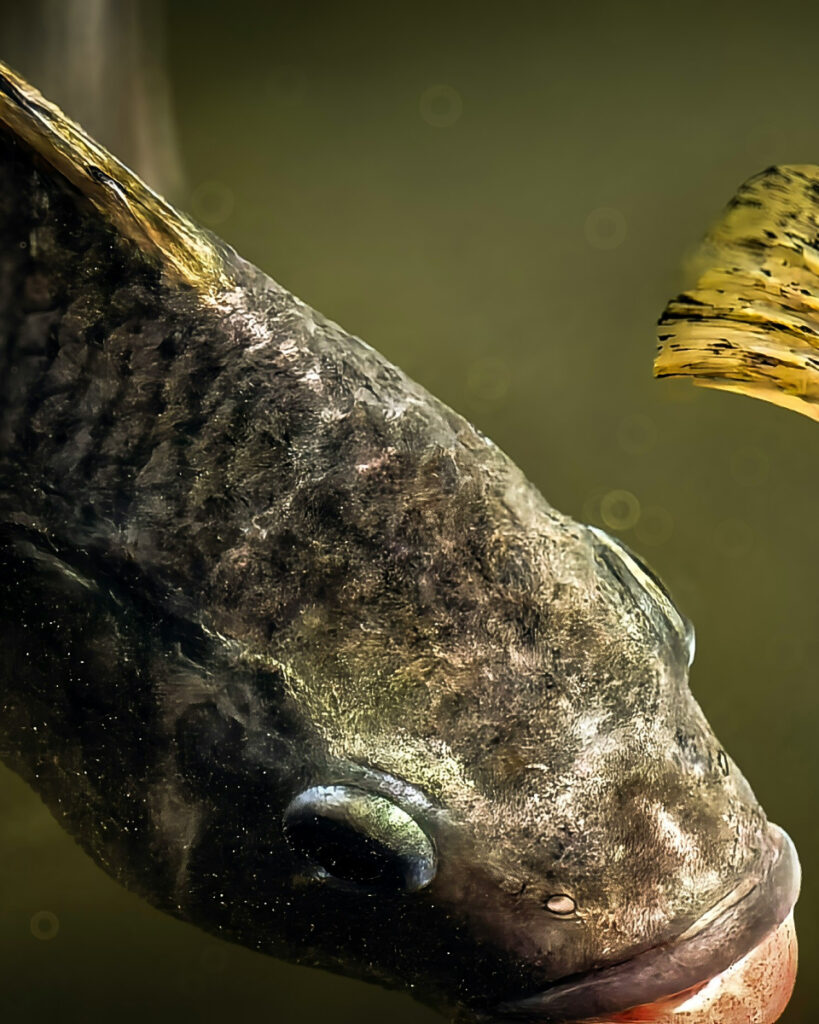
Photo by Lian Drones
Tilapia are freshwater fish primarily belonging to the genera Oreochromis, Tilapia, and Sarotherodon. They are hardy, fast-growing, and highly adaptable to varying water conditions, including low oxygen environments.
Tilapia exhibit parental care behaviours, with many species engaging in mouthbrooding, where one parent incubates fertilised eggs in the mouth until hatching. They form social hierarchies, defend territories, and respond to environmental stressors through behavioural and physiological changes.
Under natural conditions, tilapia inhabit rivers, lakes, and wetlands, foraging on plant material, algae, and small organisms. They rely on water quality, space, and environmental complexity to regulate stress and reproduction.
These characteristics establish tilapia as social, behaviourally responsive animals whose biological and environmental needs are systematically overridden within exploitation systems.
Natural versus exploited lifespan
Natural lifespan
In the absence of exploitation, tilapia commonly live 6–10 years depending on species and environmental conditions.
Lifespan under exploitation
Within exploitation systems, tilapia are typically killed far earlier:
- Industrial aquaculture systems: commonly slaughtered within 6–12 months
- Intensive recirculating systems: sometimes killed within 5–8 months
- Broodstock in breeding facilities: killed once reproductive efficiency declines
The divergence between natural lifespan and exploited lifespan is determined by growth rate targets and harvest scheduling rather than biological longevity.
Systems of exploitation
Tilapia are exploited primarily through:
- Industrial aquaculture
Tilapia are bred, hatched, confined, fed, medicated, and slaughtered in ponds, cages, tanks, and recirculating aquaculture systems. - Monosex production systems
Hatcheries manipulate sex ratios to produce predominantly male populations for faster growth. - Hatchery and breeding programs
Selective breeding prioritises rapid growth, feed efficiency, and tolerance to crowding. - Export-oriented processing industries
Tilapia are processed into fillets and distributed globally as low-cost whitefish products. - Byproducts and reduction processing
Processing waste is rendered into fishmeal, oils, fertilisers, and animal feed inputs.
Tilapia production is heavily integrated into global supply chains, particularly in regions supplying export markets.
Living conditions across system types
Pond and cage systems
Tilapia are commonly raised in high-density earthen ponds, reservoirs, or floating cages in lakes and rivers. Stocking densities are high, and water quality often deteriorates due to waste accumulation.
Fish are confined in uniform environments lacking natural habitat structure. Movement is restricted to limited enclosures. Crowding results in aggression, fin damage, skin lesions, and chronic stress.
Recirculating aquaculture systems (RAS)
In land-based tanks, tilapia are confined in tightly controlled, enclosed systems with mechanical filtration. Although water parameters are monitored, confinement remains intensive and highly artificial.
Integrated farming systems
In some contexts, tilapia are raised in systems integrated with livestock or crop operations, where waste from one system feeds another. These systems prioritise output efficiency over individual welfare.
Across all systems, environmental complexity and autonomy are absent.
Standardised lifecycle under exploitation
While production models vary, tilapia typically move through a broadly standardised lifecycle:
- Broodstock management and artificial fertilisation
Adults are bred under controlled conditions. Eggs are collected or incubated artificially. - Hormonal sex manipulation
Fry are often fed hormone-treated feed to produce predominantly male populations, reducing unwanted reproduction and accelerating growth. - Nursery phase
Juveniles are raised in tanks or small ponds until transfer size. - Grow-out phase
Tilapia are transferred to larger ponds, cages, or tanks and fed concentrated diets to accelerate weight gain. - Harvest and slaughter
Fish are crowded, netted, removed from water, stunned inconsistently, and killed.
Chemical and medical interventions
To maintain productivity at scale, tilapia are subjected to systemic interventions, including:
- Hormonal treatments (e.g., androgens) during early development for sex control
- Antibiotics to manage bacterial infections
- Antiparasitic and antifungal treatments
- Water disinfectants and chemical treatments
High stocking densities increase disease transmission risk, requiring ongoing pharmaceutical management.
Slaughter processes
Tilapia slaughter methods frequently involve inadequate stunning. Common practices include:
- Asphyxiation in air
- Ice slurry immersion
- Carbon dioxide exposure
- Electrical stunning with inconsistent effectiveness
- Manual decapitation or gill cutting
Prior to slaughter, fish are crowded tightly, resulting in compression injuries and oxygen depletion. Some fish regain consciousness during bleeding.
Harvest often involves rapid, large-scale netting of entire ponds or cages, with thousands killed simultaneously.
Slaughterhouse labour impact
Tilapia processing facilities operate high-speed filleting and packaging lines. Workers are exposed to:
- Cold, wet environments
- Repetitive strain injuries
- Continuous handling of live or dying animals
In export-oriented supply chains, labour conditions may involve long hours and limited protections.
Scale and prevalence
Tilapia are among the most widely farmed fish globally, with billions of individual fish killed annually. They are marketed as low-cost, high-efficiency protein and are central to large-scale aquaculture expansion.
Production is concentrated in regions supplying international markets, making tilapia a globally traded commodity.
Ecological impact
Tilapia exploitation contributes to ecological harm, including:
- Nutrient pollution and eutrophication from pond and cage systems
- Escape of farmed tilapia into wild ecosystems, disrupting native species
- High feed demand linked to agricultural inputs and fishmeal production
- Water extraction and habitat alteration
Tilapia are also introduced intentionally or unintentionally into non-native ecosystems, where they may outcompete local species.
Language and abstraction
Tilapia are frequently described as “production fish,” “whitefish fillets,” or “sustainable aquaculture units.” Marketing emphasises affordability and efficiency while omitting confinement conditions and slaughter methods.
Numerical framing focuses on yield per hectare or feed conversion ratios, reducing individual animals to output metrics.
Editorial correction notice
Tilapia are often framed as a sustainable or development-oriented aquaculture solution. This record documents tilapia as individual animals systematically bred, hormonally manipulated, confined, medicated, and killed within industrial production systems, independent of efficiency narratives or affordability framing.