
Scope
This record documents how sea bass are exploited within globally established animal-use systems. It describes dominant practices across marine aquaculture production, wild capture fisheries, hatchery breeding systems, seafood processing industries, aquaculture research, and feed supply chains, independent of country-specific regulation or seafood marketing narratives.
Differences in scale, enforcement, and legal classification are documented in country records. System-specific mechanisms are documented within industry records.
Species context
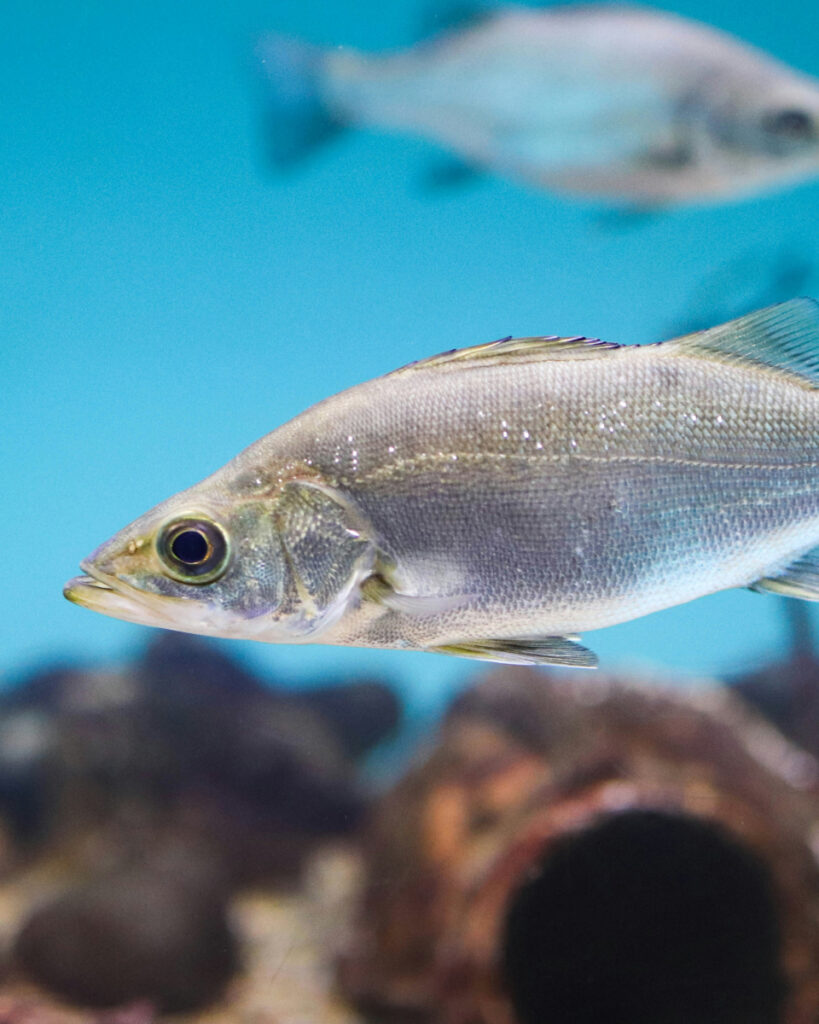
Photo by SLNC
“Sea bass” commonly refers to several marine fish species, most prominently the European sea bass (Dicentrarchus labrax), which is extensively farmed and harvested for seafood markets. Other species marketed under the name “sea bass” may include related marine fish in different regions.
European sea bass are predatory fish inhabiting coastal waters, estuaries, and shallow marine environments. They are mobile animals capable of long-distance movement and use a variety of habitats throughout their life cycle.
Sea bass rely on sensory systems that include vision, lateral line detection of water movement, and chemical sensing. They display behaviours such as schooling, territorial interactions, and active hunting of smaller fish and invertebrates.
Under natural conditions, sea bass occupy dynamic coastal ecosystems where they move between habitats in response to seasonal changes, feeding opportunities, and environmental conditions.
These characteristics establish sea bass as mobile marine animals whose environmental and behavioural needs are systematically constrained within commercial exploitation systems.
Natural versus exploited lifespan
Natural lifespan
In natural conditions, European sea bass may live 15–20 years, with gradual growth and seasonal reproductive cycles.
Lifespan under exploitation
Within commercial systems, sea bass are typically killed far earlier:
- Aquaculture production: commonly slaughtered at 18–36 months once market size is reached
- Wild capture fisheries: killed shortly after capture
The divergence between natural lifespan and exploited lifespan is determined by market demand and aquaculture production cycles rather than biological longevity.
Systems of exploitation
Sea bass are exploited across multiple, overlapping systems:
- Marine aquaculture
Sea bass are bred and raised in offshore cages or coastal farming systems. - Wild capture fisheries
Sea bass are harvested from marine ecosystems using commercial fishing methods. - Hatchery and breeding industries
Controlled hatcheries produce juvenile fish for aquaculture farms. - Seafood processing industries
Fish are processed into fresh, frozen, or packaged seafood products. - Aquaculture research and development
Sea bass are used in research related to fish health, aquaculture efficiency, and environmental impacts. - Feed production supply chains
Sea bass aquaculture relies on formulated feeds containing fish meal, fish oil, and plant-based ingredients.
These systems rely on hatcheries, marine cage infrastructure, fishing fleets, processing plants, and international seafood markets.
Living conditions across system types
Marine aquaculture systems
Sea bass aquaculture commonly uses large net cages placed in coastal waters or offshore locations. Each cage may contain thousands of fish.
Fish are confined within circular or square net pens where water flows through the enclosure but escape is prevented.
Environmental conditions such as stocking density, feeding schedules, and health monitoring are managed to maximise growth rates.
High stocking densities increase the risk of disease transmission and parasitic infections. Fish have limited ability to escape aggressive interactions or poor environmental conditions.
Natural behaviours such as long-distance swimming, habitat exploration, and complex schooling dynamics are restricted by cage boundaries.
Hatchery systems
Hatcheries produce fertilised eggs and raise larvae in tanks. Juvenile fish are transferred to grow-out cages once they reach appropriate size.
Large numbers of larvae and juvenile fish may be culled if they do not meet production requirements.
Wild capture fisheries
Sea bass may be captured using:
- Trawling
- Gillnets
- Longlines
- Other commercial fishing gear
Captured fish are removed from the water and typically die from asphyxiation or are killed during processing.
Across systems, natural migration and habitat use are significantly constrained or interrupted.
Standardised lifecycle under exploitation
While practices vary, sea bass in aquaculture systems typically move through a broadly standardised lifecycle:
- Broodstock breeding
Adult fish are maintained to produce fertilised eggs. - Egg incubation and larval rearing
Eggs hatch in hatchery tanks and larvae are raised under controlled conditions. - Juvenile transfer
Young fish are transferred to sea cages for grow-out. - Growth phase
Fish are fed formulated diets and monitored for health and growth. - Harvesting
Fish are removed from cages once they reach commercial weight. - Slaughter and processing
Fish are killed and processed into seafood products.
Wild capture fisheries bypass breeding and grow-out stages by harvesting animals directly from natural populations.
Chemical and medical interventions
Sea bass aquaculture systems may involve:
- Antibiotics to control bacterial infections
- Antiparasitic treatments
- Vaccinations
- Water treatments or disinfectants
Disease outbreaks can spread rapidly in high-density cage systems, requiring chemical interventions.
Killing processes
Sea bass are typically killed during harvest and processing through methods including:
- Ice slurry immersion (hypothermic shock)
- Asphyxiation outside water
- Percussive stunning or electrical stunning before processing
Fish may remain conscious for variable periods depending on slaughter practices.
Harvest operations often involve killing large numbers of fish simultaneously.
Labour impact
Sea bass exploitation industries involve labour associated with:
- Hatchery operations
- Cage maintenance and feeding
- Net cleaning and harvesting operations
- Seafood processing and packaging
Workers may face hazards related to heavy equipment, marine conditions, and repetitive tasks.
Scale and prevalence
Sea bass aquaculture has expanded significantly in recent decades, particularly in the Mediterranean region. Major production occurs in countries including Greece, Turkey, Spain, and Italy.
Wild capture fisheries also contribute to global sea bass supply.
Ecological impact
Sea bass aquaculture and fishing operations contribute to environmental impacts, including:
- Waste accumulation beneath marine cages
- Nutrient pollution affecting coastal ecosystems
- Escape of farmed fish into wild populations
- Use of fish meal and fish oil derived from other wild fish species
Fishing operations may also affect marine ecosystems through bycatch and habitat disturbance.
Language and abstraction
Sea bass are typically described using seafood terminology such as “fish,” “fillets,” or product-specific names used in culinary markets. This language frames the animals primarily as food commodities.
Marketing narratives often emphasise freshness, sustainability certifications, or culinary qualities rather than the conditions under which fish are farmed or captured.
Editorial correction notice
Sea bass are commonly framed as seafood commodities or aquaculture products. This record documents sea bass as mobile marine animals systematically bred, confined in marine farming systems, captured from wild populations, transported, and killed within integrated aquaculture, fisheries, and seafood supply systems independent of culinary or commercial framing.