
Scope
This record documents how sables are exploited within globally established animal-use systems. It describes dominant practices across fur farming, wildlife trapping and hunting, breeding industries, luxury fashion supply chains, and fur trade markets, independent of country-specific regulation or fashion marketing narratives.
Differences in scale, enforcement, and legal classification are documented in country records. System-specific mechanisms are documented within industry records.
Species context
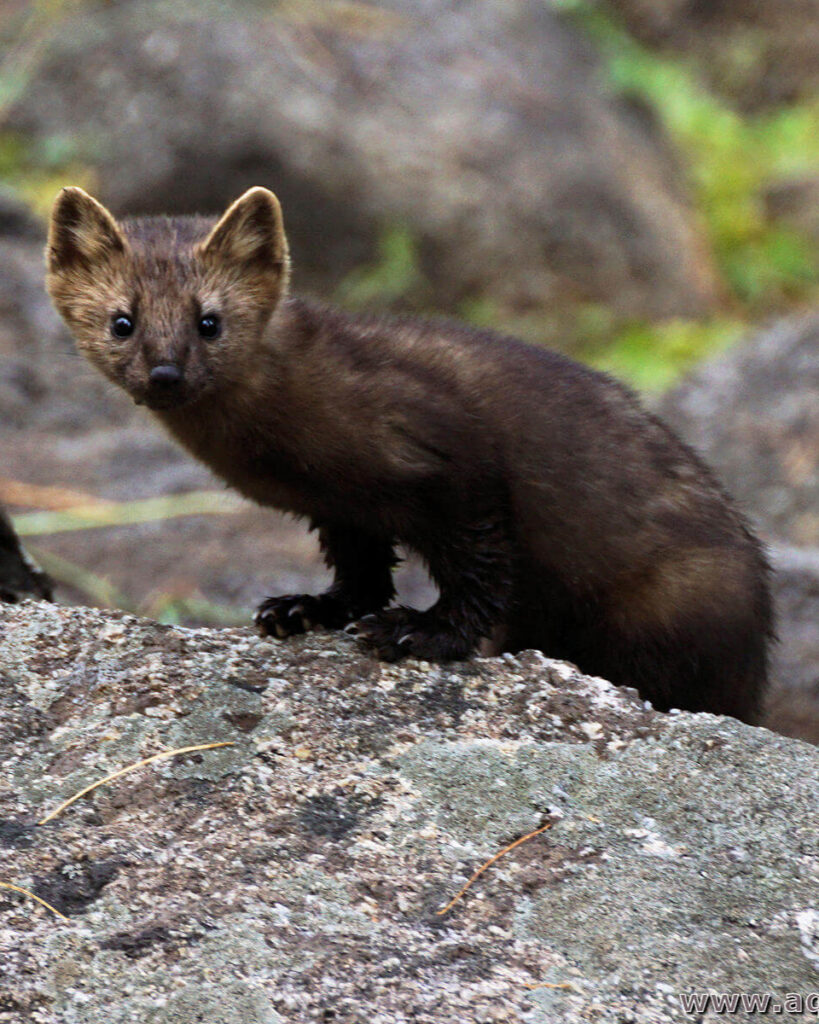
Photo by Aqua Portail
Sables (Martes zibellina) are small carnivorous mammals belonging to the weasel family (Mustelidae). They are native to forest ecosystems across northern Asia, particularly Siberia and parts of northeastern China and Mongolia.
Sables inhabit dense coniferous and mixed forests where they occupy territories that may span several square kilometres. They are agile climbers and hunters that prey on small mammals, birds, insects, and other animals.
Sables rely on keen senses of smell and hearing to locate prey and navigate their environment. They are generally solitary animals, maintaining territories and interacting primarily during breeding periods.
Their thick, dark fur provides insulation against extremely cold climates and is the primary trait targeted in commercial exploitation systems.
These characteristics establish sables as highly mobile forest predators whose natural behaviours and habitat use are systematically constrained or eliminated within fur exploitation systems.
Natural versus exploited lifespan
Natural lifespan
In natural conditions, sables may live 10–18 years, depending on environmental conditions and predation pressures.
Lifespan under exploitation
Within exploitation systems, sables are typically killed far earlier:
- Fur farming systems: commonly killed between 7–12 months of age once fur quality reaches commercial standards
- Wildlife trapping and hunting: killed shortly after capture
The divergence between natural lifespan and exploited lifespan is determined by fur market demand rather than biological longevity.
Systems of exploitation
Sables are exploited across multiple, overlapping systems:
- Wildlife trapping and hunting
Sables have historically been hunted and trapped for their fur in forest ecosystems. - Fur farming
Sables are bred and raised in captivity for fur production. - Luxury fashion supply chains
Sable fur is processed into garments and luxury fashion products. - International fur trade
Pelts are traded through fur markets and auction systems supplying global fashion industries.
These systems rely on trapping networks, breeding facilities, fur processing operations, and international fashion markets.
Living conditions across system types
Fur farming systems
Sables raised for fur are typically housed in wire cages within fur farming facilities. Cages are commonly arranged in rows or stacked structures.
These cages restrict movement and prevent natural behaviours such as roaming across large forest territories, climbing extensively, and hunting prey.
Animals are usually housed individually to prevent aggression.
Environmental enrichment is minimal or absent. Flooring composed of wire mesh may contribute to foot injuries.
Animals are fed diets composed of meat byproducts, fish, grains, and other feed ingredients.
Wild trapping systems
Wild sables may be captured using traps such as:
- foothold traps
- body-gripping traps
- snares
Animals caught in traps may remain restrained for extended periods before being killed.
Across systems, natural territorial behaviour, hunting activities, and forest habitat use are eliminated or restricted.
Standardised lifecycle under exploitation
While practices vary, sables in fur farming systems typically move through a broadly standardised lifecycle:
- Selective breeding
Adult animals are selected to produce offspring with desirable fur characteristics. - Birth and early development
Kits are born within breeding cages and remain with their mothers for a limited period. - Growth phase
Young animals are raised in cages while fur coats develop. - Harvest stage
Animals are killed once fur density and colour reach commercial standards. - Processing
Pelts are removed and processed for use in luxury garments and accessories.
Wild capture systems bypass breeding phases by trapping animals directly from natural populations.
Chemical and medical interventions
Fur farming operations may involve:
- vaccinations to prevent disease outbreaks
- antibiotics used to treat infections
- parasite control treatments
These interventions are used to maintain animal health within confined farming environments.
Killing processes
Sables raised for fur are typically killed using methods intended to preserve fur quality, including:
- gassing using carbon monoxide or carbon dioxide
- electrocution
- neck breaking in some operations
Animals trapped in the wild may be killed by shooting, blunt force, or other killing methods following capture.
Labour impact
Sable exploitation industries involve labour associated with:
- trapping and hunting operations
- breeding and cage maintenance
- feeding and health monitoring
- skinning and pelt preparation
- processing and trade logistics
Workers may experience repetitive strain injuries and exposure to animal waste, chemicals, and environmental hazards in trapping environments.
Scale and prevalence
Sable fur has historically been one of the most valuable furs in the global fashion industry. Fur farming and trapping operations continue to supply luxury fashion markets.
Production occurs primarily in northern Eurasia, particularly in regions with long-standing fur trade industries.
Ecological impact
Wild trapping of sables may affect local wildlife populations and forest ecosystem dynamics.
Fur farming operations produce environmental waste associated with feed, manure, and carcass disposal.
Escaped farmed animals may affect local ecosystems in non-native regions.
Language and abstraction
Within the fashion industry, sable fur is marketed using luxury terminology emphasising rarity, softness, and prestige.
Product descriptions typically focus on garment design and material quality while omitting the breeding, confinement, trapping, and killing processes involved in fur production.
Editorial correction notice
Sables are frequently framed as luxury fashion materials or high-value furs. This record documents sables as forest-dwelling carnivorous mammals systematically trapped, bred, confined, and killed within integrated fur farming, trapping, and luxury fashion supply systems independent of commercial framing.