
Scope
This record documents how rabbits are exploited within globally standard animal-use systems. It describes dominant, routine practices across industrial, commercial, and semi-industrial contexts, independent of country-specific regulation, cultural framing, or social perception.
Differences in scale, enforcement, and legal framing are documented in country records. System-specific mechanisms are documented within industry records.
Species context
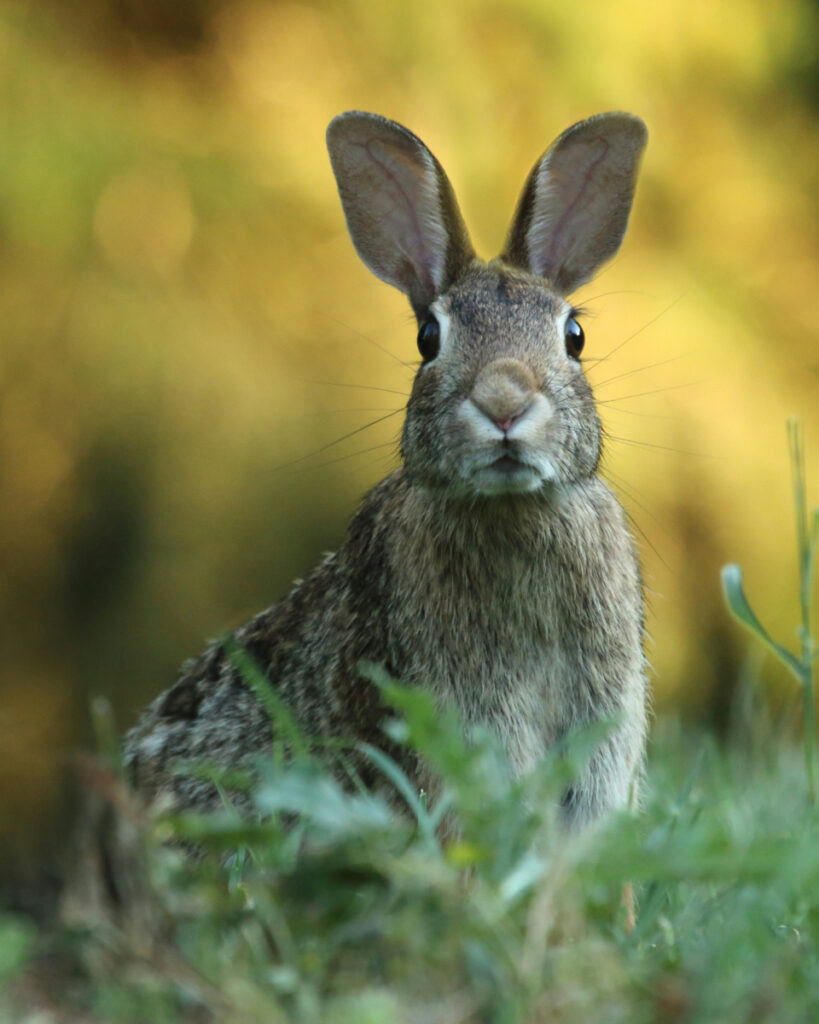
Photo by Gary Bendig
Rabbits are small herbivorous mammals adapted for continuous movement, burrowing, vigilance, and social living. They possess acute hearing, wide-angle vision, and highly sensitive stress responses. Rabbits communicate through posture, scent marking, subtle vocalisations, and rapid behavioural shifts.
Under natural conditions, rabbits spend much of their time moving through complex environments, foraging on fibrous vegetation, maintaining burrow systems, and engaging in social interactions within stable groups. They are prey animals with strong flight responses and require the ability to retreat, hide, and control distance from perceived threats.
These characteristics establish rabbits as individual animals with behavioural, social, and environmental needs that are systematically overridden within exploitation systems.
Natural versus exploited lifespan
Natural lifespan
In the absence of exploitation, rabbits commonly live approximately 8–12 years, with some individuals living longer under stable conditions.
Lifespan under exploitation
Within exploitation systems, rabbits are typically killed far earlier:
- Meat production systems: commonly within 8–12 weeks
- Fur and skin production systems: often within 12–20 weeks
- Research and testing systems: killed following experimental use
- Breeding systems: breeding animals are killed once reproductive output declines
The divergence between natural lifespan and exploited lifespan is driven by growth efficiency, yield targets, and disposability rather than biological longevity.
Systems of exploitation
Rabbits are exploited across multiple, overlapping systems:
- Meat production
Rabbits are bred, confined, fed, and killed for meat production at industrial and semi-industrial scales. - Fur and skin production
Rabbit fur and skins are used in garments, trims, and accessories, including systems where rabbits are killed primarily for pelts. - Commercial breeding and sale
Rabbits are bred for sale as companion animals, laboratory subjects, or breeding stock. - Research, testing, and education
Rabbits are used in biomedical research, toxicity testing, product safety testing, and educational experimentation. - Byproducts and secondary processing
Rabbit bodies are rendered into fats, proteins, and industrial inputs following slaughter. - Control and population management
Rabbits are killed through agricultural and environmental control programs targeting wild or feral populations.
These systems operate independently yet rely on shared infrastructures of breeding, confinement, transport, and killing.
Fibre production (Angora systems)
Certain rabbit breeds, most notably Angora rabbits, are selectively bred for continuous hair growth used in textile production. Fibre yield, hair length, and softness are prioritised over behavioural and physiological resilience.
Angora rabbits are commonly housed in individual wire cages to prevent coat damage and contamination. Space is minimal, and environmental enrichment is typically absent. Long hair growth increases susceptibility to:
- Heat stress
- Restricted movement
- Soiling and matting
- Skin infections
Fibre is harvested at regular intervals through:
- Plucking (manual pulling of hair)
- Shearing
- Combination methods
Restraint during fibre removal is routine. Repeated handling and prolonged immobilisation induce stress responses. In high-output systems, speed of extraction takes priority over minimising distress.
Angora rabbits are bred continuously to maintain fibre production. Once hair yield declines or health deteriorates, rabbits are killed and may enter meat or byproduct processing systems.
Fibre production does not replace slaughter; it extends the period of extraction prior to killing.
Living conditions across system types
Industrial meat and fur systems
In industrial contexts, rabbits are commonly housed in wire cages stacked in rows or tiers. Space is minimal, flooring causes chronic foot injuries, and environmental enrichment is absent. Movement, rearing, digging, and social choice are restricted.
High stocking densities and lack of stimulation contribute to stress, aggression, injury, and abnormal behaviours.
Breeding operations
Breeding rabbits are kept in prolonged confinement and subjected to repeated reproductive cycles. Does are frequently re-impregnated shortly after giving birth, while offspring are removed early for fattening or slaughter.
Research and institutional settings
In laboratories, rabbits are housed in small enclosures under controlled lighting and feeding regimes. Handling prioritises experimental protocols rather than behavioural needs, and animals are often isolated.
Control and culling contexts
Wild or free-living rabbits are targeted using trapping, poisoning, shooting, fumigation of burrows, and disease introduction.
Across systems, living conditions prioritise efficiency, containment, and cost reduction over species-specific requirements.
Standardised lifecycle under exploitation
While specific practices vary, rabbits typically move through a broadly standardised lifecycle:
- Breeding or capture
Rabbits are bred through controlled reproduction or captured from wild populations. - Early confinement
Kits are confined shortly after birth and separated from mothers early to maximise breeding frequency. - Growth and fattening
Rabbits are fed concentrated diets to accelerate rapid weight gain. - Handling and transport
Rabbits are handled, crated, and transported between facilities, often causing injury and stress. - Slaughter or killing
Rabbits are killed once target weight, pelt quality, or experimental use is reached.
Chemical and medical interventions
To sustain productivity at scale, rabbits are routinely subjected to chemical and medical interventions, including:
- Antibiotics to manage disease associated with crowding
- Antiparasitic treatments
- Hormonal manipulation to control reproduction
- Experimental substances and invasive procedures in research contexts
These interventions function as systemic inputs rather than exceptional measures.
Slaughter processes
Rabbit slaughter methods vary by system and region and frequently involve inconsistent stunning. Common practices include:
- Cervical dislocation performed manually or mechanically
- Electrical stunning with variable effectiveness
- Blunt force trauma
- Throat cutting following inadequate stunning
In fur systems, killing methods prioritise pelt preservation rather than rapid loss of consciousness.
In control programs, rabbits may be killed through poisoning, shooting, fumigation, or disease-induced death, often over extended periods.
Slaughterhouse labour impact
Rabbit slaughter and processing rely on repetitive, high-speed labour involving killing, skinning, and evisceration. Workers are exposed to:
- Repetitive strain and injury risks
- Handling of distressed animals
- Psychological stress associated with routine killing
Seasonal demand and low-margin production intensify throughput pressures.
Scale and prevalence
Rabbits are exploited globally across meat, fur, research, and control systems. Hundreds of millions of rabbits are killed annually, with meat and fur production accounting for the majority.
Their exploitation is embedded in agricultural systems, fashion supply chains, research institutions, and environmental control programs.
Ecological impact
Rabbit exploitation contributes to ecological harm, including:
- Resource use associated with feed production and confinement
- Waste accumulation and local pollution
- Ecological disruption linked to mass killing and population manipulation
These impacts arise from maintaining large rabbit populations within extractive and control-oriented systems.
Language and abstraction
Rabbits are commonly referred to using abstract or functional terms such as “livestock,” “production units,” “pelts,” or “pest species.” Individual animals are rendered invisible within productivity metrics.
The same species is framed as food, fashion input, laboratory tool, or invasive target depending on context, fragmenting perception and normalising exploitation.
Editorial correction notice
Rabbits are frequently framed as minor or peripheral animals within exploitation systems. This record documents rabbits as animals systematically exploited across meat, fur, research, breeding, and population control industries, independent of cultural perception or perceived scale.