
Scope
This record documents how foxes are exploited within globally standard animal-use systems. It describes dominant, routine practices across fur farming, wildlife trapping and hunting, breeding and trade, pest control operations, tourism display, and derivative byproduct processing, independent of country-specific regulation or fashion branding narratives.
Differences in scale, enforcement, and legal framing are documented in country records. System-specific mechanisms are documented within industry records.
Species context
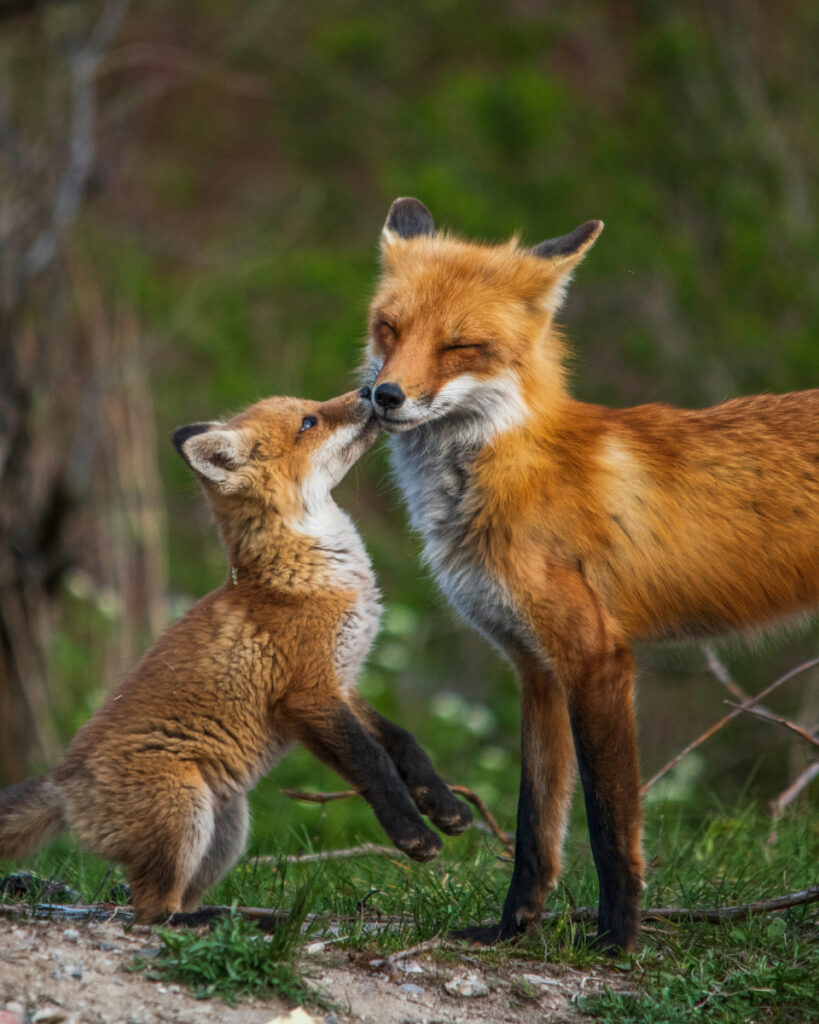
Photo by Jeremy Hynes
“Fox” commonly refers to several species within the genus Vulpes, most prominently the red fox (Vulpes vulpes), which is the primary species exploited in fur farming and hunting systems. Other species, such as the Arctic fox (Vulpes lagopus) and silver fox (a colour variant of the red fox) are also bred or captured for fur.
Foxes are highly adaptable carnivorous mammals with strong territorial behaviour. They rely on complex sensory perception, including acute hearing and smell, and demonstrate problem-solving ability, memory, and exploratory behaviour. In natural conditions, foxes establish territories that can span several square kilometres, using dens for shelter and raising offspring.
Foxes are primarily solitary hunters but maintain flexible social structures, especially during breeding and rearing periods. They exhibit avoidance behaviour toward humans and strong stress responses when captured or confined.
These characteristics establish foxes as mobile, territory-dependent predators whose behavioural and environmental needs are systematically overridden within exploitation systems.
Natural versus exploited lifespan
Natural lifespan
In natural conditions, foxes typically live 3–6 years in the wild, though some individuals may live longer under stable conditions.
Lifespan under exploitation
Within exploitation systems, foxes are typically killed far earlier:
- Fur farming systems: commonly killed at 6–8 months when winter coat reaches commercial value
- Wildlife trapping and hunting systems: killed at any age once captured
- Breeding stock in fur farms: kept several years but killed once reproductive productivity declines
The divergence between natural lifespan and exploited lifespan is determined by pelt maturity, hunting opportunity, or market demand rather than biological longevity.
Systems of exploitation
Foxes are exploited across multiple, overlapping systems:
- Fur farming
Foxes are bred, confined, and killed for pelts used in clothing, fashion accessories, and decorative trims. - Wild trapping and hunting
Foxes are captured or killed for fur, sport, predator control, or trade. - Predator control and pest management
Foxes are targeted in wildlife control programs associated with livestock protection. - Breeding and genetics
Selective breeding in captivity prioritises fur colour, size, and pelt density. - Tourism and display
Foxes may be kept in captivity for wildlife parks, photography experiences, or novelty encounters. - Byproducts and rendering
Fox carcasses and waste materials may enter rendering systems for secondary products.
These systems rely on trapping networks, captive breeding infrastructure, transport logistics, killing methods, and international fur markets.
Living conditions across system types
Fur farm confinement
Foxes on fur farms are typically housed in small wire cages arranged in rows within open sheds or barns. These cages restrict movement to a small area and contain minimal or no environmental enrichment.
Wire flooring contributes to foot injuries and chronic stress. Lack of space prevents running, digging, hunting, or territory establishment.
Foxes, which naturally roam large territories, experience prolonged confinement with continuous sensory exposure to other foxes and humans. This environment frequently results in stereotypic behaviours such as pacing, biting cage bars, or repetitive movements.
Breeding facilities
Breeding foxes are selected for coat characteristics and reproductive output. Females are confined during pregnancy and nursing periods. Cubs are raised within the same cage structures and separated once they reach a certain age.
Animals not meeting pelt quality standards may be culled early.
Wildlife trapping and hunting contexts
Foxes captured in the wild are typically caught using traps, snares, or shot. Trapping systems may involve prolonged confinement in mechanical devices before death occurs.
Across systems, foxes are removed from natural territories and placed into environments incompatible with their behavioural ecology.
Standardised lifecycle under exploitation
While practices vary, foxes exploited for fur farming typically move through a broadly standardised lifecycle:
- Breeding selection
Adult foxes are selected for pelt colour, density, and reproductive capacity. - Controlled mating
Breeding pairs are arranged within farms. - Birth and early confinement
Cubs are born in cage-based nest boxes attached to enclosures. - Growth phase
Young foxes are fed high-energy diets to promote rapid growth and coat development. - Individual caging
Foxes are confined until the winter coat develops fully. - Killing and skinning
Once pelts reach commercial quality, foxes are killed and skinned.
Breeding animals may repeat this cycle for several years before being killed.
Wild-caught foxes may bypass breeding phases and be killed immediately upon capture.
Chemical and medical interventions
To maintain productivity and reduce disease outbreaks in confined systems, foxes may be subjected to:
- Antibiotics to control bacterial infections
- Vaccinations where implemented
- Parasite treatments
- Chemical disinfectants used in cages and housing areas
High-density confinement increases the likelihood of disease transmission.
Slaughter and killing processes
Foxes killed in fur farming systems are typically killed using methods intended to preserve fur quality, including:
- Gas exposure (e.g., carbon monoxide or carbon dioxide)
- Electrocution using probes placed in the mouth and rectum
- Cervical dislocation in smaller operations
Gas methods may result in respiratory distress and prolonged time to unconsciousness.
Electrocution methods require immobilisation of the animal and can involve multiple attempts if improperly applied.
Following death, foxes are skinned and pelts are processed through drying, cleaning, and grading operations.
In wildlife hunting and trapping systems, foxes may die from:
- Gunshot wounds
- Blunt force trauma
- Trapping injuries and prolonged exposure
Death in traps may occur hours or days after capture depending on trap type and conditions.
Slaughterhouse and labour impact
Fur farm and trapping operations involve labour associated with:
- Handling aggressive or stressed animals
- Killing and skinning operations
- Processing and grading pelts
Workers may experience physical injury risk and repetitive strain from skinning processes.
Scale and prevalence
Fox exploitation occurs globally through both fur farming and wild capture. Millions of foxes have historically been bred and killed annually for fur markets.
Wild trapping remains common in some regions where fox fur remains part of commercial or subsistence trade.
Foxes are also killed in large numbers through predator control programs targeting livestock protection.
Ecological impact
Fox exploitation contributes to ecological disruption including:
- Population pressure from hunting and trapping
- Escape of farmed foxes into ecosystems
- Waste runoff and pollution from fur farms
- Disruption of predator-prey dynamics
Selective breeding and captive escapes may introduce genetic changes into wild populations.
Language and abstraction
Foxes are often described within fur markets using commodity terminology such as “pelts,” “colour types,” or “fur stock.” Fashion narratives frame fox fur as luxury or craftsmanship, separating the finished product from the killing process.
Predator control narratives describe foxes as “pests” or “vermin,” reframing killing as land management rather than exploitation.
Editorial correction notice
Foxes are frequently portrayed as either luxury fashion materials or nuisance wildlife. This record documents foxes as territorial carnivores systematically trapped, confined in cages, bred, transported, and killed within integrated fur production, wildlife control, and hunting systems, independent of fashion narratives or pest-control framing.