
Scope
This record documents how dogs are exploited within globally standard animal-use systems. It describes dominant, routine practices across industrial, commercial, and semi-industrial contexts, independent of country-specific regulation, cultural framing, or social perception.
Differences in scale, enforcement, and legal framing are documented in country records. System-specific mechanisms are documented within industry records.
Species context
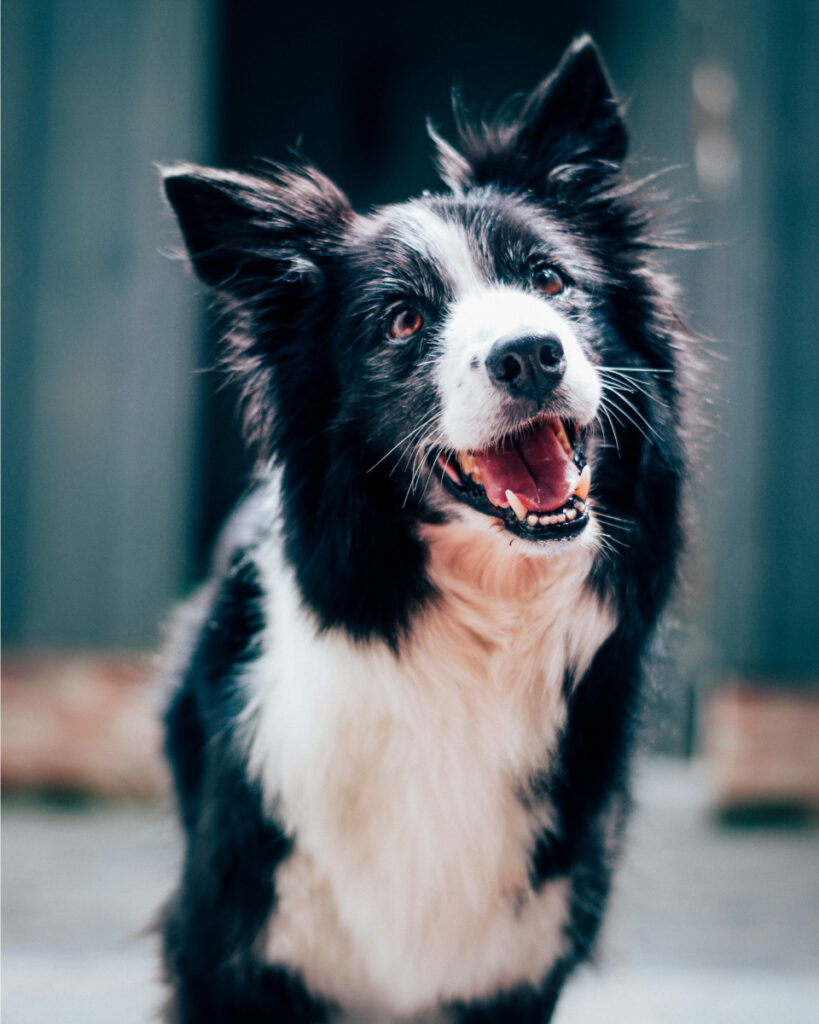
Photo by Baptist Standaert
Dogs are domesticated mammals with highly developed social cognition, strong attachment behaviours, and advanced sensory perception. They form enduring social bonds, communicate through vocalisations, facial expressions, body language, and scent, and display problem-solving abilities, emotional responsiveness, and memory.
Under natural and non-exploitative conditions, dogs engage in exploratory movement, social play, cooperative behaviours, caregiving, and sustained affiliative relationships with other dogs and humans. They exhibit distress when isolated, confined, or separated from social bonds.
These characteristics establish dogs as individual animals with complex social, emotional, and environmental needs that are systematically overridden within exploitation systems.
Natural versus exploited lifespan
Natural lifespan
In the absence of exploitation, dogs typically live approximately 10–15 years, with variation based on genetics and health. Some individuals live longer under stable, supportive conditions.
Lifespan under exploitation
Within exploitation systems, dogs are frequently killed far earlier:
- Meat production systems: often within 6–24 months
- Breeding and commercial trade systems: discarded or killed once profitability declines
- Research and testing systems: killed following experimental use
- Culling and control programs: killed at any age
The divergence between natural lifespan and exploited lifespan is driven by economic utility, disposability, or regulatory convenience rather than biological longevity.
Systems of exploitation
Dogs are exploited across multiple, overlapping systems:
- Meat production
Dogs are bred, captured, transported, confined, and killed for human consumption in various regions. - Commercial breeding and sale
Dogs are bred for sale as companion animals, often in large-scale breeding operations prioritising volume and profit. - Research, testing, and education
Dogs are used in biomedical research, toxicity testing, surgical training, and educational experiments. - Entertainment and sport
Dogs are exploited in racing, fighting, guarding, and performance contexts. - Security, military, and policing
Dogs are trained, deployed, injured, and frequently discarded or killed once deemed unfit for service. - Byproducts and secondary use
Dog bodies may be rendered into meat, skins, fats, or industrial inputs following killing. - Control, culling, and population management
Dogs are killed through municipal, agricultural, or public health programs targeting stray or free-roaming populations.
These systems operate independently yet rely on shared breeding, confinement, transport, and killing infrastructures.
Living conditions across system types
Meat and breeding systems
In meat and commercial breeding systems, dogs are commonly confined in cages, pens, or enclosures with limited space, minimal environmental enrichment, and restricted social interaction. Breeding animals are repeatedly impregnated, while offspring are raised for slaughter or sale.
Physical restraint, isolation, and deprivation of stimulation are routine.
Research and institutional settings
In laboratories and training facilities, dogs are housed in kennels or cages, often indoors, under controlled conditions that restrict movement and social contact. Handling prioritises compliance and experimental protocols over welfare.
Control and culling contexts
Free-roaming dogs may be captured using traps, snares, or force, held in temporary facilities, or killed immediately.
Across systems, confinement structures prioritise manageability and cost reduction over species-specific needs.
Standardised lifecycle under exploitation
While specific practices vary, dogs typically move through a broadly standardised lifecycle:
- Breeding or capture
Dogs are bred intentionally or captured from free-roaming populations. - Early confinement and conditioning
Puppies are separated from mothers, confined, and conditioned for sale, use, or fattening. - Utilisation phase
Dogs are exploited for meat, reproduction, labour, research, or entertainment. - Decline in economic value
Once dogs are injured, aged, infertile, or behaviourally unsuitable, they are discarded, sold into other systems, or killed. - Killing or disposal
Dogs are killed through slaughter, euthanasia, or mass depopulation methods.
Chemical and medical interventions
To sustain exploitation at scale, dogs are subjected to chemical and medical interventions, including:
- Hormonal manipulation to control reproduction
- Antibiotics to manage disease associated with confinement
- Sedatives or paralytics during transport or handling
- Experimental drugs and surgical procedures in research contexts
These interventions function as systemic inputs rather than exceptional measures.
Slaughter processes
Dog slaughter methods vary by system and region and frequently involve high levels of distress. Common practices include:
- Bludgeoning or beating
- Hanging or strangulation
- Throat cutting without prior stunning
- Electrocution
- Poisoning
In meat systems, dogs are often transported long distances in crowded conditions prior to killing. Stunning is inconsistent or absent, and death may occur over extended periods.
In control and institutional contexts, killing may involve shooting, gas chambers, or chemical injection, sometimes applied at scale.
Slaughterhouse labour impact
Dog killing and processing rely on labour exposed to:
- Repetitive killing and handling of distressed animals
- Physical injury and hazardous environments
- Psychological stress associated with prolonged exposure to suffering and death
Where dog meat systems intersect with informal or unregulated labour, protections are minimal or absent.
Scale and prevalence
Dogs are exploited globally across all inhabited regions. While dog meat production represents a smaller numerical scale than some other animal industries, it involves millions of individual dogs annually.
Commercial breeding, research use, and population control programs affect additional millions, with high turnover and disposability embedded into system design.
Ecological impact
Dog exploitation contributes to ecological harm, including:
- Resource use associated with breeding, feeding, and confinement
- Waste accumulation and pollution from facilities
- Disease transmission linked to high-density populations and trade
These impacts arise from maintaining large dog populations within extractive or control-oriented systems.
Language and abstraction
Dogs are often linguistically separated into moral categories such as “pets,” “working dogs,” “strays,” or “meat animals.” These labels fragment a single species into roles that obscure systemic exploitation.
Terms such as “control,” “management,” or “euthanasia” are used to normalise killing and mask industrial or administrative violence.
Editorial correction notice
Dogs are frequently excluded from exploitation records due to their cultural positioning as companion animals. This record documents dogs as animals systematically exploited across multiple industries, including meat, research, labour, and population control, independent of social sentiment or regional taboo.