
Scope
This record documents how buffalo are exploited within globally standard animal-use systems. It describes dominant, routine practices across dairy, meat, leather, draught labour, breeding, and byproduct industries, independent of country-specific regulation or cultural framing.
Differences in scale, enforcement, and legal enforcement are documented in country records. System-specific mechanisms are documented within industry records.
Species context
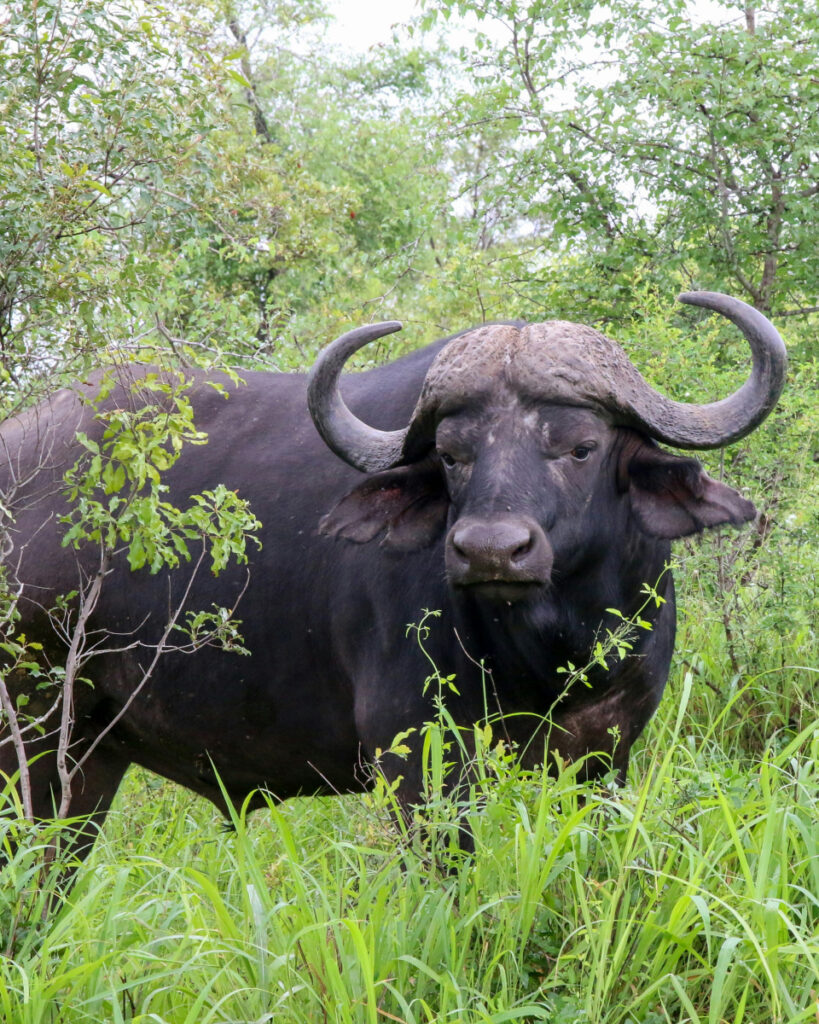
Photo by Glen Carrie
The term “buffalo” commonly refers to domesticated water buffalo (Bubalus bubalis) and, in some regions, African buffalo (Syncerus caffer) exploited through hunting systems. The primary industrial exploitation concerns domesticated water buffalo.
Water buffalo are large, social bovines adapted to wetland and riverine environments. They form herd structures with strong maternal bonds and social hierarchies. Calves remain dependent on their mothers for extended nursing and social learning.
Buffalo regulate body temperature through wallowing in water or mud and require access to moisture-rich environments for comfort and skin health. They exhibit stress responses when restrained, isolated, or deprived of environmental regulation.
These characteristics establish buffalo as social, herd-oriented animals with environmental needs that are systematically constrained within exploitation systems.
Natural versus exploited lifespan
Natural lifespan
In the absence of exploitation, water buffalo commonly live 18–25 years, with some individuals living longer under stable herd conditions.
Lifespan under exploitation
Within exploitation systems, buffalo are frequently killed far earlier:
- Meat production systems: commonly slaughtered between 1–5 years
- Dairy systems: killed once milk yield declines, often within 8–12 years
- Male calves in dairy systems: frequently killed at young ages
- Draught labour systems: killed following injury, exhaustion, or reduced productivity
The divergence between natural lifespan and exploited lifespan is determined by milk yield, body weight, labour capacity, or market demand rather than biological longevity.
Systems of exploitation
Buffalo are exploited across multiple, overlapping systems:
- Dairy production
Female buffalo are bred and milked for high-fat milk used in products such as mozzarella, yoghurt, and ghee. - Meat production
Buffalo are slaughtered for meat, including export markets for “carabeef.” - Leather production
Buffalo hides are processed into leather goods and industrial materials. - Draught labour
Buffalo are used for ploughing, hauling, cart pulling, and agricultural transport. - Breeding and genetics
Selective breeding prioritises milk yield, size, and muscle mass. - Byproducts and rendering
Horns, bones, fats, and organs are processed into secondary products.
These systems rely on controlled breeding, early calf separation, confinement, transport networks, and slaughter infrastructure.
Living conditions across system types
Dairy systems
Dairy buffalo are repeatedly impregnated to maintain milk production. Calves are commonly separated from mothers to divert milk for commercial extraction.
Buffalo may be housed in:
- Tie-stall systems
- Confined barns
- Limited-access pasture systems
Access to wallowing areas is often restricted in intensive systems despite their biological need for water immersion.
Male calves in dairy systems are frequently sold for meat or killed early due to low economic value.
Meat production systems
Buffalo raised for meat may be kept in pasture-based or semi-intensive systems before transport to slaughter. Feedlot-style finishing systems may be used in export supply chains.
Draught labour systems
Buffalo used for agricultural labour are subjected to prolonged physical exertion, harnessing, and environmental exposure. Injury and exhaustion reduce lifespan.
Across systems, management prioritises productivity and output over species-specific environmental requirements.
Standardised lifecycle under exploitation
While pathways vary, buffalo typically move through a broadly standardised exploitation cycle:
- Controlled breeding
Females are impregnated through natural mating or artificial insemination. - Birth and calf management
Calves are categorised by sex and economic value. - Milk extraction phase (dairy systems)
Females are milked for multiple lactation cycles. - Labour or growth phase
Males may be raised for meat or used for draught work. - Decline in productivity
Once milk yield, strength, or growth efficiency declines, buffalo are sold or slaughtered. - Transport and slaughter
Buffalo are transported to slaughter facilities when deemed economically surplus.
Chemical and medical interventions
To maintain productivity, buffalo are subjected to systemic interventions, including:
- Hormonal treatments for reproductive management
- Antibiotics to manage infection
- Antiparasitic treatments
- Vaccinations
In intensive systems, pharmaceutical inputs are used to manage stress-related illness and maintain milk output.
Slaughter processes
Buffalo slaughter methods vary by region and infrastructure. Common practices include:
- Captive bolt stunning followed by throat cutting
- Electrical stunning
- Throat cutting without effective stunning in some contexts
Transport often involves long distances, crowding, dehydration, and stress. Stunning reliability varies, particularly with large-bodied animals, increasing risk of prolonged consciousness during bleeding.
In some export markets, buffalo are transported across national borders before slaughter.
Slaughterhouse labour impact
Buffalo slaughter involves:
- Handling large, distressed animals
- High physical injury risk
- Repetitive skinning and carcass processing
Workers are exposed to hazardous conditions and psychological strain associated with high-throughput killing.
Scale and prevalence
Buffalo are exploited extensively across Asia and other regions for dairy and meat production. Millions are slaughtered annually for meat export and domestic consumption.
Buffalo dairy supports large-scale production of high-fat milk products, tightly integrated with calf production cycles.
Draught labour exploitation persists in agricultural regions lacking mechanisation.
Ecological impact
Buffalo exploitation contributes to ecological harm, including:
- Methane emissions from ruminant digestion
- Land use for grazing and feed production
- Water consumption for dairy operations
- Manure waste and nutrient runoff
Expansion of buffalo dairy and meat industries increases resource demand and environmental pressure.
Language and abstraction
Buffalo are frequently described using terms such as “livestock,” “dairy units,” “draught animals,” or “carabeef.” Milk products are marketed without reference to forced reproduction or calf separation.
Leather derived from buffalo hides is framed as a durable material without acknowledgement of slaughter origins.
Editorial correction notice
Buffalo are often framed as traditional agricultural animals or culturally integrated livestock. This record documents buffalo as social herd animals systematically bred, milked, worked, transported, and killed within integrated dairy, meat, labour, and leather industries, independent of cultural familiarity or economic framing.